United Airlines is pushing the boundaries of endurance aviation in 2026, crafting a network that stretches time, geography, and passenger expectations. With routes approaching 22 hours of total travel time, the airline is not merely extending distance—it is reshaping how ultra-long-haul journeys are structured, sold, and experienced. By blending nonstop endurance flights with complex one-stop fifth freedom operations, United has quietly built one of the most intriguing long-haul strategies in modern aviation.
What makes this expansion particularly compelling is not just the duration, but the architecture behind it. These are not simple A-to-B routes. They are carefully engineered corridors linking North America to secondary Asian cities, emerging markets, and underserved long-haul destinations, often through strategic hubs like Tokyo Narita and Hong Kong. The result is a network that feels both expansive and precise—designed to capture demand that competitors often overlook.
The 22-Hour Benchmark: United’s Longest Routes in 2026
At the top of United’s ultra-long-haul portfolio sits the Houston–Tokyo Narita–Ulaanbaatar service, clocking in at an astonishing 21 hours and 45 minutes. This route is emblematic of United’s willingness to connect unconventional city pairs, linking the American South directly with Mongolia’s capital—an aviation rarity.
Close behind is the Los Angeles–Hong Kong–Bangkok service at 21 hours and 40 minutes, a route that combines efficiency with scale. Unlike many one-stop flights, this service operates as a same-aircraft journey, allowing passengers to remain onboard during the stop in Hong Kong before continuing to Thailand.
Other standout routes include:
- Los Angeles–Hong Kong–Ho Chi Minh City (20h 45m), reconnecting the airline with Vietnam after nearly a decade
- Los Angeles–Tokyo Narita–Cebu (20h 30m), opening direct access to the Philippines’ booming leisure market
- Denver–Tokyo Narita–Koror (19h 15m), linking the U.S. mainland with Palau’s remote island paradise
These routes are not مجرد long—they are strategically layered, combining high-demand trunk segments with niche continuation legs that maximize aircraft utilization and route profitability.
Tokyo Narita’s Revival as a Strategic Hub
A central pillar of this network is Tokyo Narita, which has re-emerged as a vital connecting hub for United’s Asia-Pacific operations. While many airlines have shifted toward point-to-point flying, United is leaning into Narita’s geographic advantage to enable fifth freedom flights beyond Japan.
In several cases, passengers must change aircraft in Narita, even while retaining the same flight number. This unconventional setup allows United to deploy different aircraft types tailored to each segment—typically a Boeing 787-9 for transpacific legs and narrowbody jets like the 737 MAX 8 for regional continuation.
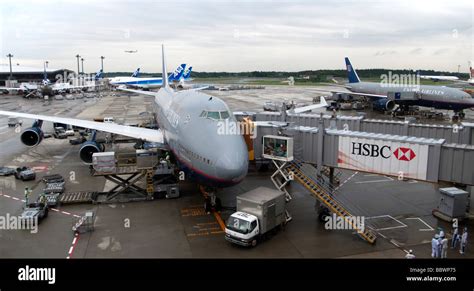
This hybrid model introduces complexity but unlocks flexibility. It enables United to serve destinations such as Kaohsiung, Cebu, and Koror without committing widebody aircraft to thinner routes. For travelers, it creates a seamless booking experience—albeit with a behind-the-scenes aircraft swap that reflects careful operational design.
The Return of Same-Plane One-Stop Flights
While aircraft changes dominate some routes, United has also revived a more classic concept: the same-plane one-stop service. The flagship example is the Los Angeles–Hong Kong–Bangkok route, where the aircraft continues onward after refueling and crew changes.
This approach offers a unique passenger experience. Travelers benefit from:
- Reduced transit friction, as there is no need to switch aircraft
- Consistent cabin environment, particularly valuable on ultra-long journeys
- Streamlined baggage handling, minimizing risk of delays or mishandling
The same model applies to Ho Chi Minh City, where United re-entered the market in 2025. These routes echo the golden age of long-haul aviation, when multi-stop journeys were common—but with modern efficiency and aircraft technology.
Why Bangkok and Ho Chi Minh City Matter
The decision to extend flights beyond Hong Kong was not arbitrary. Both Bangkok and Ho Chi Minh City represent massive origin-and-destination markets with strong ties to the United States, particularly Los Angeles. Despite this demand, nonstop flights remain absent, creating an opportunity for creative routing.
Before these extensions, United’s Los Angeles–Hong Kong flights struggled with load factors, averaging just over 63% seat occupancy. By continuing flights onward, the airline tapped into diaspora travel, tourism flows, and price-sensitive long-haul demand.
The results were immediate. Load factors surged to over 85%, demonstrating how a relatively low-risk extension can transform route performance. It is a sharp reminder that in aviation, network design often matters as much as raw demand.
Nonstop Titans: The Endurance Flights Still Leading
While one-stop routes dominate the conversation, United’s nonstop ultra-long-haul flights remain formidable. The San Francisco–Singapore route, operating twice daily, continues to be one of the longest nonstop services globally at 17 hours and 35 minutes.
Similarly, routes like:
- Houston–Sydney
- Newark–Delhi
- Newark–Johannesburg
demonstrate the airline’s commitment to direct intercontinental connectivity. These flights rely heavily on the efficiency of the Boeing 787-9, whose range and fuel economy make such operations viable on a daily basis.
What distinguishes these flights is their simplicity. In contrast to the layered one-stop routes, nonstop services offer predictability and time savings, appealing to premium travelers and business passengers.
A Network Designed for Opportunity, Not Tradition
United’s 2026 long-haul expansion reveals a broader strategic philosophy: serve markets that others overlook, and do so with flexible, adaptive routing. Rather than focusing solely on headline-grabbing nonstop distances, the airline is building a network that captures both volume and niche demand.
This includes:
- Entering previously unserved cities like Ulaanbaatar and Koror
- Re-establishing links to former destinations such as Bangkok and Ho Chi Minh City
- Leveraging fifth freedom rights to maximize aircraft utilization
The result is a system that feels less like a traditional hub-and-spoke model and more like a dynamic web of long-haul pathways, each calibrated for efficiency and reach.
The Passenger Experience on 20+ Hour Journeys
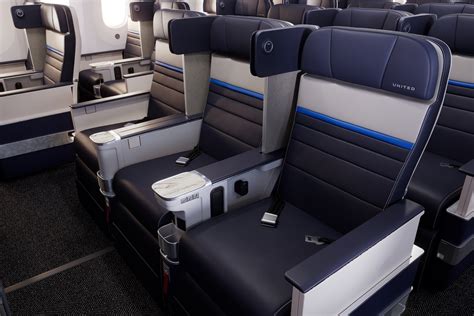
Flying for nearly a full day is no small feat, and United’s reliance on the Dreamliner family plays a crucial role in making these journeys tolerable—even enjoyable. Features such as higher cabin humidity, lower altitude pressurization, and larger windows help reduce fatigue over extended durations.
Passengers on these routes are not just enduring distance—they are experiencing a new category of travel, where the journey itself becomes a defining element of the trip. Whether it’s stepping off in Bangkok after a single flight number from Los Angeles or reaching Mongolia via Tokyo, the experience is as much about connectivity as it is about endurance.
A Bold Step Into the Future of Ultra-Long-Haul Travel
United Airlines’ longest routes in 2026 are more than statistical achievements. They represent a calculated evolution in how airlines approach distance, demand, and destination strategy. By blending nearly 22-hour itineraries with innovative routing and revived hub dynamics, United has positioned itself at the forefront of ultra-long-haul aviation.
For travelers, it opens doors to places once considered distant or inconvenient. For the industry, it sets a precedent: the future of long-haul flying may not belong solely to the longest nonstop route, but to the smartest combination of reach, efficiency, and imagination.