A Record-Breaking Year for Delta’s Long-Haul Network
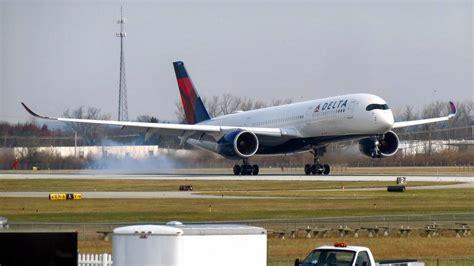
Delta Air Lines is stepping decisively into a new era of ultra-long-haul aviation in 2026, deploying its most ambitious international schedule to date. Between June and December, the airline is set to operate an average of 127 daily long-haul departures, marking a 5% increase year-over-year and a striking 16% surge compared to pre-pandemic 2019 levels. This expansion is not just incremental—it is a calculated move to dominate high-value, long-distance markets where premium demand is strongest.
As the second-largest long-haul operator in the United States, Delta trails only United Airlines in total departures. Yet, Delta’s strategic edge lies in higher seat density per flight combined with premium-heavy configurations, allowing it to extract greater revenue per route while maintaining competitive frequency. The airline’s reliance on the Airbus A350-900—configured for fewer passengers but more premium seats—signals a clear shift toward yield optimization over sheer volume.
Understanding the 17-Hour Benchmark: What Defines Ultra-Long-Haul
Ultra-long-haul flights are not just about distance—they are about block time, the critical metric used across the industry. This measurement captures the full duration from gate departure to gate arrival, including taxi time, airborne duration, and built-in buffers for delays. Airlines carefully calibrate block times to balance operational reliability, aircraft utilization, and passenger expectations.
In Delta’s case, the crown jewel of its 2026 schedule reaches an astonishing 17 hours and 5 minutes, placing it firmly among the longest commercial flights in the world. These routes demand not only advanced aircraft performance but also meticulous route planning, payload management, and crew scheduling.
Atlanta to Johannesburg: The Longest Nonstop Flight in Delta’s Network
At the top of Delta’s ultra-long-haul hierarchy sits the Johannesburg to Atlanta route, consistently ranked as the airline’s longest nonstop service. With a maximum block time exceeding 17 hours, this route represents a technical and operational masterpiece.
Operating between a high-altitude airport in South Africa and Delta’s primary hub in Atlanta, the flight faces unique challenges. Johannesburg’s “hot-and-high” conditions significantly impact aircraft performance, requiring careful payload restrictions and optimized fuel planning. To address this, Delta deploys its 275-seat Airbus A350-900, a configuration specifically designed to prioritize range and premium comfort over capacity.
Seasonal demand shapes the route’s frequency, with daily flights during peak northern summer months and a reduced schedule of five weekly services in winter. Despite these fluctuations, the route remains a cornerstone of Delta’s intercontinental strategy.
Cape Town, Shanghai, and Melbourne: The Next Tier of Ultra-Long Routes
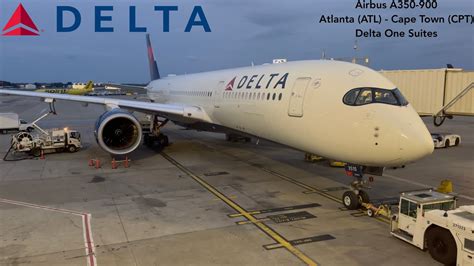
Just behind Johannesburg in duration is the Cape Town to Atlanta route, clocking in at up to 16 hours and 35 minutes. Covering more than 7,000 nautical miles, this route exemplifies Delta’s commitment to connecting distant leisure and business markets directly, bypassing traditional European hubs.
Meanwhile, the Detroit to Shanghai Pudong service underscores the airline’s renewed focus on Asia. With a maximum duration of 16 hours and 15 minutes, this daily flight leverages both high-capacity and premium-focused A350 configurations, adapting to seasonal demand fluctuations.
A newer addition, Los Angeles to Melbourne, has quickly become a critical link between North America and Australia. Operating year-round, the route typically runs three times weekly, scaling up to daily service during peak holiday periods. Its inclusion highlights Delta’s strategy of targeting high-demand transpacific corridors with limited nonstop competition.
Seoul and the Power of Frequency in Long-Haul Markets
Unlike most ultra-long-haul routes, which prioritize duration over frequency, Atlanta to Seoul Incheon stands out as an exception. With flights reaching up to 16 hours, this route is served twice daily, reflecting its importance within the SkyTeam alliance network.
The dual-daily service enables seamless connections across Asia via Seoul, reinforcing Delta’s partnership with Korean Air. The use of high-premium A350 configurations ensures that even on a high-frequency route, the focus remains on business and premium leisure travelers, who drive the majority of long-haul profitability.
New Frontiers: Los Angeles to Hong Kong and Atlanta to Riyadh
Delta’s 2026 expansion is not limited to strengthening existing routes—it also introduces entirely new ultra-long-haul markets. Among the most notable is the Los Angeles to Hong Kong service, launching in June. With a block time approaching 15 hours and 45 minutes, this route reestablishes Delta’s presence in one of Asia’s most competitive aviation markets.
Facing direct competition from Cathay Pacific and United Airlines, Delta is taking a cautious yet strategic approach by deploying its lowest-capacity A350 configuration. This decision reflects lessons learned from past performance, where high capacity often led to weaker load factors in saturated markets.
Equally significant is the introduction of Atlanta to Riyadh, a route never previously served by Delta. Scheduled to begin in October, this 15-hour-plus flight operates three times weekly and signals the airline’s growing interest in the Middle East as an emerging long-haul market.
Pacific Expansion: Sydney, Brisbane, and Beyond
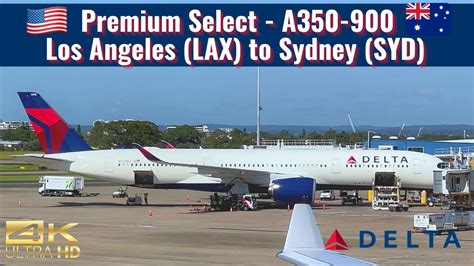
Delta’s footprint across the Pacific continues to expand with established routes such as Los Angeles to Sydney and Los Angeles to Brisbane. While slightly shorter than the top-tier ultra-long-haul flights, these routes still exceed 14 to 15 hours, placing them firmly within the long-haul elite category.
Sydney remains a daily service, reflecting its consistent demand, while Brisbane operates on a seasonal three-weekly schedule, targeting peak travel periods. Both routes rely on the Airbus A350 to deliver a balance of range efficiency, passenger comfort, and operational reliability.
Aircraft Strategy: Why the Airbus A350 Dominates Delta’s Longest Routes
At the heart of Delta’s ultra-long-haul expansion is the Airbus A350-900, a platform uniquely suited for flights exceeding 15 hours. Its advanced aerodynamics, fuel efficiency, and extended range capabilities make it the backbone of Delta’s intercontinental ambitions.
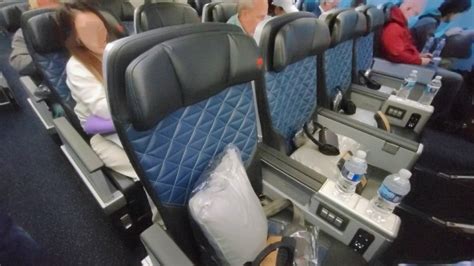
However, what truly differentiates Delta’s approach is its customized cabin configuration. By limiting total seat count to around 275 in certain layouts, the airline maximizes space for Delta One suites, premium select seating, and enhanced crew rest areas. This design philosophy aligns with the realities of ultra-long-haul travel, where comfort and premium experience directly influence revenue performance.
The Bigger Picture: Delta’s Ultra-Long-Haul Vision for 2026
Delta’s 2026 network is not just about flying farther—it is about flying smarter. Each route reflects a careful balance between distance, demand, competition, and aircraft capability. By focusing on ultra-long-haul markets, Delta is positioning itself to capture high-yield passengers willing to pay for nonstop convenience and premium comfort.
This strategy also reduces reliance on connecting hubs, streamlining travel for passengers while improving operational efficiency. As global travel demand continues to rebound and evolve, Delta’s investment in ultra-long-haul routes places it at the forefront of a new aviation frontier defined by endurance, precision, and profitability.
In a world where time is the ultimate luxury, Delta’s 17-hour flights are not just journeys—they are strategic statements of intent, redefining what modern air travel can achieve.