The strategic evolution of Iberia is entering a decisive phase in 2026, marked by a bold expansion into ultra-long-haul territory. Operating from its dominant hub in Madrid, the airline is leveraging its geographic advantage to push the limits of nonstop connectivity—stretching flight durations to nearly 16 hours and redefining the competitive landscape between Europe and the Americas, as well as Asia.
This expansion is not merely about distance. It is a calculated move rooted in network efficiency, fleet optimization, and demand forecasting. With nearly half of Madrid’s flights under its control, Iberia has built a powerful feeder system through domestic and short-haul European routes. These act as arteries feeding long-haul demand, allowing the airline to sustain routes that would otherwise struggle to achieve profitability.
The result is a carefully engineered long-haul network where each route plays a distinct role—some driven by business traffic, others by diaspora demand, and a few by strategic positioning in emerging markets.
The Longest Flight: Madrid to Tokyo Narita at the Edge of Operational Limits
At the pinnacle of Iberia’s long-haul network lies its flagship route between Madrid and Tokyo Narita Airport. This service has evolved into the airline’s longest nonstop flight, with a maximum block time reaching 15 hours and 35 minutes.
What makes this route particularly fascinating is not just its length, but its complexity. Due to geopolitical constraints—most notably the avoidance of Russian airspace—flight paths have been significantly altered. Eastbound flights traverse Central Asia, while westbound returns arc dramatically northward, often passing over Greenland. These deviations add substantial time and fuel requirements, pushing the aircraft and crew planning to their limits.

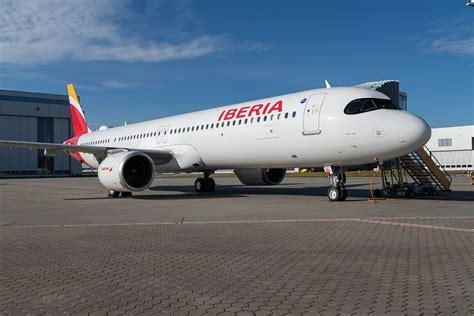
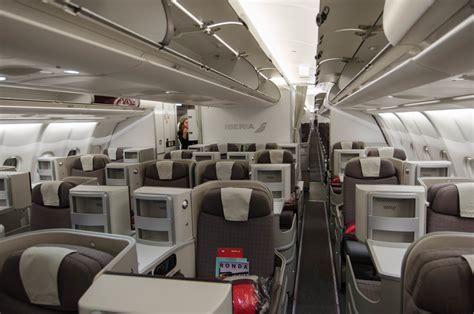
The route is operated exclusively by the Airbus A350-900, Iberia’s most advanced and highest-capacity aircraft. Configured with fully flat business class seats, an upgraded premium economy cabin, and dense yet efficient economy seating, the A350-900 is purpose-built for endurance missions like this.
Since its launch in 2016, the Madrid–Tokyo route has matured into a cornerstone of Iberia’s Asia strategy. Its endurance, however, underscores a broader reality: ultra-long-haul flying is as much about geopolitical navigation as it is about engineering capability.
Latin America Dominance: High-Density, High-Demand Routes
While Tokyo captures headlines, Iberia’s true strength lies across the Atlantic. Its network into Latin America is unmatched among European carriers, and several of its longest routes reflect this dominance.
Flights from Madrid to Santiago rank second in duration, reaching up to 14 hours and 26 minutes. This route sees peak frequency during the Southern Hemisphere summer, with as many as 13 weekly departures—an aggressive schedule that signals both strong demand and strategic importance.
Closely following are routes to Buenos Aires and Montevideo, each exceeding 13 hours. These flights are sustained by deep cultural, economic, and historical ties between Spain and South America, making them consistently resilient even during market downturns.
The synergy with regional partners, particularly codeshare agreements, further amplifies Iberia’s reach. This allows the airline to dominate not just point-to-point traffic, but also onward connections across the continent.
Monterrey: The Strategic Newcomer with Global Timing
Among the ten longest routes, one stands out not for its duration, but for its strategic timing: Madrid to Monterrey. Launching in June 2026, this route marks a significant expansion into northern Mexico’s industrial heartland.
Operated by the Airbus A330-200, the flight will run three times weekly with a block time exceeding 13 hours. While slightly shorter than Iberia’s flagship routes, its importance lies in market positioning.
Monterrey is not a traditional tourist hub. Instead, it is a powerhouse of manufacturing and commerce, attracting business travelers and high-yield corporate demand. The timing of the route’s launch—aligned with global events like the FIFA World Cup hosted partly in Mexico—adds an additional layer of demand stimulation.
Notably, Iberia will compete directly with Aeroméxico on this route, marking the first time two carriers operate simultaneously between Madrid and Monterrey. This introduces a competitive dynamic that could reshape pricing and service standards on the corridor.
North America Expansion: West Coast Reach and Market Adjustments
Iberia’s presence in North America continues to expand, with routes to Los Angeles and San Francisco ranking among its longest. These flights, ranging between 12 hours and 45 minutes, are critical for connecting Europe with the U.S. West Coast.
The San Francisco route, in particular, has demonstrated resilience despite fluctuating demand. After pandemic-related disruptions, the service returned with adjusted seasonal schedules. Reduced capacity led to improved load factors, highlighting a key strategy: fewer flights, higher efficiency, better yields.
This approach reflects a broader industry shift. Airlines are no longer chasing volume alone—they are optimizing for profitability per seat, particularly on ultra-long-haul routes where operational costs are significantly higher.
The 12-Hour Club: Efficient Long-Haul Connectivity
Beyond the headline-grabbing ultra-long routes, Iberia’s network includes several flights in the 12-hour range. Destinations such as Lima, Mexico City, and Guatemala City form the backbone of its long-haul operations.
These routes may not qualify as ultra-long-haul by strict definition, but they are operationally significant. They balance aircraft utilization, maintain network connectivity, and provide consistent revenue streams.
The distinction here is subtle but important: while ultra-long-haul flights capture attention, it is these “mid-long-haul” routes that sustain the network financially.
Fleet Strategy: Matching Aircraft to Mission Profiles
A defining feature of Iberia’s expansion is its disciplined fleet deployment. The airline strategically assigns aircraft based on route characteristics rather than simply maximizing capacity.
The A350-900 is reserved for the longest and most demanding routes, where fuel efficiency and passenger comfort are critical. Meanwhile, the A330-200 is deployed on slightly shorter routes where flexibility and cost efficiency take precedence.
This dual-aircraft strategy allows Iberia to maintain operational agility. It can scale capacity up or down, adjust frequencies, and respond to market shifts without overcommitting resources.
Ultra-Long-Haul Reality: Beyond Distance and Duration
Flying for 15 to 16 hours nonstop is not just a technical achievement—it is a logistical and human challenge. Crew scheduling, passenger comfort, fuel management, and contingency planning all become exponentially more complex as flight times increase.
For passengers, these flights demand a different mindset. Cabin design, seat ergonomics, and onboard service play a crucial role in shaping the experience. Iberia’s emphasis on premium cabins reflects an understanding that ultra-long-haul travelers are willing to pay for comfort.
From a network perspective, these routes are high-risk, high-reward. They require strong demand, efficient operations, and precise execution. But when successful, they offer unmatched connectivity and competitive advantage.
Conclusion: Iberia’s Long-Haul Blueprint for Global Relevance
Iberia’s 2026 expansion into ultra-long-haul flying is not an isolated development—it is a blueprint for long-term relevance in an increasingly competitive aviation landscape. By combining strategic route selection, optimized fleet deployment, and a powerful hub in Madrid, the airline is positioning itself as a key player in global connectivity.
The introduction of routes approaching 16 hours signals a new era where distance is no longer a barrier, but an opportunity. For Iberia, the challenge is not just to fly farther—but to do so smarter, more efficiently, and with a clear understanding of where demand truly lies.
As these routes take shape, one thing becomes clear: the future of long-haul travel will not be defined by who flies the most routes, but by who flies the right ones.