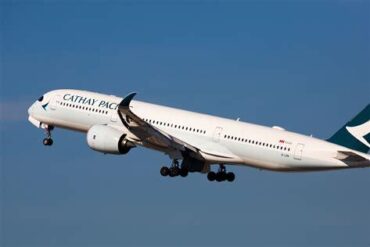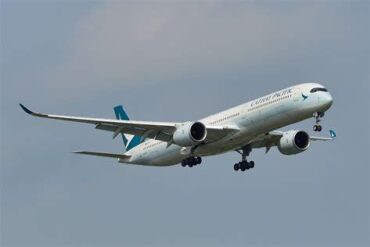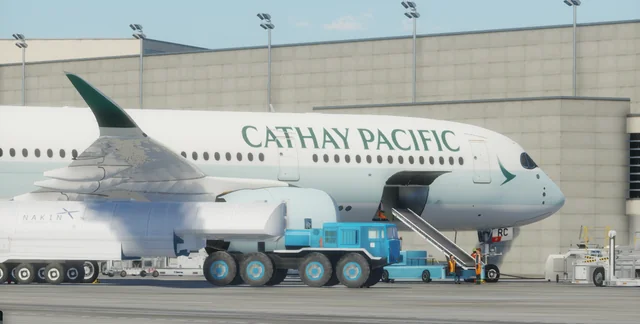
Cathay Pacific is entering a new era of ultra-long-haul aviation in 2026, quietly building one of the world’s most strategically powerful intercontinental networks. While Gulf carriers often dominate discussions about long-range flying, Hong Kong’s flag carrier has assembled a formidable operation centered around efficiency, premium demand, and some of the longest nonstop flights on Earth. Backed by a fleet heavily dominated by widebody aircraft, Cathay Pacific is now pushing deeper into the ultra-long-range segment with routes approaching — and even exceeding — the 17-hour threshold.
The airline’s transformation reflects far more than schedule expansion. It demonstrates how modern aviation economics, geopolitical airspace restrictions, premium business travel, and advanced twin-engine aircraft are redefining the viability of nonstop global connectivity. Cathay Pacific’s network strategy for 2026 reveals a carrier aggressively optimizing its Airbus A350 fleet while strengthening Hong Kong International Airport’s role as one of Asia’s premier long-haul transit hubs.
With 143 widebody aircraft making up roughly 90% of its passenger fleet, Cathay Pacific now ranks among the world’s most widebody-intensive airlines. That massive twin-aisle presence gives the carrier an unusually high average seat count per flight, exceeded globally only by Emirates among major international airlines. The result is a network designed not for regional dominance, but for sustained intercontinental reach.
The centerpiece of that strategy is the airline’s growing portfolio of ultra-long nonstop routes connecting Hong Kong with major North American and European gateways.
Dallas Fort Worth Becomes Cathay Pacific’s Longest Flight
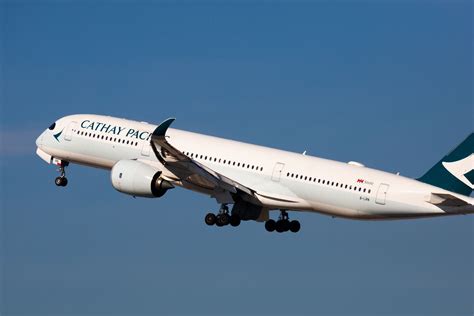
Cathay Pacific’s longest route in 2026 is now the nonstop service between Dallas/Fort Worth International Airport and Hong Kong International Airport. Operating at up to 17 hours and 15 minutes, the flight has rapidly become one of the most significant additions to the airline’s network.
The route only launched recently, yet it already represents a textbook example of alliance-driven aviation economics. Cathay Pacific operates the service in close partnership with American Airlines, leveraging Dallas/Fort Worth’s enormous domestic connectivity across the United States. More than half of the passengers on the route reportedly connect onward through the Texas mega-hub, highlighting how ultra-long-haul profitability increasingly depends on feed traffic rather than solely local demand.
Cathay deploys both the Airbus A350-1000 and the smaller Airbus A350-900 on the route depending on seasonal scheduling requirements. The A350 family has become the backbone of the airline’s ultra-long-range ambitions thanks to exceptional fuel efficiency, lower operating costs, and strong passenger comfort on flights lasting nearly an entire day.
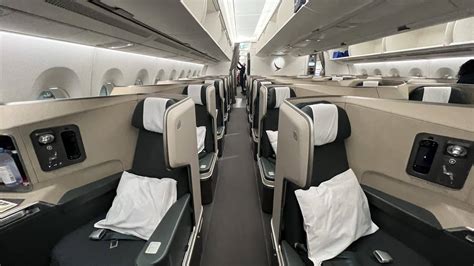
Load factors on the Dallas route have reportedly approached 90%, an extraordinary achievement for such an operationally demanding sector. In modern aviation, sustaining passenger demand over flights exceeding 17 hours requires a highly refined premium strategy involving business-class comfort, optimized crew rotations, cargo revenue, and carefully calibrated departure timings.
New York, Los Angeles, And Chicago Anchor The North American Expansion
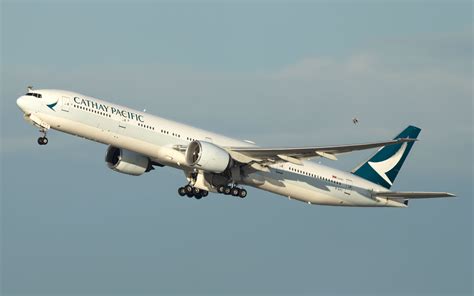
Behind Dallas, Cathay Pacific’s second-longest flight is the nonstop route from John F. Kennedy International Airport back to Hong Kong. Clocking in at up to 16 hours and 40 minutes, the route remains one of the airline’s flagship services and operates up to three times daily using a mix of Airbus A350s and the legendary Boeing 777-300ER.
New York continues to serve as one of the most competitive premium long-haul markets in the world, making frequency almost as important as aircraft size. Cathay’s ability to sustain multiple daily departures demonstrates the enduring demand for nonstop Asia–US East Coast connectivity despite growing competition from both Gulf carriers and mainland Chinese airlines.
Los Angeles ranks third on the airline’s list of longest flights, reaching block times of 16 hours and 15 minutes. The California gateway remains critically important because of its enormous Asian diaspora traffic, cargo demand, entertainment industry connections, and transpacific corporate travel flows.
Meanwhile, the route linking Hong Kong with O’Hare International Airport stretches to roughly 16 hours. Chicago has evolved into a major connecting hub for Cathay Pacific, particularly for travelers originating across the American Midwest.
Russian Airspace Restrictions Continue To Reshape Flight Times
One of the defining operational realities behind Cathay Pacific’s ultra-long-haul schedules is the airline’s continued inability to use Russian airspace following the geopolitical fallout from the war in Ukraine. Those restrictions have fundamentally altered routing efficiency between Asia and Europe as well as parts of North America.
Flights that once utilized polar shortcuts must now operate along significantly longer paths, increasing fuel burn, operating expenses, and overall flight duration. The effect is especially visible on westbound flights returning to Hong Kong, where strong headwinds compound already extended routings.
The Boston service illustrates this unusual dynamic perfectly. Flights from Hong Kong to Logan International Airport can take up to 15 hours and 55 minutes, making the eastbound leg longer than the return sector. That reversal highlights how modern airline scheduling is increasingly shaped by geopolitics as much as geography.
Longer flight paths also create environmental and financial consequences. Additional fuel burn raises emissions while simultaneously increasing operational costs, placing airlines unable to access Russian airspace at a competitive disadvantage compared with carriers from countries still permitted to overfly the region.
Toronto, Vancouver, And San Francisco Strengthen Cathay’s Pacific Dominance
Cathay Pacific’s Canadian operations remain among the airline’s most strategically valuable assets. The Hong Kong–Toronto route now reaches approximately 15 hours and 50 minutes and operates with high seasonal frequency using the Airbus A350 family.
Toronto’s role extends beyond passenger traffic alone. The city provides strong cargo demand, substantial Asian business links, and a large Hong Kong expatriate population that has supported the route for decades.
Vancouver remains another cornerstone destination. Flights approaching 15 hours and 40 minutes are primarily operated by the Boeing 777-300ER, an aircraft particularly valued for its substantial cargo capacity beneath the passenger cabin. Freight revenue has become increasingly important on ultra-long-haul routes where operating costs are exceptionally high.
San Francisco also continues to hold a critical position within Cathay’s North American network. The technology corridor connecting Silicon Valley with Hong Kong supports strong premium-cabin demand year-round, helping justify twice-daily operations despite intense competition.
London Heathrow And Madrid Highlight Cathay’s European Reach
Although North America dominates Cathay Pacific’s longest flights, Europe still plays a central role in the airline’s global strategy. The Hong Kong to Heathrow Airport service reaches block times approaching 14 hours and 50 minutes while operating up to five daily flights.
That enormous frequency underscores London’s unmatched importance as both a financial hub and premium travel market. Cathay deploys multiple aircraft types on the route, including the Airbus A350-1000 and Boeing 777-300ER, allowing the airline to balance premium demand with cargo capacity.
Madrid joins Heathrow among Cathay Pacific’s ten longest routes despite operating only four weekly flights. Spain’s capital has emerged as an increasingly valuable gateway for both tourism and commercial traffic between Asia and Southern Europe.
Cathay Pacific’s 2026 ultra-long-haul network ultimately reflects a broader transformation occurring across global aviation. Airlines are no longer simply chasing distance records. Instead, they are building highly calculated long-range systems designed around alliance connectivity, fuel efficiency, cargo economics, and premium passenger experience.
For Cathay Pacific, the strategy positions Hong Kong as one of the world’s most important ultra-long-haul crossroads — a role likely to grow even further as next-generation aircraft continue pushing the boundaries of nonstop global travel.