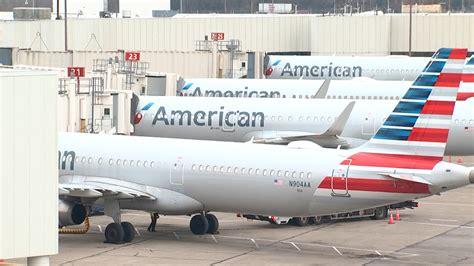
American Airlines is quietly redrawing the global map. In 2026, the world’s largest carrier by fleet size and passenger volume is leaning harder into ultra-long-haul flying, unveiling a network of nonstop routes stretching close to 17 hours gate-to-gate. These are not symbolic flights or marketing stunts. They are carefully timed, aircraft-specific links that reflect how modern aviation economics, geopolitics, and passenger demand are converging at the very edges of what commercial flight can sustain.
Long-haul flying still represents a surprisingly small slice of American’s overall operation. Despite its scale, only about 2% of American Airlines’ flights qualify as long-haul, well below United Airlines and Delta Air Lines. Yet within that narrow slice lies disproportionate strategic value. Ultra-long routes command premium fares, lock in corporate contracts, and strengthen alliance relevance across continents where frequency matters more than sheer volume.
What makes 2026 notable is not just the distance, but the concentration. Ten routes now cluster at the extreme end of American’s schedule, many exceeding 15 hours and several approaching the 17-hour mark. These services connect fortress hubs in Texas and the Northeast to Asia-Pacific and the Middle East, reshaping how American competes beyond the Atlantic.
By block time, measured from chocks-off to chocks-on and including taxi and delay buffers, these routes represent the airline’s operational ceiling. They also reveal where American believes global demand will hold firm even as fuel costs, crew constraints, and aircraft availability remain unforgiving.
A Network Built at the Limits of Human Endurance
Ultra-long-haul routes are not planned casually. Every additional hour compounds fuel burn, crew duty limits, aircraft utilization risk, and recovery complexity. American’s decision to expand this segment signals confidence in both its widebody fleet strategy and the durability of long-distance demand in a fragmented global travel market.
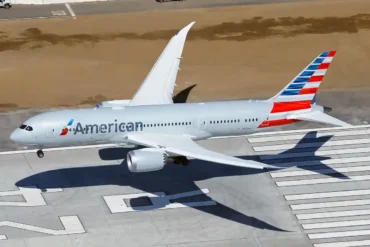
At the heart of this expansion is the Boeing 787-9 Dreamliner, an aircraft optimized for precisely these missions. With lower fuel consumption, improved cabin pressurization, and extended range, the 787-9 enables routes that were once economically or physically impractical. Select missions still rely on the 777-200ER and 777-300ER, particularly where cargo demand or peak-season capacity justifies the higher operating cost.
These aircraft are deployed surgically. Frequencies are often daily, but seasonality plays a decisive role. Northern winter schedules dominate transpacific routes to Australia and New Zealand, while Asia and the Middle East maintain year-round relevance tied to business travel and diaspora traffic.
Dallas/Fort Worth to Brisbane: American’s Longest Route Ever
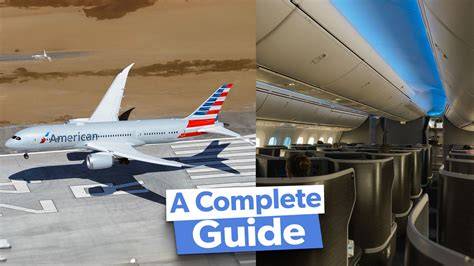
The crown jewel of American’s long-haul network is Dallas/Fort Worth to Brisbane, clocking in at a maximum block time of 16 hours and 50 minutes. Launched in late 2024, this route stretches the Dreamliner to its practical limits and places American firmly in the ultra-long-haul club dominated by a handful of global carriers.
This service operates daily during the northern winter, aligning with peak Australian summer demand. The route’s existence is no accident. Dallas/Fort Worth is American’s most powerful hub, offering unmatched domestic feed, while Brisbane provides a less congested alternative to Sydney with strong inbound leisure appeal.
Early performance data shows the route is still maturing. Load factors in its first season hovered just above 73%, respectable for a new ultra-long service but not yet compelling. Routes of this length often require multiple seasons to stabilize, especially when competing against one-stop options with aggressive pricing.
Asia Reasserts Its Gravity in American’s Network
Asia features prominently across American’s longest routes, signaling a deliberate rebalancing after years of transatlantic emphasis. Delhi to New York JFK, at 16 hours and 45 minutes, ranks second only to Brisbane. This year-round Dreamliner service caters to one of the fastest-growing premium long-haul markets, blending corporate travel, government traffic, and a vast visiting-friends-and-relatives segment.
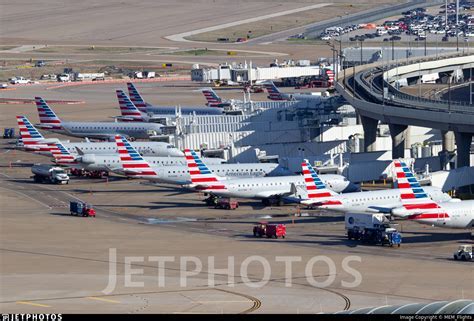
From Dallas/Fort Worth, American operates nonstop to Shanghai Pudong, Seoul Incheon, Tokyo Narita, and seasonally to Tokyo Haneda. These routes range from roughly 14 to over 16 hours and reflect a hub-centric strategy: consolidate long-haul risk at a fortress hub with unparalleled domestic connectivity.
The upcoming Dallas/Fort Worth to Tokyo Haneda seasonal service is particularly telling. The route’s upgauge from the 787-8 to larger aircraft underscores strong performance and rising demand for premium nonstop access to Tokyo’s closer-in airport.

Australia and New Zealand: Seasonal Distance, Strategic Presence
Beyond Brisbane, American’s network reaches deep into the South Pacific. Dallas/Fort Worth to Auckland, timed at just over 15 hours, returns seasonally, while Los Angeles to Sydney remains a daily staple using the high-capacity 777-300ER.
The short-lived Los Angeles to Brisbane route, ending in early 2026, illustrates how tactical some ultra-long-haul deployments can be. Introduced during a temporary capacity gap at Qantas, the route was always designed as a stopgap rather than a permanent fixture. Its withdrawal is less a retreat than a recalibration, freeing aircraft for more defensible markets.
These Pacific routes are as much about alliance dynamics as point-to-point demand. They reinforce American’s relevance within oneworld while ensuring its metal remains visible in markets where nonstop flying carries outsized brand value.
The Middle East and the Power of Directional Flying
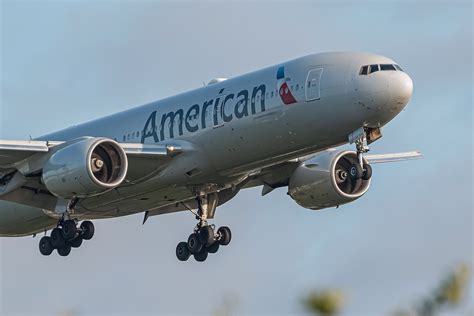
American’s longest Middle Eastern service, Doha to Philadelphia, clocks in at 14 hours and 40 minutes on the return leg. Direction matters here. Westbound flights often push block times to their limits due to prevailing winds, slot constraints, and airspace considerations.
Philadelphia’s role is notable. While not American’s largest hub, it provides efficient transatlantic and Middle Eastern connectivity with less congestion than New York. The route also complements Qatar Airways’ extensive US network, reinforcing alliance depth without oversaturating primary gateways.
This directional asymmetry highlights how ultra-long-haul flying is shaped as much by meteorology and geopolitics as by aircraft range.

Why These 10 Routes Matter in 2026
Taken together, American Airlines’ ten longest routes reveal a carrier willing to operate at the edge of feasibility where strategic payoff justifies the risk. These flights are not about chasing records. They are about locking in nonstop relevance in markets where time savings translate directly into pricing power.
Ultra-long-haul routes amplify both success and failure. When they work, they anchor hubs, deepen alliances, and elevate brand perception. When they falter, they disappear quietly, replaced by the next calculated experiment. In 2026, American’s willingness to sustain flights approaching 17 hours suggests confidence not just in aircraft performance, but in a global travel market that still values the simplest luxury of all: flying farther without stopping.