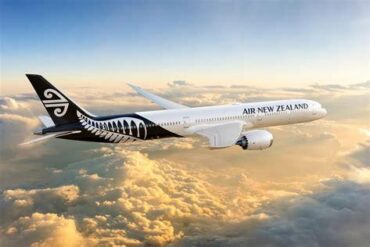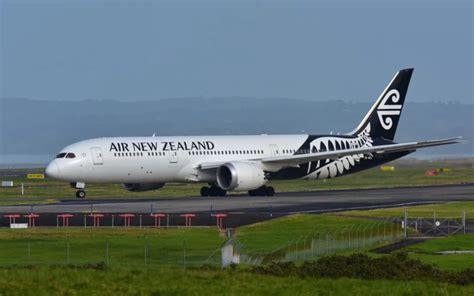
Air New Zealand is stepping deeper into the ultra-long-haul era, where endurance, precision scheduling, and passenger comfort converge at extreme distances. Operating from one of the most geographically isolated hubs in global aviation, Auckland, the airline has naturally evolved into a specialist in marathon flights that stretch the limits of both aircraft capability and human patience. By 2026, its long-haul network is set to intensify further, with ten routes exceeding 11 hours of block time and one extraordinary service surpassing the 18-hour threshold.
These services are not just about distance; they reflect a strategic positioning of New Zealand as a critical connector between the South Pacific, North America, and East Asia. Using Boeing 777-300ERs and 787-9 Dreamliners, Air New Zealand balances range efficiency with cabin innovation, ensuring that even the longest journeys remain commercially viable and operationally stable. The result is a network that feels less like a set of isolated routes and more like a carefully drawn global arc radiating from Auckland.
Among all these operations, one route stands as a flagship of endurance aviation, setting the tone for everything else in the airline’s ultra-long-haul portfolio.
The Auckland–New York JFK service leads the pack with an 18-hour and five-minute return sector, making it one of the longest scheduled commercial flights in the world. Operating three times weekly with the Boeing 787-9, it demonstrates how modern composite aircraft have reshaped what is physically and economically possible in intercontinental travel. This route also symbolizes Air New Zealand’s bold entry into the US East Coast market, extending its reach far beyond traditional Pacific crossings and into transatlantic competition zones via the southern hemisphere corridor.
What makes this service particularly significant is not just its duration, but its role as a scheduling keystone. The aircraft rotation, crew management, and fuel planning must all align with precision, as even minor disruptions ripple across a tightly synchronized long-haul timetable. In practice, this single route embodies the operational complexity of the entire network.
North America as the Backbone of Ultra-Long Operations
North America continues to dominate Air New Zealand’s longest flights in 2026, reflecting both strong demand and established diaspora and business travel links. After New York, Houston stands as the second-longest route at 14 hours and 50 minutes, operated up to five times weekly using a mix of Boeing 777-300ER and 787-9 aircraft. Vancouver follows closely, with flight times approaching 14 hours, benefiting from high seasonal frequency that can reach daily operations during peak demand.
Los Angeles and San Francisco round out the core West Coast triangle, each sitting just under 13 hours of flying time. These routes are particularly important because they function as flexible capacity valves for transpacific demand, allowing the airline to adjust frequency depending on tourism flows, corporate travel cycles, and seasonal migration patterns. The consistency of these city pairs underscores how deeply embedded North American connectivity has become in Air New Zealand’s long-haul identity.
East Asia’s Expanding Long-Haul Web
While North America dominates in duration, East Asia represents density and network diversification. Shanghai emerges as the longest Asian destination at 12 hours and 10 minutes, followed closely by Hong Kong, Taipei, and Tokyo Narita, all clustered in the 11-hour range. These routes reflect a different operational logic: higher frequency, shorter average stage lengths compared to the Americas, and stronger outbound travel symmetry.
A particularly notable development is the Christchurch–Tokyo Narita service, marking the return of direct South Island connectivity to Japan after more than a decade. Scheduled for three weekly rotations with the 787-9, it adds a strategic decentralization layer to Air New Zealand’s network, reducing sole dependence on Auckland as the international gateway. This diversification also improves resilience during peak disruption periods and spreads tourism inflows more evenly across the country.
Fleet Strategy and the Human Experience at 40,000 Feet
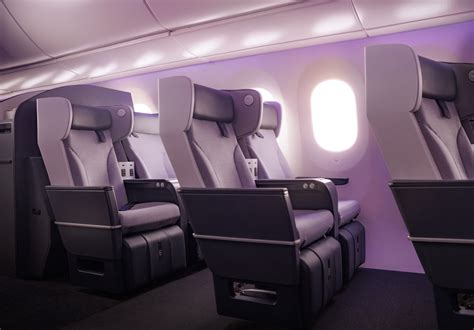
The backbone of these ultra-long flights is the Boeing 787-9 Dreamliner, complemented by the larger 777-300ER on selected high-demand routes. The 787’s fuel efficiency and cabin pressurization advantages make it particularly suited for 16–18 hour sectors, where passenger comfort becomes as critical as range performance. Cabin layouts are increasingly optimized for sleep cycles, with attention to lighting systems, humidity control, and noise reduction shaping the onboard experience.
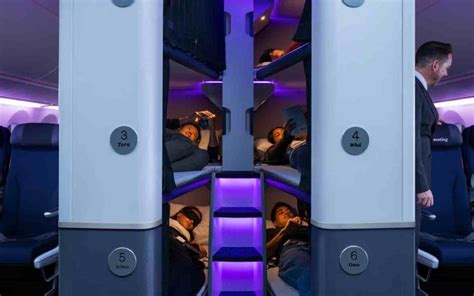
Air New Zealand is also preparing to introduce its Skynest sleep pod concept, initially on the Auckland–New York route. Designed for economy passengers, it offers lie-flat rest pods in timed sessions, transforming long-haul travel into a more segmented rest experience rather than a continuous endurance test. On an 18-hour flight, this innovation effectively reframes economy travel comfort standards without requiring a full cabin redesign.
Strategic Outlook for a Longer Global Reach
Looking ahead, Air New Zealand’s ultra-long-haul network reflects a broader shift in global aviation: fewer stopovers, longer direct connections, and increasingly aircraft-driven route design rather than purely market-driven geography. The airline’s ten longest routes illustrate how a small, remote nation can maintain global relevance by leveraging geography as an advantage rather than a limitation.
As demand for seamless intercontinental travel grows, especially across business and premium leisure segments, these 11-to-18-hour flights are likely to become more normalized within the airline’s identity. What once felt exceptional is steadily becoming routine, reshaping expectations of distance, time, and connectivity in modern air travel.