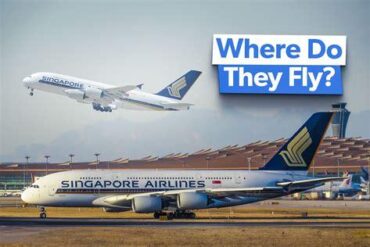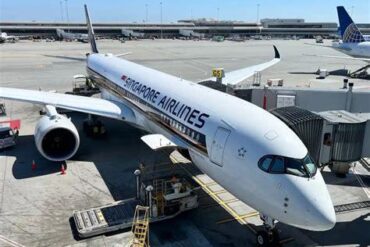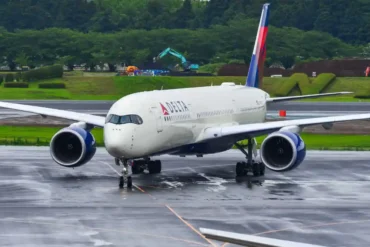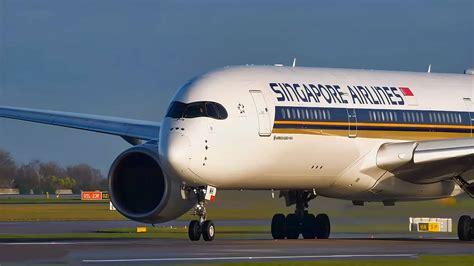
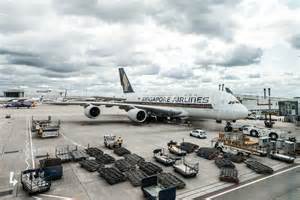
Singapore Airlines continues to define the modern ultra-long-haul travel market in 2026, operating some of the planet’s most ambitious nonstop routes from its global hub at Singapore Changi Airport. With a fleet heavily built around widebody aircraft and a reputation for premium long-distance service, the airline has transformed geography into a competitive advantage. While many carriers rely on stopovers, Singapore Airlines has doubled down on direct flights linking Southeast Asia with North America and Europe in journeys stretching close to an entire day.
Its current passenger fleet reflects that strategy. The airline operates Airbus A350-900s, Boeing 787-10s, Boeing 777-300ERs, Airbus A380s, and Boeing 737 MAX 8 aircraft. More than four-fifths of the fleet are widebodies, a clear signal that long-haul connectivity remains central to its business model. That focus allows Singapore Airlines to rank among the world’s leading international carriers despite having no domestic market to support volume.
What makes these routes especially notable is not just mileage, but block time—the full gate-to-gate schedule including taxiing, airborne time, and operational buffers. In practical terms, block time determines how passengers experience the route and how airlines schedule crews, aircraft rotations, and fuel loads. In 2026, no carrier uses this concept more dramatically than Singapore Airlines.
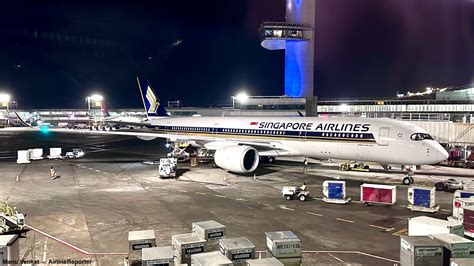
New York JFK to Singapore: The World’s Longest Scheduled Nonstop Flight
The crown jewel of the network is the return sector from New York John F. Kennedy International Airport to Singapore Changi. Scheduled at up to 19 hours and 15 minutes, this route stands as the longest scheduled commercial nonstop service in the world in 2026. It is operated daily by the Airbus A350-900ULR, a specialized ultra-long-range variant designed specifically for missions of this scale.
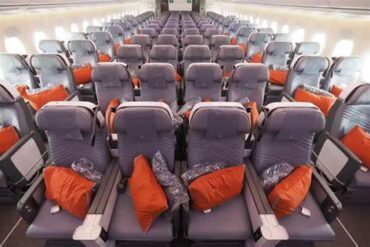
Inside, the aircraft features only Business Class and Premium Economy seating. That reduced-density cabin layout helps maximize fuel efficiency, range, and passenger comfort. On flights approaching twenty hours, cabin space and seat quality are no luxury—they are operational necessities. Singapore Airlines understood that early and built a product tailored to endurance travel.
Newark to Singapore: A Close Second in the Endurance Race
Only five minutes shorter than the JFK service, the Newark Liberty International Airport to Singapore route remains another flagship operation. Also flown daily by the A350-900ULR, it has become one of the most recognized business travel links in aviation.
The route’s consistency proves there is real demand for direct travel between the US Northeast and Southeast Asia. For finance, pharmaceuticals, technology, and corporate travelers, avoiding a stopover can save substantial time while reducing missed connections and fatigue.
Los Angeles to Singapore: West Coast Powerhouse Route
Singapore Airlines’ third-longest nonstop route in 2026 is Los Angeles back to Singapore, scheduled at up to 17 hours and 50 minutes. The service operates ten times weekly and uses both the standard A350-900 and the A350-900ULR on selected frequencies.
Los Angeles is strategically valuable because it connects Singapore Airlines to one of America’s largest premium travel markets while also feeding traffic across Asia through Changi. The route combines leisure demand, entertainment industry traffic, cargo potential, and onward connections to Australia, India, and Southeast Asia.
San Francisco and Seattle Strengthen US Expansion
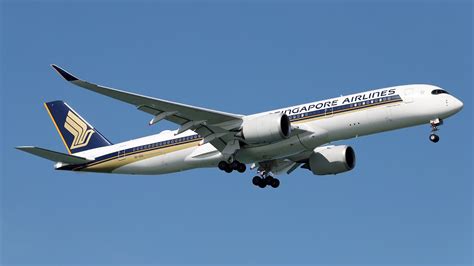
San Francisco ranks fourth among the airline’s longest nonstop services, reaching block times of 17 hours and 30 minutes. With double-daily frequencies on some schedules, it is one of the most important North American links in the network. Silicon Valley traffic, technology partnerships, and high-value corporate travel continue to drive strong performance.
Seattle follows in fifth place at up to 17 hours. Since launching in 2019, the route has matured into a high-performing market. Strong passenger loads show how effectively Singapore Airlines identified untapped demand between the Pacific Northwest and Asia.
Seattle’s rise is particularly significant because it demonstrates that ultra-long-haul success is no longer limited to legacy gateways like New York or Los Angeles. Secondary business cities can now sustain nonstop links when supported by modern aircraft economics.
London Heathrow and Gatwick: Twin UK Long-Haul Giants
Two London routes share sixth place at 14 hours and 30 minutes. Heathrow remains the premium anchor, served multiple times daily by a mix of A350-900s, Airbus A380s, and Boeing 777-300ERs. Gatwick complements the strategy with daily or higher seasonal frequency using A350 aircraft.
Operating both airports gives Singapore Airlines access to separate traveler segments. Heathrow captures corporate and alliance demand, while Gatwick supports leisure passengers and South London catchment traffic. Few airlines can profitably serve both airports nonstop from Asia at scale.
Manchester, Paris, Barcelona, and Brussels Complete the Top Ten
Europe remains deeply important to Singapore Airlines, and four more cities complete the list of longest nonstop routes.
Manchester takes seventh place at up to 14 hours and 25 minutes, giving Northern England direct access to Asia without a London transfer. Paris Charles de Gaulle follows at 14 hours and 15 minutes, supported by strong tourism and premium traffic.
Barcelona enters next at around 14 hours and 5 minutes, with selected nonstop flights complemented by services routed through Milan. Brussels rounds out the top ten at 13 hours and 55 minutes, a route welcomed into the network recently and one that strengthens links to European institutions and business traffic.
These cities may not match New York for duration, but they highlight Singapore Airlines’ ability to profitably connect distant markets with precision scheduling and right-sized aircraft.
Why Singapore Airlines Leads the Ultra-Long-Haul Market
Few airlines have committed so aggressively to the nonstop model. The combination of A350 efficiency, premium-heavy cabins, Changi Airport connectivity, and disciplined route planning has given Singapore Airlines a commanding position in flights exceeding fourteen hours.
The strategy also builds brand value. Travelers often associate the airline with comfort, reliability, and technological sophistication—critical factors when choosing who to trust for nearly a full day in the air.
As competitors explore similar missions, Singapore Airlines already has years of experience managing crew rest logistics, fuel planning, passenger wellness, and schedule resilience on these marathon sectors.
2026 Outlook: Even Longer Journeys Ahead
The 2026 route map confirms one clear reality: Singapore Airlines remains the benchmark for ultra-long-haul aviation. Its 19-hour services are no publicity stunt—they are profitable, repeatable, and strategically important. As aircraft range improves and passenger demand for nonstop convenience rises, even more distant city pairs may soon become viable.
For now, if the world wants to know what the future of long-distance flying looks like, it is already departing daily from Singapore.