Delta Air Lines is entering a new era of ultra-long-haul aviation, expanding its global network with some of the longest nonstop flights operated by any US carrier. The airline’s upcoming schedule reveals a growing focus on routes that push the limits of aircraft range, passenger endurance, and long-distance connectivity.
Among the most anticipated additions is the new Los Angeles International Airport (LAX) to Manila Ninoy Aquino International Airport (MNL) nonstop service. Beginning in March 2027, the route will become one of Delta’s longest flights, connecting two major markets that have historically depended heavily on connecting services.
The Manila route joins two other major additions to Delta’s ultra-long-haul network: Los Angeles to Hong Kong, which launched in June 2026, and Atlanta to Riyadh, scheduled to begin in October 2026. Together, these services highlight Delta’s strategy of strengthening its presence across Asia and the Middle East while increasing the importance of LAX as a global gateway.
Delta’s Longest Nonstop Flights Push Beyond 15 Hours
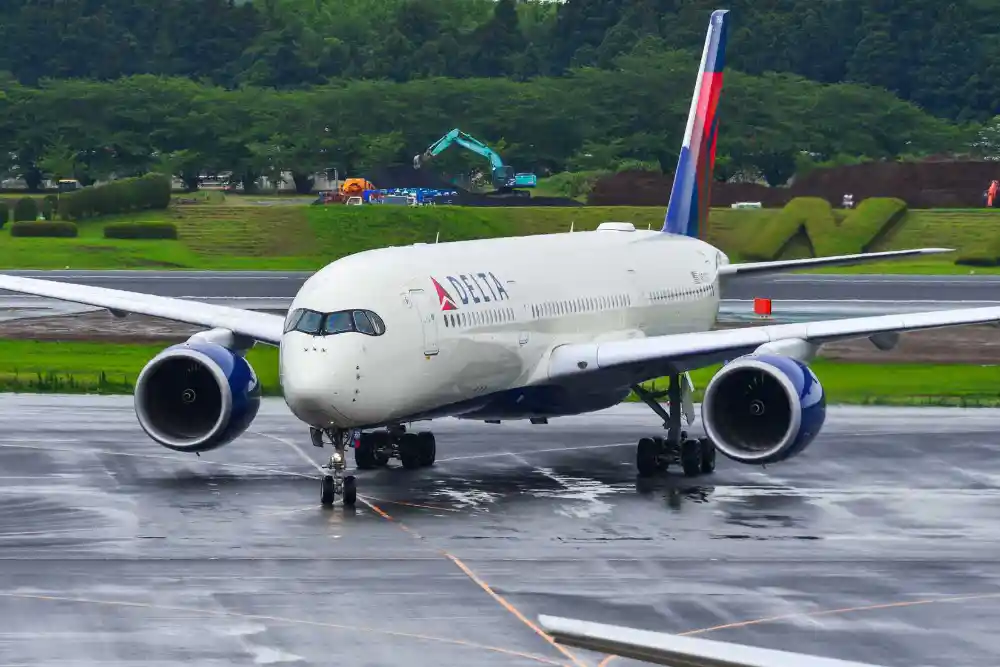
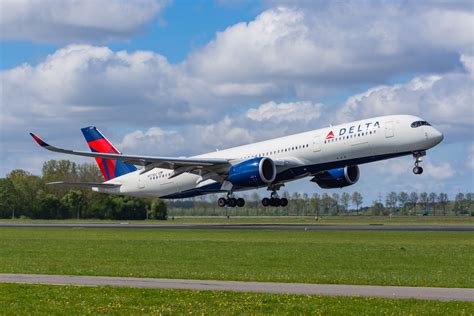
Delta’s longest routes demonstrate how modern Airbus A350-900 aircraft are transforming international travel. Based on scheduled operations between August 2026 and March 2027, the airline’s network includes multiple flights with maximum block times exceeding 15 hours.
The longest flight remains the return journey from Johannesburg, South Africa, to Atlanta, Georgia, with a maximum scheduled block time of 17 hours and 5 minutes. This route represents one of the most demanding commercial aviation missions because of its distance, fuel requirements, and operational complexity.
Delta specifically introduced a 275-seat Airbus A350-900 configuration partly to support extremely long routes like Johannesburg-Atlanta. Compared with higher-density aircraft layouts, this version provides more range capability, improved efficiency, and a more premium passenger experience.
The lighter configuration allows Delta to optimize the aircraft for missions where every kilogram matters. On flights lasting more than 15 hours, airlines must carefully balance passenger capacity, cargo loads, fuel reserves, and performance requirements.
Full List of Delta’s 11 Longest Nonstop Routes
Delta’s ultra-long-haul network includes services across Africa, Asia, Australia, and the Middle East. The following routes represent the carrier’s longest scheduled nonstop operations.
- Johannesburg (JNB) to Atlanta (ATL): 17 hours 5 minutes
Operated up to daily using the 275-seat Airbus A350-900.
- Cape Town (CPT) to Atlanta (ATL): 16 hours 35 minutes
Operated several times weekly with the same long-range A350 configuration.
- Detroit (DTW) to Shanghai Pudong (PVG): 16 hours 15 minutes
A key China connection operated daily with Airbus A350 aircraft.
- Los Angeles (LAX) to Melbourne (MEL): 16 hours 10 minutes
A major Australia route increasing Delta’s Pacific presence.
- Atlanta (ATL) to Seoul Incheon (ICN): 16 hours
A critical Asia connection supported by Delta’s partnership with Korean Air.
- Los Angeles (LAX) to Hong Kong (HKG): 15 hours 45 minutes
A newly launched route connecting two major financial centers.
- Riyadh (RUH) to Atlanta (ATL): 15 hours 35 minutes
A new Middle East service beginning in October 2026.
- Detroit (DTW) to Seoul Incheon (ICN): 15 hours 30 minutes
Another important transpacific operation.
- Los Angeles (LAX) to Sydney (SYD): 15 hours 20 minutes
One of Delta’s longest-running Pacific services.
- Los Angeles (LAX) to Brisbane (BNE): 14 hours 40 minutes
A growing Australia connection.
- Los Angeles (LAX) to Manila (MNL): 14 hours 40 minutes
The newest addition beginning March 2027.
These routes show a clear pattern: Delta is increasingly using its A350 fleet to serve markets where nonstop flying provides a major advantage over connecting alternatives.
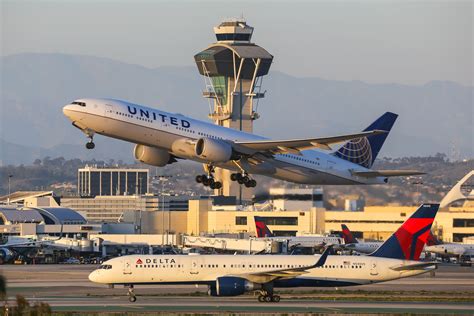
Why Delta Is Expanding Long-Haul Flights From Los Angeles
Delta’s investment in Los Angeles International Airport is one of the biggest drivers behind its latest international expansion. The airline has been increasing departures from LAX while adding more nonstop services to Asia-Pacific destinations.
Between August 2026 and March 2027, Delta is scheduled to operate an average of 16 daily nonstop flights to Asia, representing growth compared with the previous year. The airline currently operates services from LAX to destinations including Hong Kong, Shanghai, and Tokyo Haneda.
The addition of Manila strengthens Delta’s position in a market with significant passenger demand. Data from the previous 12 months showed approximately 379,000 round-trip passengers traveled between LAX and Manila. A large share of those travelers relied on connecting flights, leaving room for a nonstop competitor.
The Philippines-US market has strong demand because of business relationships, tourism, and large communities of Filipino travelers living in North America. Until Delta launches its service, Philippine Airlines has been the only airline offering nonstop flights between LAX and Manila.
The Challenge Behind Operating a 17-Hour Flight
While ultra-long-haul routes create new opportunities, they also introduce major financial challenges. The LAX-Manila route is a good example of the difficulty airlines face when operating extremely long flights in markets with limited premium demand.
The distance between Los Angeles and Manila is approximately 6,348 nautical miles, or around 11,757 kilometers. Longer flights require significantly more fuel, increase aircraft utilization challenges, and create higher maintenance costs.
Unlike routes connecting major financial centers, Manila has historically produced lower average fares because a larger percentage of passengers travel for visiting friends and relatives rather than high-paying business trips.
Average base fares between LAX and Manila have been significantly lower than comparable Delta Asia routes. This creates a question for Delta: can a premium airline product generate enough additional revenue to offset the higher cost of operating such a long flight?
The airline will rely on several advantages, including its reputation for service quality, loyalty program strength, and premium cabin offerings. However, maintaining profitability on ultra-long routes requires careful management of capacity and pricing.
The Future of Delta’s Ultra-Long-Haul Strategy
Delta’s expanding long-distance network reflects a broader shift in commercial aviation. Modern aircraft such as the Airbus A350-900 allow airlines to connect cities that previously required one or more stops.
For passengers, nonstop flights reduce travel time, simplify international journeys, and create more convenient connections between distant regions. For airlines, these routes provide opportunities to capture high-value traffic and strengthen global brand recognition.
Delta’s 11 longest nonstop flights demonstrate how the airline is balancing ambition with operational efficiency. From Johannesburg to Atlanta to the upcoming Manila service, these routes represent the next generation of global air travel.
As more airlines compete in the ultra-long-haul market, Delta’s success will depend on finding the right combination of aircraft technology, network strategy, and passenger demand. The arrival of these 17-hour-class flights marks another major step in the evolution of nonstop international aviation.