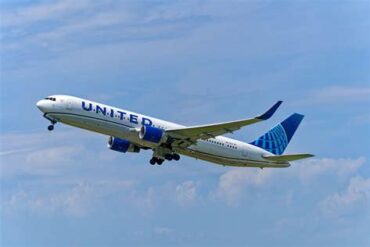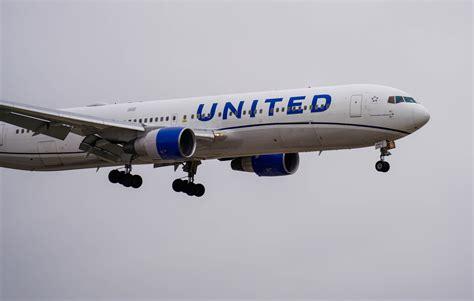
A United Airlines Boeing 767-300ER crossing the North Atlantic in the small hours of Monday morning was forced to abandon its journey to the Netherlands and divert to St. John’s International Airport (YYT) in Newfoundland, Canada, after the crew reported a serious problem with one of the jet’s two engines. The aircraft, operating as flight UA946, had departed Washington Dulles International Airport (IAD) bound for Amsterdam Airport Schiphol (AMS), carrying 122 passengers and nine crew members.
The trouble unfolded while the widebody was cruising at 37,000 feet (11,300 m) roughly 370 nautical miles (685 km) east of St. John’s, a stretch of open ocean where diversion options are measured in hours rather than minutes. When the crew detected an issue with one of the aircraft’s Pratt & Whitney PW4060 powerplants, they initiated a descent to approximately 26,000 feet (7,920 m) — a standard response that reduces strain on the remaining engine and improves the aircraft’s ability to maintain altitude and control on a single powerplant.
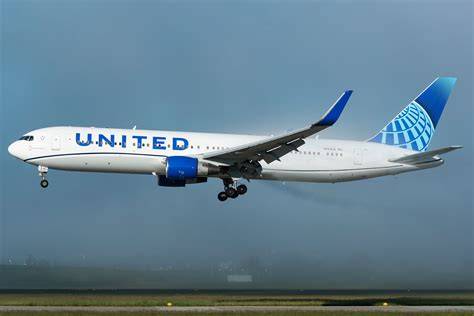
It was during that descent that the flight crew declared an emergency, signalling to air traffic controllers that the situation warranted priority handling and immediate support. According to Aviation Herald, the 767 arrived at St. John’s with one engine shut down, confirming that the crew had been managing a genuine single-engine scenario rather than a precautionary alert. The jet touched down safely on the airport’s runway 28 approximately 90 minutes after the diversion decision was made, a textbook outcome for an emergency that could have deteriorated rapidly over the Atlantic.
United Airlines has described the event as an “engine issue” rather than confirming the shutdown directly. A carrier spokesperson offered a carefully worded statement: “United flight 946 from Washington Dulles to Amsterdam diverted to St. John’s International Airport on Sunday to address an engine issue. The plane landed safely, and passengers deplaned normally. We arranged overnight hotel accommodations for our customers and are sending a different aircraft to take them to Amsterdam.” The distinction matters, because airlines routinely avoid language that pre-empts an official investigation.
The operational consequences rippled well beyond the diversion itself. With the 767 stranded on the wrong side of the Atlantic and unable to complete its rotation, the scheduled return flight from Amsterdam at 11:15 AM was cancelled outright. Passengers bound for the Dutch capital were housed overnight in St. John’s before a replacement aircraft was dispatched to complete the journey — an expensive but routine consequence of keeping a damaged or suspect engine on the ground.
The PW4060: Exclusive Powerplant of United’s 767-300ER Fleet
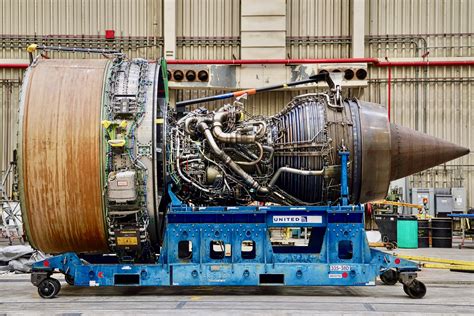
The engine at the centre of the incident, the PW4060, is the exclusive powerplant fitted to United’s 767-300ER fleet, making the type’s reliability record directly relevant to the carrier’s long-haul network. The powerplant forms part of the Pratt & Whitney PW4000 family, a series that first ran in April 1984 as the successor to the venerable JT9D and entered operational service in June 1987. The family spans thrust ratings from 50,000 to 99,040 lbf (222 to 441 kN), a breadth that made it a natural fit for widebody workhorse jets including the Airbus A330 and the McDonnell Douglas MD-11.
The -94 variant used on the 767-300ER measures 153.6 inches (390 cm) in length and weighs 9,420 lb (4,273 kg), producing between 50,000 and 62,000 lbf (222 to 276 kN) of thrust. Its 94-inch (239 cm) fan drives a bypass ratio of 4.8 to 5.1 and an overall pressure ratio of 27.5 to 32.3, figures that reflect a design optimised for fuel efficiency on long, thin transatlantic routes rather than raw short-field performance.
A Broader Pattern of Diversions Keeping Passengers Safe
Diversions driven by mechanical or cabin concerns are an essential component of safe airline operations, and United has relied on them repeatedly in recent months. One notable example involved a Boeing 757 that departed Dublin Airport (DUB) for Newark Liberty International Airport (EWR) before crew members elected to turn back shortly after climbing to 31,000 feet (9,500 m) because of a fuel odour in the cabin. With only 53 minutes of flight time logged, the crew lacked a safe opportunity to dump fuel and advised air traffic control that an overweight landing would be necessary.
That aircraft touched down at 3:03 PM local time, where paramedics met the jet on the apron to assist passengers and crew affected by the fumes. The flight was cancelled and travellers were rebooked onto alternative services. The parallel with Monday’s 767 diversion is instructive: in both cases, crews prioritised a controlled, deliberate landing over pressing on toward a destination, and in both cases the system absorbed the disruption by cancelling, rebooking, and repositioning aircraft.
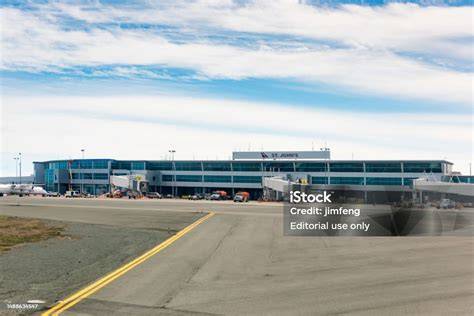
For the passengers of UA946, the outcome was an unplanned night in Newfoundland and a delayed arrival in Amsterdam rather than a headline about a catastrophe over the Atlantic. The 767 remains the subject of inspection, and the precise cause of the PW4060’s failure will be determined through engine teardown and regulatory review rather than airline press statements. What is already clear is that the decision-making chain — descent, emergency declaration, diversion, and safe landing on runway 28 — functioned exactly as designed when a two-engine jet becomes a one-engine jet at 37,000 feet.