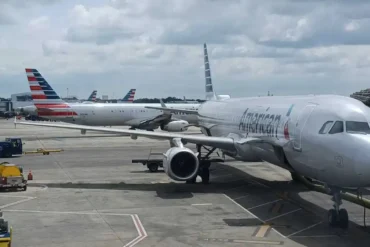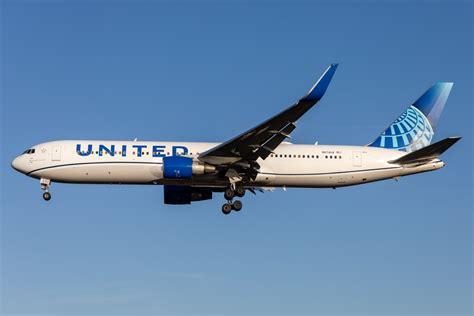
On 19 November 2025, United Airlines Flight UA925—a transatlantic Boeing 767 service from London Heathrow to Washington Dulles—was forced to make an unscheduled diversion after a passenger’s laptop slipped into a narrow cavity within a business-class seat. The aircraft touched down safely in Dublin, where engineers retrieved the device and cleared the aircraft to continue. The incident delayed the flight’s arrival in Washington by roughly five hours, as confirmed by real-time Flightradar24 tracking data.
The mishap unfolded when the laptop disappeared into the gap between the seat, armrest, and cabin sidewall, leaving the crew unable to visually confirm the battery’s condition. With the device inaccessible and the risk of compression damage unknown, the flight crew initiated a diversion in accordance with modern safety protocols surrounding lithium-ion batteries. These batteries, which power laptops, phones, and power banks, can enter a dangerous state known as thermal runaway when damaged—producing smoke, intense heat, or potentially fire.
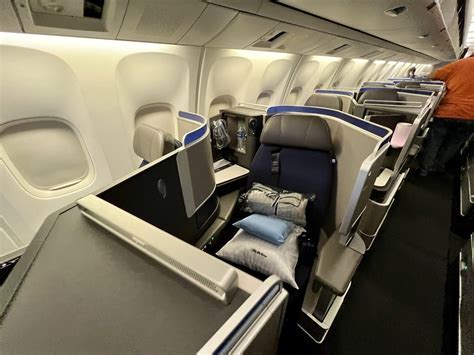
Upon landing in Dublin, maintenance teams retrieved the trapped laptop and inspected the surrounding seat assembly. No damage was detected, allowing the aircraft to push on to Washington later that evening. United later described the diversion as a precautionary measure needed because the crew could not monitor the device while airborne.
The Hidden Risk Inside Modern Airline Seats
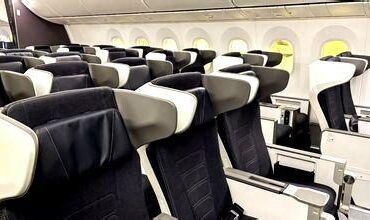
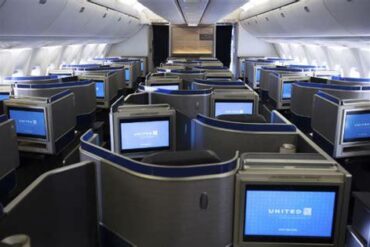
The incident highlights an increasingly common hazard in long-haul cabins: personal electronics slipping into tight spaces within complex motorized seating. Business-class seats—particularly those with privacy shells or movable armrests—contain numerous actuators, support rails, and cavities where small devices can vanish. Once lodged inside, the battery may be subjected to pressure or heat, and if damage occurs, the crew may have no way to reach the device while airborne.
ACARS messages seen by aviation outlets indicated the laptop was trapped “between the seat and side wall,” an area that is often impossible to access without specialized tools. With the aircraft crossing the North Atlantic, where diversion airports are limited, the crew followed standard protocol: avoid moving the seat further, isolate the area, and divert early before the situation evolves beyond control.
A Recurrence of an All-Too-Familiar Problem
This diversion is not an isolated event for United. Only weeks prior, another Boeing 767 operating Flight UA126 from Washington Dulles to Rome returned to its origin after a powered-on laptop slipped into a fuselage cavity. The pilots, unable to see or reach the device, told air traffic control they could not continue overwater until its status was known. That flight similarly departed several hours later following recovery of the device and inspection of the aircraft.
In a separate mid-October event, a SAS Airbus A320neo in Oslo experienced a more serious battery failure during boarding when a lithium-powered device inside a passenger’s bag entered thermal runaway. The resulting smoke and fumes sent eight people to the hospital, underscoring how even small electronic devices can create major operational and medical emergencies.
What These Incidents Reveal About Modern Cabin Safety
As passengers carry more electronics than ever, airlines are confronting a new kind of safety challenge that cabin designers two decades ago could not have anticipated. Business-class suites, with their sculpted shells and intricate moving parts, inadvertently create small openings that can trap thin devices. When a lithium-ion battery disappears into such a space, several risks emerge:
- The battery may be bent or compressed by seat motors.
- The crew cannot inspect or cool the device if overheating begins.
- Seat movement could accidentally crush the device further.
- Fire-suppression in passenger cabins is limited compared to cargo holds.
These factors explain why airlines increasingly choose diversion over uncertainty, even though such decisions cause delays, operational disruption, and significant expense. Safety regulators are now pushing manufacturers to redesign seat bases, close structural gaps, and standardize protective barriers that prevent devices from slipping into mechanical areas.
New Safety Measures Passengers Should Expect
Airlines and regulators are tightening guidelines around portable electronics, implementing measures such as enhanced crew training, revised seat-inspection procedures, stronger warnings during boarding, and improved fire-containment tools. Some carriers are examining redesigns of business-class suites to ensure small electronics cannot fall into hazardous zones.
For travelers, the message is growing clearer: keep laptops, phones, and power banks secure; avoid placing them on armrests or loose cushions; check surroundings before adjusting motorized seats; and alert crew immediately if a device disappears. With long-haul aircraft often hours from the nearest diversion airport, early reporting can prevent full-scale emergency diversions.
As airlines adapt to the realities of an increasingly digital passenger base, the United 767 diversion illustrates the fine balance between operational continuity and uncompromising safety. More incidents like this are prompting broader industry scrutiny of cabin design, emergency procedures, and the evolving challenges posed by lithium-ion technology.