Economy class may lack the champagne rituals and sliding doors that dominate airline marketing campaigns, but it remains the true backbone of global aviation. Every day, millions of passengers squeeze into narrow-body jets and long-haul widebodies equipped with seats that appear nearly identical regardless of airline, destination, or ticket price. Beneath that uniformity sits one of the aviation industry’s least visible monopolies: a market where three manufacturers continue to shape the experience of almost every economy passenger on Earth.
The aircraft seating business operates under what industry insiders often call the “80/20 rule.” Roughly 80% of the global market is controlled by three giants, while dozens of smaller firms compete for the remaining slice. For travelers, this explains why stepping onto an Airbus A320 in Europe can feel strangely similar to boarding a Boeing 787 in Asia or North America. The seats may carry different fabrics, logos, or entertainment systems, but the engineering DNA often comes from the same handful of suppliers.
For more than two decades, that dominance has remained remarkably resilient. According to RECARO Aircraft Seating CEO Dr. Mark Hiller, the names at the top have shifted slightly, but the structure itself has barely changed. Years ago, the dominant trio consisted of Zodiac, BE Aerospace, and RECARO. Today, the throne belongs to RECARO, Collins Aerospace, and Safran Seats. Different logos, same concentration of power.
The result is an aviation ecosystem where innovation, passenger comfort, airline economics, and even aircraft profitability are heavily influenced by just three companies operating behind the scenes.
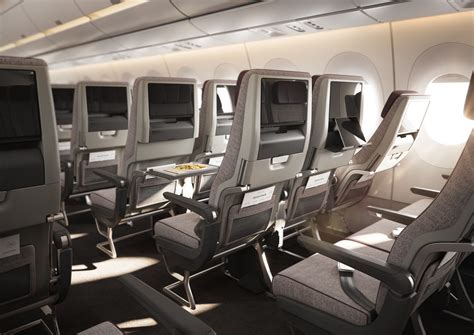
Why Economy Seats All Feel The Same
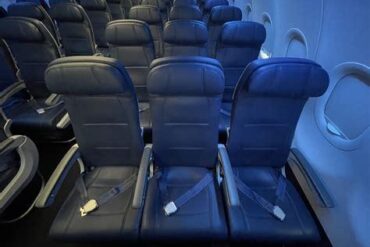
Most passengers assume airlines design their own seats. In reality, carriers typically select from catalogs offered by major seating manufacturers, customizing only minor details such as upholstery, branding, or spacing configurations. The core architecture — the frame, reclining system, tray table mechanics, weight distribution, and crash certification — usually comes from the same industrial suppliers.
This concentration exists because aircraft seating is one of the most heavily regulated products in transportation. A modern economy seat must survive brutal crash tests, meet strict fire-resistance standards, minimize weight, integrate with inflight entertainment systems, and comply with global certification requirements. Developing a single new seat platform can cost hundreds of millions of dollars and require years of engineering validation.
That enormous barrier to entry protects the established giants.
For airlines, reliability matters more than experimentation. A delayed seat certification can postpone aircraft deliveries, disrupt schedules, and cost millions in lost revenue. Major carriers therefore gravitate toward manufacturers with proven records and massive production capabilities. Even a small defect can trigger fleet-wide inspections affecting hundreds of aircraft simultaneously.
The economics become even more powerful at scale. When airlines order hundreds of jets from Airbus or Boeing, seat suppliers capable of delivering thousands of units on strict timelines gain a decisive advantage. Smaller manufacturers often lack the industrial footprint needed to support those contracts.
As a result, the aviation seat market behaves less like fashion retail and more like semiconductor manufacturing: technologically demanding, capital-intensive, and dominated by a tiny elite.
The Hidden Gold Mine Behind Cabin Retrofits
While new aircraft deliveries generate headlines, some of the industry’s most lucrative opportunities come from older jets receiving second lives through cabin retrofits. Airlines increasingly realize that refreshing interiors can dramatically improve passenger perception without purchasing entirely new aircraft.
That trend has become especially important for giants like the Airbus A380 and Boeing 747-8. Once viewed as symbols of a fading era, many of these aircraft are now undergoing extensive refurbishment programs as airlines extend operational lifespans amid strong international demand.
Dr. Hiller notes that approximately 65% of the market still comes from “line fit” installations on newly built aircraft, while retrofit programs now account for roughly 35%. Yet the retrofit segment is expanding rapidly.
Airlines once reluctant to spend heavily on aging aircraft are reconsidering the equation. Replacing cabins can be far cheaper than replacing entire fleets, particularly when delivery slots for new aircraft remain constrained. Modern seats also allow airlines to reduce weight, increase durability, and sometimes add extra rows without dramatically compromising passenger comfort.
The retrofit business has therefore evolved into a strategic battlefield for seat manufacturers.
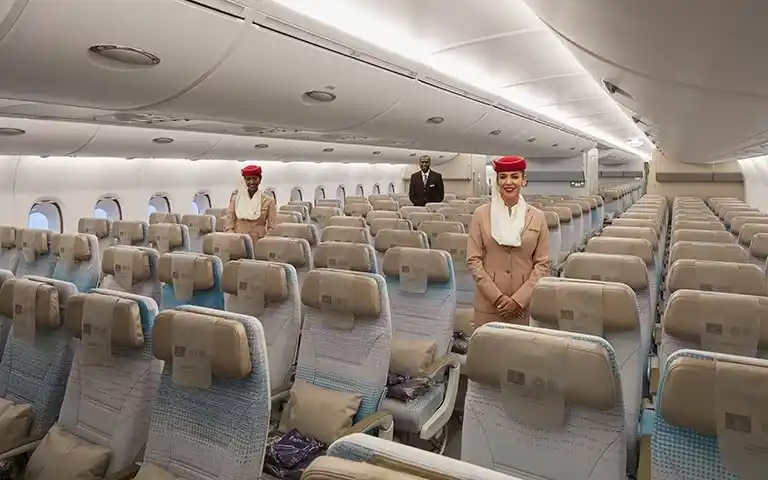
On long-haul aircraft like the A380, even marginal weight savings matter enormously. A lighter seat can reduce fuel burn across thousands of flights annually. That makes modern economy seats valuable not merely as passenger products, but as financial instruments capable of improving airline operating margins.
At the same time, refreshed cabins help airlines maintain competitive relevance. A ten-year-old aircraft fitted with updated seats, larger entertainment screens, USB-C charging ports, and improved ergonomics can still feel modern to travelers. For passengers, the psychological effect is powerful. Few people know the aircraft’s manufacturing date if the cabin looks contemporary.
Ultra-Long-Haul Flights Are Redefining Economy Comfort
The next major battleground is ultra-long-haul travel.
Flights exceeding 18 or even 20 hours are forcing airlines and manufacturers to rethink what economy class can realistically offer. As routes stretch deeper into endurance territory, the traditional minimalist approach to seating becomes increasingly difficult to defend.
Qantas’ ambitious “Project Sunrise” flights from Australia to Europe and North America illustrate this shift perfectly. Keeping passengers physically tolerable during flights approaching an entire day in the air requires more than simply squeezing additional padding into a seat cushion.
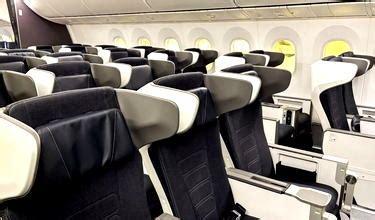
Manufacturers are now experimenting with features once considered exclusive to premium cabins. Privacy wings around headrests, integrated reading lights, personal device holders, improved lumbar support, and enhanced recline mechanics are gradually entering economy cabins on flagship aircraft.
Five years ago, many of these features barely existed in economy class. Today, they are becoming key selling points.
The pressure comes from both passengers and airlines. Travelers increasingly compare cabin experiences online, dissecting seat comfort with forensic precision across social media, aviation forums, and YouTube reviews. A poorly received economy product can damage an airline’s reputation faster than ever before.
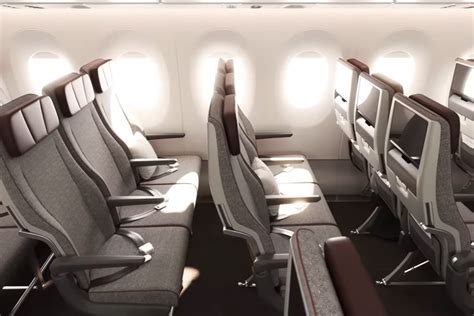
Airlines also understand that economy passengers generate the majority of onboard volume. Business-class cabins may produce prestige and profit margins, but economy cabins fill the aircraft. Improving comfort for hundreds of travelers simultaneously can significantly influence customer loyalty.
This creates a fascinating contradiction within aviation economics. Airlines continue chasing denser cabin layouts to maximize revenue, while manufacturers simultaneously search for ways to make shrinking personal space feel more humane. The future of economy seating will likely depend on which side wins that balancing act.
Why The Three Giants Are Still Untouchable
Despite growing demand and emerging competitors, breaking the dominance of RECARO, Collins, and Safran remains extraordinarily difficult. Their advantage extends beyond engineering expertise into manufacturing infrastructure, certification experience, airline relationships, and logistical scale.
Aircraft production itself is booming, creating enormous demand for seats worldwide. Yet the complexity of aviation manufacturing favors incumbents. Even if smaller firms develop innovative products, scaling production consistently across global airline fleets remains a daunting challenge.
The irony is that economy seats — often mocked as cramped and uninspiring — represent one of the most sophisticated industrial products most people encounter regularly. Every hinge, cushion, tray table, and armrest reflects years of engineering trade-offs between comfort, safety, durability, weight, and cost.
Passengers may never notice the corporate power structure shaping their flight experience. They simply board the aircraft, buckle in, and endure another journey at 35,000 feet.
But behind nearly every economy cabin sits the same invisible equation: three manufacturers controlling the skies one seat at a time.