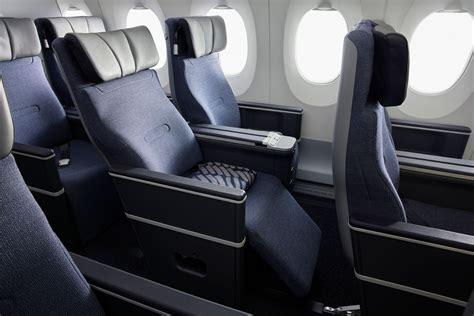
Flying long distances often turns a seemingly small design detail into a major comfort factor. Among all the upgrades airlines advertise in premium economy, one of the most noticeable differences is seat width. Travelers frequently focus on legroom or meals, yet the extra width of premium economy seats compared to standard economy is what often determines whether a flight feels cramped or comfortable.
On long-haul flights that stretch eight, ten, or even fifteen hours, a narrow seat can quickly become exhausting. Your shoulders press into the passenger next to you, armrests become contested territory, and even simple activities like typing on a laptop or opening a meal tray feel awkward. By contrast, premium economy cabins introduce wider seating that subtly changes the entire in-flight experience, offering more personal space without the dramatic price jump of business class.
Understanding how much wider these seats are requires looking beyond simple marketing claims. Airlines measure seat width in different ways, aircraft configurations vary, and seat manufacturers design cabins differently. Still, clear industry trends reveal how premium economy creates its comfort advantage.
The result is a seating category that has rapidly evolved into one of the airline industry’s most important cabin classes.
The Key Comfort Factor: Why Seat Width Matters More Than You Think
Seat width may seem like a minor specification on an aircraft seating chart, but it directly influences how passengers experience a flight. A difference of just one or two inches can significantly change how relaxed or restricted a passenger feels.
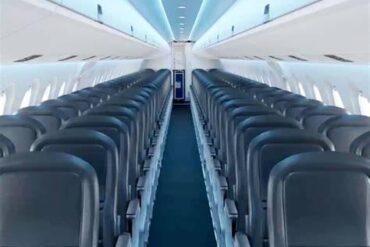
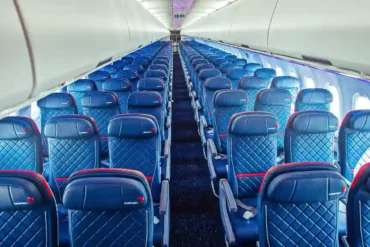
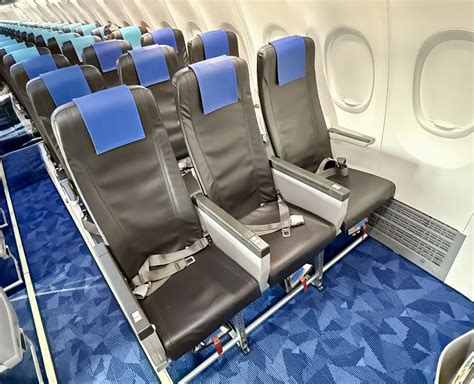
Standard economy seats on modern long-haul aircraft typically range between 16.5 and 18 inches (41.8–45.7 cm) wide. These measurements represent the distance between armrests and are heavily influenced by airline seating density. Carriers often configure aircraft with as many seats as possible, meaning even a wide fuselage aircraft can feel surprisingly cramped.
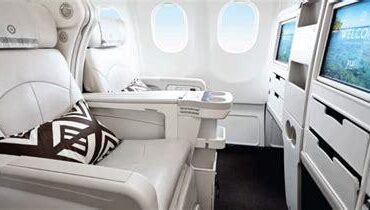
Premium economy, by contrast, generally offers seats between 18.5 and 19.5 inches (47–49.5 cm) wide. That difference may sound small on paper, but physically it provides several important advantages:
- Shoulder space increases, reducing constant contact with neighboring passengers.
- Armrest conflicts decrease, since each passenger has slightly more room to rest their arms naturally.
- Working on laptops becomes easier, particularly when tray tables and armrests are larger.
- Sleeping positions improve, because passengers can lean or shift without immediately bumping someone else.
This subtle expansion of personal space often transforms the overall travel experience, especially on long flights where comfort compounds hour after hour.
The Rapid Rise of Premium Economy Over the Past Decade
Premium economy was once a relatively obscure offering. Many airlines experimented with it as a minor upgrade option, but it lacked consistent standards and widespread adoption.
Over the past decade, however, the cabin has transformed into a core revenue strategy for airlines worldwide.
In 2017, only around 42 airlines offered a true premium economy cabin with dedicated seating and upgraded service. By 2024, that number had nearly doubled to around 90 carriers globally. At the same time, installations across widebody aircraft fleets expanded dramatically, with roughly 45% of widebody jets now featuring premium economy cabins.
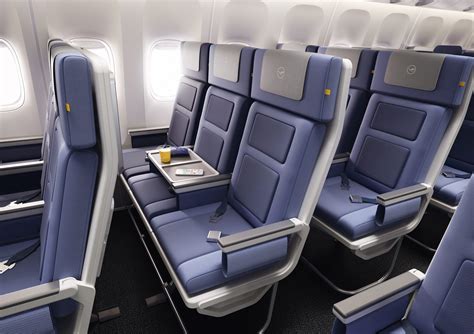
This rapid expansion reflects shifting passenger demand. Historically, corporate travelers were the primary customers willing to pay large premiums for comfort, typically choosing business class. Leisure travelers, meanwhile, largely remained in economy.
That dynamic began to change as airlines realized that many passengers wanted more comfort than economy but could not justify the cost of business class. Premium economy filled this gap perfectly.
The cabin delivers tangible upgrades—larger seats, improved meals, bigger screens, and enhanced service—while maintaining a ticket price that is usually 40–65% cheaper than business class on long-haul routes.
For airlines, this creates a powerful revenue lever: they can convert economy passengers into higher-paying premium customers without needing expensive lie-flat seats.
Premium Economy on Major US Airlines
In the United States, three major legacy carriers dominate the premium economy landscape: American Airlines, Delta Air Lines, and United Airlines. Each airline markets its premium economy cabin as a step above economy while remaining far below business-class pricing.
These cabins are primarily installed on widebody aircraft used for long-haul international routes, where passengers are most likely to pay for additional comfort.
American Airlines offers premium economy on aircraft such as:
- Boeing 777-200
- Boeing 777-300ER
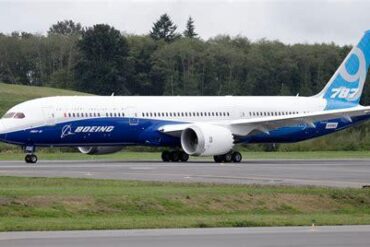
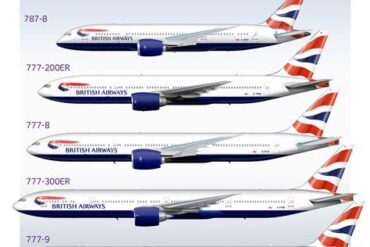
- Boeing 787-8 Dreamliner
- Boeing 787-9 Dreamliner
Delta Air Lines markets its product under the name Delta Premium Select, available on aircraft including the Airbus A350-900, A330-900neo, A330-200, and selected Boeing 767 variants.
United Airlines brands its offering as United Premium Plus, found on the airline’s widebody fleet including the Boeing 777, 787 Dreamliner, and 767 aircraft.
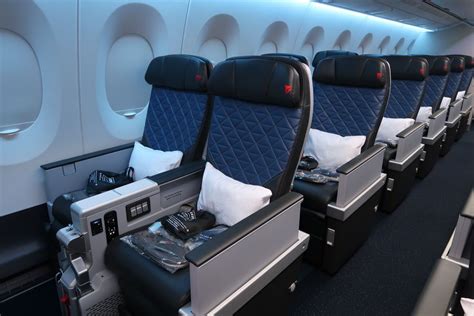
While the branding differs, the goal remains the same: create a meaningful step-up experience that convinces economy passengers to upgrade.
How Much Wider Premium Economy Seats Actually Are
Across these airlines, the width difference between premium economy and economy typically falls between one and two inches. Though this may sound modest, the real-world impact becomes noticeable almost immediately.
Typical measurements look like this:
- Economy Class: 16.5–18 inches (41.8–45.7 cm)
- Premium Economy: 18.5–19.5 inches (47–49.5 cm)
United Airlines’ Premium Plus seats, for instance, generally measure around 19 inches wide, while its long-haul economy seats often fall between 17 and 17.5 inches.
Delta’s Premium Select seats on the Airbus A350 typically measure about 18.5 inches, compared to roughly 17–17.5 inches in standard economy.
American Airlines tends to sit at the higher end of the spectrum, with premium economy seats reaching 19 inches or more on certain aircraft.
Although these measurements vary slightly depending on the aircraft and configuration, the average upgrade remains remarkably consistent: roughly two additional inches of personal space.
Why Two Inches Can Transform a Long Flight
The importance of seat width becomes especially obvious during overnight flights or journeys longer than ten hours. In such conditions, even small increases in space dramatically improve comfort.
A wider seat changes the physical experience in several ways.
First, shoulder compression decreases significantly. Narrow economy seats often force passengers to rotate their shoulders inward, creating tension that builds over hours of sitting. Extra width allows a more natural posture.
Second, movement becomes easier. Passengers can shift positions, cross their legs, or lean slightly without immediately touching their neighbor.
Third, sleeping improves. Wider seats allow travelers to lean to one side or curl slightly without being constrained by the seat frame.
These advantages become even more noticeable when combined with other premium economy upgrades such as deeper recline, leg rests, and larger seat pitch.
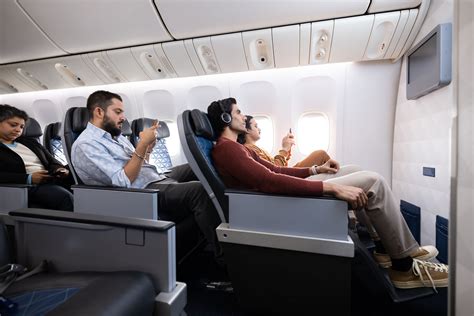
Seat Design: Why Width Numbers Can Be Misleading
Seat width measurements alone do not always reflect how spacious a seat truly feels. Several design elements can influence usable space inside the cabin.
Many premium economy seats feature thicker armrests and fixed seat shells, which increase structural support and improve privacy. While these features enhance comfort overall, they can sometimes reduce the effective personal space inside the seat.
Additionally, different manufacturers measure seat width differently. Some measure between armrests, others measure cushion width, and some include parts of the seat shell.
This means two seats listed as 19 inches wide may feel slightly different in practice depending on:
- Armrest thickness
- Seat shell design
- Cushion contouring
- Storage compartments built into the seat frame
Nevertheless, passengers generally perceive premium economy as noticeably wider than economy, even when accounting for these variations.
International Airlines Offering Exceptionally Wide Premium Economy Seats
Outside the United States, several international airlines have pushed premium economy seat width even further, creating cabins that approach business-class comfort.
Virgin Atlantic, for example, offers premium economy seats reaching up to 21 inches wide on certain aircraft. This makes them dramatically wider than most economy seats worldwide.
Similarly, Emirates has introduced premium economy cabins on aircraft such as the Airbus A350 that feature seats around 20–21 inches wide, along with larger recline and enhanced amenities.
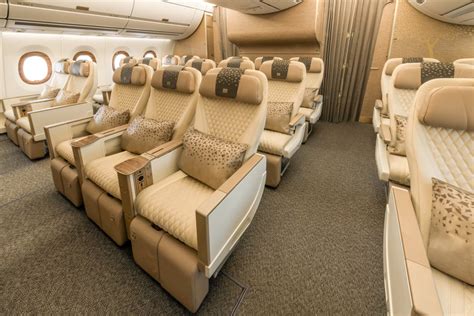
Other highly regarded premium economy cabins include:
- Singapore Airlines
- Cathay Pacific
- Air New Zealand
- Japan Airlines
- ANA (All Nippon Airways)
- Qantas
These airlines often treat premium economy as a true mini-premium cabin, rather than simply adding extra legroom to economy seating.
Passengers receive wider seats, improved meal service, upgraded entertainment systems, and quieter cabin sections.
Global Seat Width Trends Compared to the United States
Despite standout examples from airlines like Virgin Atlantic and Emirates, most global premium economy cabins still fall within a relatively consistent range.
Across international carriers, premium economy seats typically measure between 18.5 and 19.5 inches wide, closely matching the standards found among US airlines.
Economy class seats globally continue to cluster around 17 inches wide, though some airlines push slightly narrower configurations to increase passenger capacity.
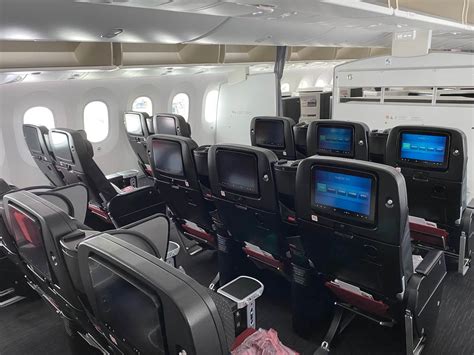
The resulting difference—roughly 1 to 2 inches of additional width—remains the industry norm.
What differentiates top-tier airlines is not simply width but the overall design philosophy. Leading carriers combine wider seats with thoughtful features such as:
- Footrests and leg supports
- Adjustable headrests
- Increased recline angles
- Larger seatback screens
- Dedicated cabin service
Together, these upgrades create an experience that feels far more premium than the raw seat measurements alone would suggest.
Why Airlines Are Investing Heavily in Premium Economy
From a business perspective, premium economy has become one of the most profitable sections of the aircraft cabin.
Business-class seats occupy a large amount of space and require expensive mechanisms such as lie-flat beds. Economy seats, on the other hand, generate low revenue per passenger.
Premium economy sits squarely between those two extremes. Airlines can install more premium economy seats than business-class seats while still charging significantly higher fares than economy.
This balance creates strong profit margins, particularly on long-haul flights where passengers are willing to pay for additional comfort.
At the same time, changing travel patterns have reinforced the importance of this cabin. Corporate travel has recovered unevenly since the pandemic, while leisure travel has surged.
Many travelers now choose premium economy as a personal upgrade, paying out of pocket for additional space without reaching business-class prices.
The Bottom Line: A Small Measurement With a Big Impact
At first glance, the difference between economy and premium economy seating appears minor. An increase of one or two inches in seat width might not seem revolutionary.
Yet on a long-haul flight, those inches can dramatically change how passengers feel after hours in the air.
Premium economy seats typically offer:
- 1–2 inches more width
- greater shoulder and elbow room
- larger armrests and seat structures
- more comfortable working and sleeping positions
These improvements, combined with better service and upgraded amenities, explain why the cabin has become one of the fastest-growing segments in commercial aviation.
For travelers seeking a meaningful comfort upgrade without paying business-class prices, premium economy’s wider seating often delivers exactly the balance they are looking for.