For decades, the aviation industry focused its attention on the extremes of the passenger experience. Airlines competed fiercely to create more luxurious first-class suites and more efficient economy cabins, often leaving a significant gap between affordability and comfort. Yet as long-haul travel evolved and passenger expectations changed, a new category emerged that would permanently reshape airline economics and customer preferences. Today, that category—premium economy—has become one of the most important battlegrounds in commercial aviation.
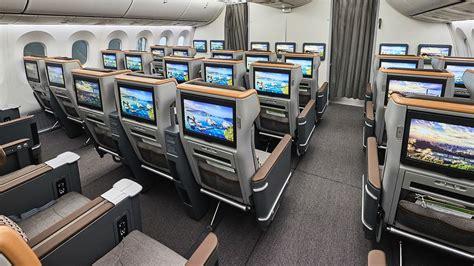
Ironically, the airline that helped create the concept more than thirty years ago has once again positioned itself at the forefront of innovation. EVA Air, the Taiwanese carrier widely credited with pioneering modern premium economy travel, now offers what is arguably the most spacious premium economy product flying anywhere in the world.
Its latest cabin design on the Boeing 787-9 does more than provide additional legroom. It signals a broader transformation in how airlines view premium travel, profitability, and passenger comfort in an increasingly competitive global market.
The story of EVA Air’s newest premium economy cabin is not merely about seat measurements. It is about how an airline that introduced a revolutionary idea in the early 1990s has returned to redefine the standards of an entire industry.
After years of watching competitors expand their own premium economy offerings, EVA Air has raised the bar once again with a product that prioritizes personal space at a level rarely seen in modern commercial aviation.
The Origins Of Premium Economy Travel
To understand why EVA Air’s latest premium economy cabin matters, it is necessary to revisit the origins of the concept itself.
In the early 1990s, airline cabins were generally divided into two distinct worlds. At one end sat economy passengers, often enduring long flights in tightly packed seating arrangements. At the other end were business and first-class travelers enjoying significantly greater comfort at dramatically higher prices.
There was very little available for passengers who wanted something in between.
EVA Air recognized an emerging market segment that many airlines had overlooked. A growing number of travelers were willing to spend more than the cost of a standard economy ticket but could not justify—or afford—the substantial premium associated with business class.
In 1992, EVA Air introduced a groundbreaking solution.
Operating aboard Boeing 747-400 aircraft on routes between Taipei and Los Angeles, the airline launched what it called Evergreen Deluxe Class. This innovative cabin featured a generous 38-inch seat pitch arranged in a spacious 2-4-2 configuration.
At a time when many travelers were still watching shared cabin monitors mounted above the aisles, EVA Air offered individual entertainment screens, wider seats, enhanced dining experiences, and significantly improved legroom.
The concept was revolutionary.
Passengers quickly discovered that they could enjoy a much more comfortable long-haul experience without paying the steep fares associated with premium cabins. The market responded positively, proving that a substantial gap existed between economy and business class.
While Virgin Atlantic introduced a similar concept around the same period, EVA Air became one of the first airlines to successfully operate the product on scheduled passenger services. The resulting debate over who invented premium economy continues among aviation enthusiasts, but both carriers played crucial roles in creating what would eventually become a global standard.
What began as an experiment soon evolved into one of the airline industry’s most influential innovations.
How Premium Economy Became Aviation’s Fastest-Growing Cabin
For many years, premium economy remained a niche offering.
Several major airlines resisted introducing a third cabin class because they feared it might cannibalize business-class revenue. The concern seemed reasonable. Why would passengers purchase expensive business-class tickets if a cheaper alternative offered many of the same advantages?
Reality proved otherwise.
Corporate travel policies became increasingly restrictive, limiting access to premium cabins for many employees. At the same time, affluent leisure travelers began prioritizing comfort during long-haul journeys without necessarily seeking full business-class luxury.
This shift created the perfect environment for premium economy expansion.
Throughout the 2010s and early 2020s, airlines around the world rapidly adopted dedicated premium economy cabins. Carriers that once dismissed the concept began investing heavily in retrofits and new aircraft configurations.
The numbers illustrate the scale of this transformation.
The number of international airlines offering premium economy increased from 42 in 2017 to 63 by 2022. Widebody aircraft equipped with premium economy cabins expanded dramatically across global networks, including routes connecting North America, Europe, Asia, and Oceania.
Perhaps even more significant is the financial value of the sector.
Premium economy generated an estimated market value of approximately $8.2 billion in 2024. Industry forecasts suggest that figure could reach nearly $18.7 billion by 2033, reflecting sustained demand from both business and leisure travelers.
For airlines, the appeal is obvious.
Premium economy occupies far less cabin space than business-class suites while generating substantially higher revenue than standard economy seating. This creates an attractive balance between profitability and capacity utilization.
As a result, premium economy has evolved from an experimental product into a critical component of long-haul airline strategy.
EVA Air’s Fourth-Generation Premium Economy Revolution
More than three decades after introducing Evergreen Deluxe Class, EVA Air has once again transformed the category.
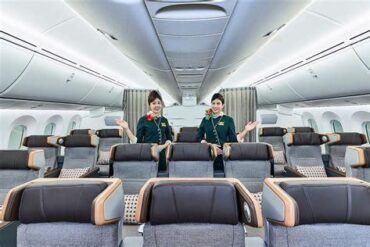
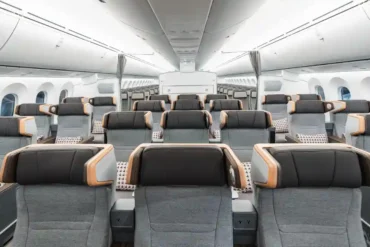
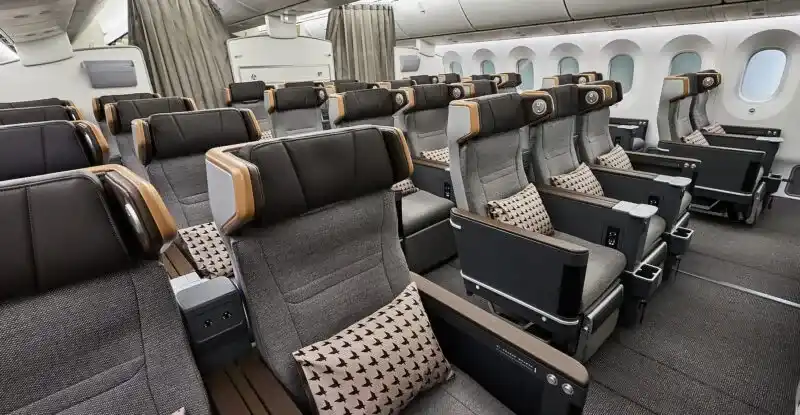
In 2025, the airline unveiled its fourth-generation premium economy cabin aboard newly configured Boeing 787-9 Dreamliners.
The centerpiece of the redesign is an industry-leading 42-inch seat pitch.
To appreciate the significance of this figure, it is important to understand that most premium economy products worldwide offer approximately 38 inches of pitch. While four inches may appear modest on paper, the difference becomes remarkably noticeable during flights lasting twelve to fifteen hours.
EVA Air’s new cabin effectively provides passengers with an entirely different level of personal space.
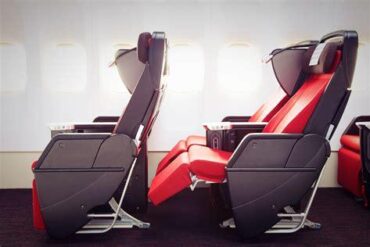
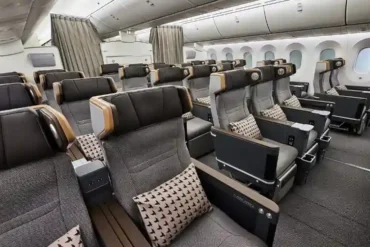
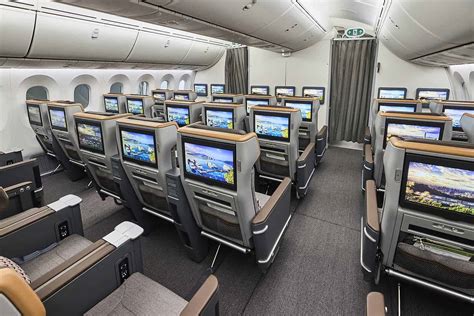
Rather than maximizing seat count, the airline intentionally reduced cabin density. The Boeing 787-9 features a spacious seven-abreast 2-3-2 configuration, creating wider aisles and additional room for every passenger.
This decision represents a deliberate rejection of industry trends that prioritize higher passenger capacity.
Instead, EVA Air chose comfort over density.
The result is a premium economy experience that stands apart from virtually every major competitor operating long-haul routes today.
Why 42 Inches Of Seat Pitch Changes Everything
Seat pitch is often misunderstood by travelers.
While it does not directly measure legroom, it represents the distance between a point on one seat and the same point on the seat in front. Greater pitch generally translates into more personal space, improved comfort, and easier movement throughout a flight.
EVA Air’s 42-inch pitch exceeds the industry norm by a considerable margin.
On ultra-long-haul routes crossing the Pacific Ocean, those extra inches significantly reduce physical fatigue. Travelers gain additional room for stretching, working on laptops, reading comfortably, or sleeping without feeling confined.
The airline has also introduced an advanced cradle-style recline system.
Unlike traditional reclining seats that intrude into the personal space of passengers behind, the cradle mechanism moves the seat cushion forward and upward while reclining. This design preserves cabin harmony by allowing travelers to recline without creating conflicts over limited space.
Passengers benefit from an effective eight-inch recline while maintaining a respectful separation from neighboring travelers.
This engineering solution addresses one of the most common frustrations associated with premium and economy-class travel.
The emphasis on ergonomics demonstrates how premium economy has matured from a simple legroom upgrade into a carefully designed comfort-focused product.
The Competitive Landscape: How Rivals Compare
EVA Air’s latest premium economy cabin enters a marketplace crowded with strong competitors.
Japan Airlines, frequently praised for its premium service standards, offers premium economy seating with a 38-inch pitch on many Boeing 787 aircraft. The airline generally employs an eight-abreast 2-4-2 layout that prioritizes capacity while maintaining respectable comfort levels.
All Nippon Airways, another highly regarded Japanese carrier, also provides approximately 38 inches of pitch within seven-abreast configurations on selected aircraft.
Singapore Airlines, often regarded as one of the world’s leading premium carriers, similarly maintains premium economy cabins centered around the 38-inch benchmark.
Cathay Pacific, Air France, and numerous other international airlines follow comparable standards.
Even Emirates, which resisted premium economy for years before embracing the concept, generally adheres to measurements that remain below EVA Air’s new 42-inch benchmark.
What makes EVA Air unique is not merely the seat pitch itself but the willingness to sacrifice revenue-generating seats in exchange for enhanced passenger comfort.
Most airlines carefully calculate cabin layouts to maximize profitability through higher capacity. EVA Air instead uses additional space as a strategic differentiator.
This approach positions the airline at the very top of the premium economy market.
Why Corporate Travelers Are Paying Attention
One of the most important customer segments driving premium economy growth is the corporate traveler.
Many companies have tightened travel budgets over the past decade. Employees who once flew business class are increasingly restricted to premium economy, particularly on long-haul international routes.
For these travelers, productivity matters almost as much as comfort.
A 42-inch seat pitch creates a workspace that feels substantially more functional than traditional economy seating. Passengers can comfortably use laptops, review presentations, participate in work-related tasks, and maintain a more professional routine during lengthy journeys.
The enhanced recline also improves rest quality, enabling travelers to arrive better prepared for meetings and business engagements.
As organizations seek cost-effective travel solutions, EVA Air’s premium economy product provides an attractive compromise between economy affordability and business-class functionality.
The airline has effectively positioned itself to capture this growing segment of corporate demand.
The Luxury Leisure Market Is Fueling Demand
Premium economy’s success is not driven solely by business travelers.
Leisure passengers are increasingly willing to invest in comfort, particularly on long-haul flights.
Families embarking on vacations, retirees exploring international destinations, and affluent travelers seeking better value often find premium economy to be the ideal compromise.
For many passengers, the price difference between economy and premium economy feels justified when measured against the benefits received.
Additional space, improved dining, priority services, larger entertainment screens, and enhanced seating comfort significantly improve the overall travel experience.
EVA Air’s 42-inch configuration amplifies these advantages.
On routes connecting Asia with North America, where flight durations frequently exceed twelve hours, the extra personal space becomes a meaningful contributor to passenger well-being.
This growing willingness among consumers to pay for comfort has fundamentally altered airline revenue strategies and accelerated investment in premium economy products worldwide.
The Future Of Premium Economy Is Becoming Clear
The evolution of premium economy suggests a future where the distinction between premium economy and business class continues to narrow.
Airlines increasingly equip premium economy cabins with features once reserved exclusively for premium travelers. Enhanced privacy, larger entertainment systems, upgraded dining experiences, improved storage solutions, and sophisticated seating technologies are becoming standard expectations.
The competition is intensifying.
As market valuations continue climbing and demand remains strong, airlines face mounting pressure to differentiate their products.
Physical space remains the most obvious battleground.
Passengers immediately notice seat width, legroom, recline capability, and cabin density. Marketing language can influence purchasing decisions, but actual cabin dimensions ultimately shape customer satisfaction.
EVA Air’s decision to establish a 42-inch benchmark may force competitors to reconsider their own cabin strategies.
If travelers consistently demonstrate a preference for more spacious premium economy products, other airlines could eventually follow a similar path.
The economics of the segment are simply too important to ignore.
How EVA Air Reclaimed Leadership In The Cabin It Helped Create
Few airlines have the opportunity to redefine an industry twice.
EVA Air achieved exactly that.
The carrier helped introduce premium economy in 1992 when the concept barely existed. More than thirty years later, it has once again challenged conventional thinking by delivering the most spacious premium economy cabin currently available on scheduled commercial flights.
Its fourth-generation Boeing 787-9 product demonstrates that innovation in aviation is not always about new aircraft or revolutionary technology. Sometimes, it is about understanding what travelers value most.
Space remains one of the rarest commodities in modern air travel.
By providing more of it than any major competitor, EVA Air has strengthened its position as the benchmark for premium economy excellence. In a market increasingly defined by passenger comfort, corporate travel efficiency, and premium leisure demand, the airline’s 42-inch Dreamliner cabin stands as a powerful reminder of why it became a pioneer in the first place—and why it continues to shape the future of long-haul travel today.