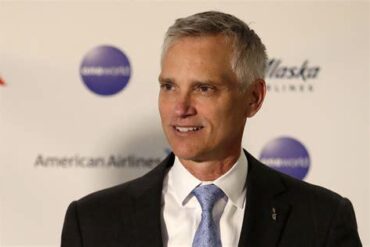
American Airlines is reshaping its senior management team as CEO Robert Isom comes under increasing pressure to narrow the performance gap with Delta Air Lines and United Airlines. The changes bring several executives into expanded leadership roles while adding experienced operational talent, signaling a renewed emphasis on execution, accountability, and financial performance.
The management overhaul arrives at a complicated moment for the Fort Worth-based carrier. American generated a record $16.7 billion in second-quarter 2026 revenue, a 16.3% increase from a year earlier, demonstrating that demand remains strong. Yet that impressive top-line performance translated into only $71 million in GAAP net income, while adjusted net income reached $99 million.
The numbers explain why Isom is focusing heavily on execution rather than simply pursuing additional growth. American’s capacity increased 5.4% year over year and on-time arrival performance improved by 2.8 percentage points, but fuel expenses rose by more than $2.2 billion. Strong commercial performance offset nearly half of that increase, according to the airline, leaving management with the difficult task of turning substantial revenue growth into stronger and more consistent earnings.
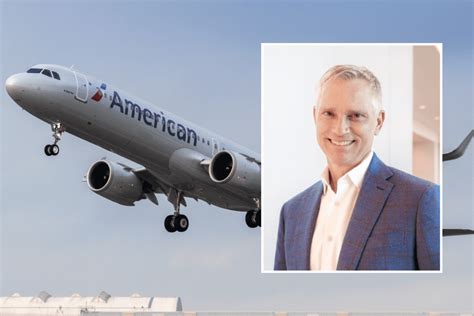
American Airlines Adds Operational Experience
One of the most significant appointments is John Bendoraitis, the former chief operating officer of Spirit Airlines, who will lead American’s technical operations organization. His arrival brings experience from another major U.S. carrier at a time when American is placing greater emphasis on reliability, maintenance execution, and operational discipline. Reuters reported that Isom characterized the restructuring as an initial step toward stronger alignment and execution across the organization.
Several existing leaders are also receiving broader responsibilities. Nat Pieper, American’s chief commercial officer, and Heather Garboden, its chief customer officer, are among the executives taking on expanded roles. Caroline Clayton and Steve Neuman are joining the senior leadership team in communications and government affairs, respectively, while Ron DeFeo is leaving his communications leadership position. The changes suggest that American is attempting to connect commercial strategy, customer experience, operations, and corporate affairs more tightly.
The reshuffle does not represent a wholesale abandonment of Isom’s strategy. Instead, it appears designed to strengthen the organization responsible for delivering it. American continues to concentrate on its global network, premium cabins, customer experience, loyalty program, and hub performance, areas that management believes can generate better returns when executed more effectively.
Record Revenue Masks a Profitability Challenge
American’s second-quarter performance highlights the difference between revenue momentum and profitability. Passenger revenue increased 15.9%, while passenger revenue per available seat mile rose 10%. Premium passenger unit revenue climbed 13.4%, outperforming Main Cabin growth of 8.8%, while managed corporate revenue increased 26% year over year for a fifth consecutive quarter of double-digit growth.
That commercial strength gives American a solid foundation, but expenses remain a major constraint. The company’s second-quarter pre-tax income fell sharply from the previous year, with fuel, labor, and other operating costs contributing to the decline. The leadership changes therefore arrive at a point when American needs its existing investments to produce measurable financial returns rather than simply higher sales.
Premium Revenue Becomes Central to the Strategy
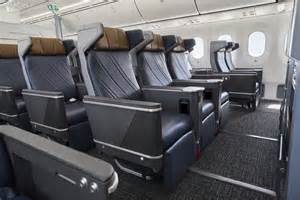
American is placing particular emphasis on premium revenue, responding to an industry-wide shift toward higher-value customers. The airline is adding premium seats through new Boeing 787-9 Dreamliner and Airbus A321XLR deliveries while retrofitting existing 777-300ER, 777-200ER, A319, and A320 aircraft. American expects to offer more premium seats than any other U.S. airline this summer.
The corporate market is already providing evidence that this strategy can work. Managed corporate revenue rose 26% in the second quarter, while premium unit revenue continued to outperform the Main Cabin. The challenge is ensuring that the additional aircraft, seats, and customer investments generate returns strong enough to improve American’s position against Delta and United.
DFW Shows What Better Execution Can Deliver
Operational improvements at Dallas/Fort Worth International Airport (DFW) provide an important example of the strategy in action. American’s schedule-rebanking initiative reduced system misconnections by nearly 25% year over year during the second quarter. Unit revenue at DFW also exceeded the airline’s system average, suggesting that better connectivity can support both customer satisfaction and financial performance.
Ultimately, the management reshuffle is less about changing American Airlines’ direction than accelerating its execution. Robert Isom has a strategy built around network strength, premium demand, loyalty, and operational improvement. The critical question is whether the reorganized leadership team can convert those strengths into substantially higher profitability. For American, the next few quarters will show whether a stronger management structure can finally translate record revenue into the financial performance needed to compete more effectively with Delta and United.