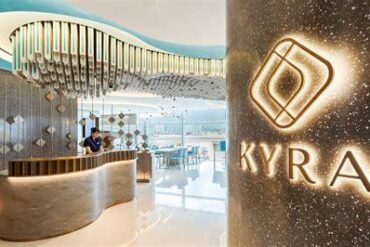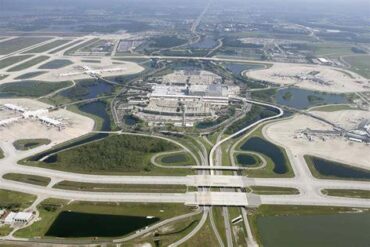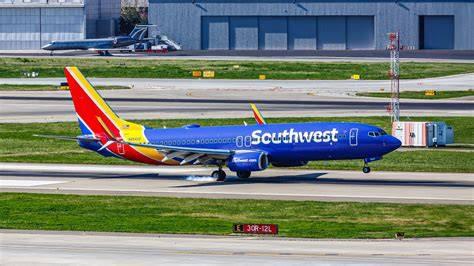
Southwest Airlines is quietly positioning itself to build a lounge at Orlando International Airport (MCO), a move that would plant its emerging premium brand in one of the carrier’s largest and most strategically valuable markets. The project has not been formally announced by the airline, yet the paper trail emerging from Orlando’s own planning process leaves little ambiguity about the direction of travel. Dedicated airline club space appears in expansion documents for Airside 2, the concourse complex where Southwest operates its primary Orlando gate footprint, and a source cited by View From The Wing has confirmed the carrier’s interest. For an airline that spent five decades selling simplicity and rejecting the trappings of legacy carriers, the Orlando filing represents something far more consequential than a single room with better coffee.
Airport Planning Documents Point To Dedicated Airside 2 Club Space
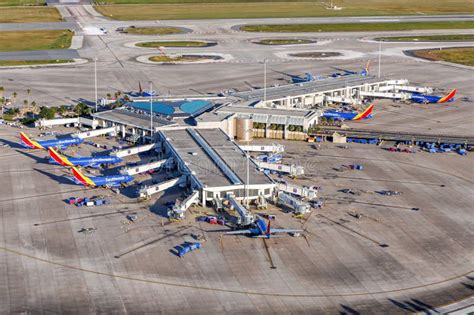
The strongest evidence sits inside Orlando International Airport’s own procurement record. An April presentation delivered to contractors listed “airline club space” on Level 3 of the Airside 2 expansion, a placement that suggests the facility was contemplated early enough to be designed into the building rather than squeezed into it afterward. A June design and engineering solicitation went considerably further, specifying an airline club or lounge facility complete with vertical circulation, support spaces, and an optional terrace. Those three elements describe a purpose-built hospitality venue with its own dedicated access route, back-of-house operations, and the possibility of outdoor seating overlooking the airfield.
The documents do not name Southwest directly, which is typical for airport capital solicitations that must remain competitively neutral until a lease or use agreement is executed. An airline source cited by View From The Wing confirmed the carrier’s plans, while the outlet reported that the eventual size of the lounge remains unknown. That silence on square footage matters. A club of 4,000 square feet serves a fundamentally different customer than one of 12,000 square feet, and the difference shapes everything from seating capacity during morning departure banks to whether a full kitchen or a grab-and-go counter anchors the food offering.
Location is the quiet advantage here. Airside 2 handles gates 100 through 129 on Concourse 2, the complex Southwest uses for its main Orlando operation. Building a lounge into an expansion gives the airline purpose-designed space instead of forcing a retrofit into an already congested terminal, a distinction that affects plumbing, ventilation, kitchen infrastructure, and the structural capacity needed for a mezzanine-level club. Airport capital planning documents also proposed raising the expansion budget from $374 million to $681.9 million, a figure covering a new wing, additional aircraft parking positions, and a premium lounge. That broader number does not establish how much would be spent on Southwest’s facility specifically, and the airport has not broken out lounge costs.
Orlando Would Extend A Lounge Network Built Around Chase
Southwest formally announced its first four lounge locations on September 2: Austin-Bergstrom International Airport (AUS), Baltimore/Washington International Thurgood Marshall Airport (BWI), Daniel K. Inouye International Airport in Honolulu (HNL), and Nashville International Airport (BNA). Construction has already begun at those sites, and the first guests are expected in late 2027. The airline has said at least seven additional lounges are planned across high-demand business and leisure markets, which places Orlando inside a pipeline rather than at the frontier of the concept.
Orlando would become the fifth identifiable location in the network, joining three other sites beyond the initial four where public plans or executive comments point to possible facilities: Denver (DEN), Dallas Love Field (DAL), and Ronald Reagan Washington National Airport (DCA). Those locations are not all at the same stage of confirmation, and Southwest has not published a complete list of its planned lounges. Orlando’s reported inclusion therefore adds evidence of expansion without establishing a finalized rollout schedule. The airline has announced no Orlando opening date and released no floor plan, and Simple Flying was told there is no further information at the moment.
The optional terrace mentioned in the airport’s design solicitation deserves careful reading. It appears as a potential feature of the project scope, not as confirmation that the finished lounge will include outdoor seating. Airports frequently include optional bid items so contractors can price alternates the client may or may not exercise. If Orlando does include a terrace, it would immediately distinguish the facility from the four announced locations and give the lounge a signature architectural element in a market defined by heat, humidity, and long leisure stays.
Chase Partnership Ties The Lounge To Rapid Rewards Loyalty Strategy
The lounge program is being developed with Chase, Southwest’s long-standing credit card partner. The airline says a new premium Rapid Rewards credit card issued by Chase is expected to launch in 2027 and provide access to the lounge network. Southwest has described the facilities as a combination of its hospitality approach with sophisticated design, locally inspired dining, and amenities associated with the Chase Sapphire Reserve Lounge Network. That last detail matters enormously, because it signals that Southwest is not inventing an access model from scratch but plugging into an established premium ecosystem with its own service standards.
For Orlando, the strategy maps neatly onto the market. Central Florida draws millions of leisure travelers heading to theme parks and resorts, many of them traveling in family groups rather than as solo business passengers. A lounge gives Southwest another way to differentiate its offering before boarding, while a card-linked access model encourages customers to keep spending and earning rewards inside the same travel ecosystem. The airline has not disclosed whether the Orlando lounge will impose guest limits, require a particular fare or status, or offer paid entry. Those details will determine whether the facility functions as a genuine family amenity or a tightly gated perk for a narrow slice of cardholders.

Why A Premium Lounge Fits Southwest’s Broader Repositioning
The broader expansion coincides with Southwest’s effort to broaden its appeal beyond its traditional low-cost positioning. Assigned seating, upgraded cabins, and now airport lounges collectively describe an airline rewriting the terms of its own brand. Its lounge investment introduces a premium element to the airport experience, while the Chase partnership connects that amenity directly to the airline’s loyalty program rather than treating it as a standalone real estate play.
Orlando’s proposed facility would extend that approach into a market where Southwest already has a substantial operating presence, and that existing scale is precisely what makes the economics work. A lounge performs best where an airline controls enough departures to fill it across multiple banks of flights. Airside 2 gives Southwest that density. What remains unresolved is scale, timing, and access design. Until the airline publishes those details, Orlando stands as the clearest signal yet that Southwest intends to compete for premium travelers on the ground as well as in the air.