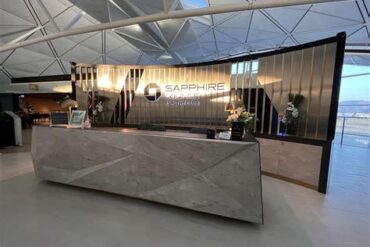
After more than three years of quiet significance, the original Chase Sapphire Lounge at Hong Kong International Airport has officially closed, ending a short but symbolically important chapter in the evolution of premium credit card lounges. Opened in October 2022, the lounge carried outsized weight as the first physical expression of the Chase Sapphire brand in airport hospitality, positioned inside one of Asia’s most competitive global hubs.
Unlike later locations in the network, the Hong Kong lounge stood apart both geographically and strategically. While Chase Sapphire Lounges were clearly designed to serve a US-centric cardmember base, this outpost operated thousands of miles from that core market. Access rules reflected that anomaly, with unrestricted entry for all Priority Pass members and no annual visit caps, making it unusually generous by global lounge standards.
In early December 2025, Chase confirmed that the Hong Kong Sapphire Lounge would close permanently on January 5, 2026. No formal explanation accompanied the announcement, fueling speculation across frequent-flyer communities. Given the rising costs of international operations and the brand’s domestic focus, many observers suspected the decision reflected strategy rather than performance.
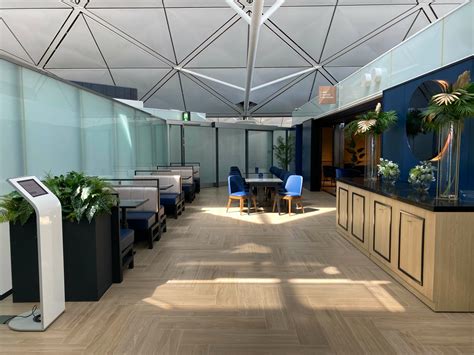
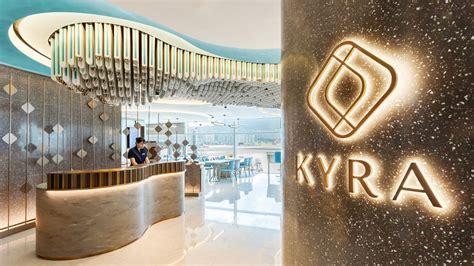
The closure now has a clear outcome. The former Sapphire Lounge space has reopened as the Kyra Lounge, marking its transition from a branded credit-card showcase into a broader Priority Pass-focused offering. This is not an unfamiliar name at Hong Kong International Airport; Kyra already operates another lounge in the terminal, widely regarded as one of the stronger independent options available.
Strategic Context
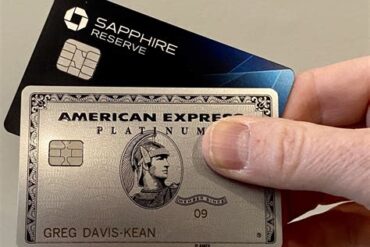
The rebranding underscores how Chase structured its lounge strategy differently from competitors like American Express. Sapphire Lounges are operated in partnership with The Club, and access is mediated through Priority Pass rather than direct card presentation alone. That layered monetization model works efficiently within the United States, but becomes harder to justify abroad, where brand synergy and card acquisition benefits diminish.
What Travelers See
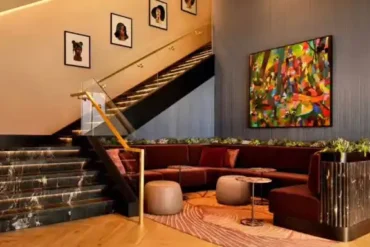
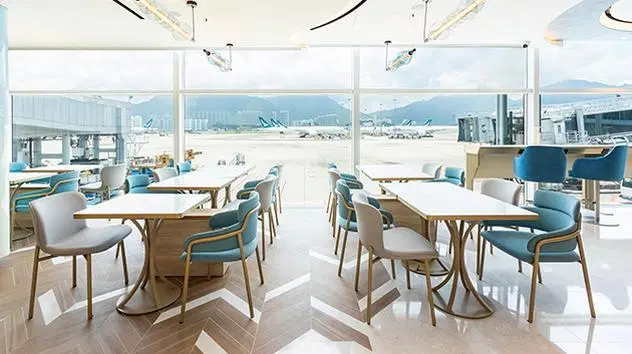
For travelers, the practical impact is less disruptive than the brand shift might suggest. The new Kyra Lounge continues to accept Priority Pass members, allowing entry up to three hours before departure. Early impressions indicate that much of the original design language, seating density, and food service standards remain intact, preserving the lounge’s reputation for calm efficiency.
Industry Implications
Industry watchers view the transformation as confirmation that the Hong Kong experiment never aligned with Chase’s long-term objectives. The Sapphire Reserve card is issued exclusively in the United States, and its lounge network increasingly functions as a retention tool for domestic cardholders. Removing an overseas outlier simplifies operations while strengthening focus on high-traffic US airports.
There is also a symbolic dimension to the closure. As the very first Sapphire Lounge ever opened, Hong Kong represented ambition and experimentation. Its rebranding signals a maturation phase for the network, where consistency, scalability, and return on investment now outweigh novelty.
For Priority Pass users, the outcome may actually be positive. Kyra has already built a reputation for reliable service, contemporary interiors, and thoughtful food offerings. With two locations now operating at Hong Kong International Airport, capacity pressures should ease, improving access during peak departure waves.
From a branding perspective, the episode highlights how global visibility does not always translate into measurable loyalty. Airport real estate is expensive, expectations are high, and card issuers must balance prestige with profitability when expanding beyond their primary customer base. Those lessons are increasingly shaping lounge networks worldwide across major aviation hubs.
Ultimately, the Chase Sapphire Lounge Hong Kong story ends less as a failure and more as a recalibration. The space lives on under a different name, travelers retain lounge access, and Chase refines its strategy around markets it knows best. In a landscape where airport lounges increasingly define travel experiences, clarity of purpose may be the most valuable amenity.