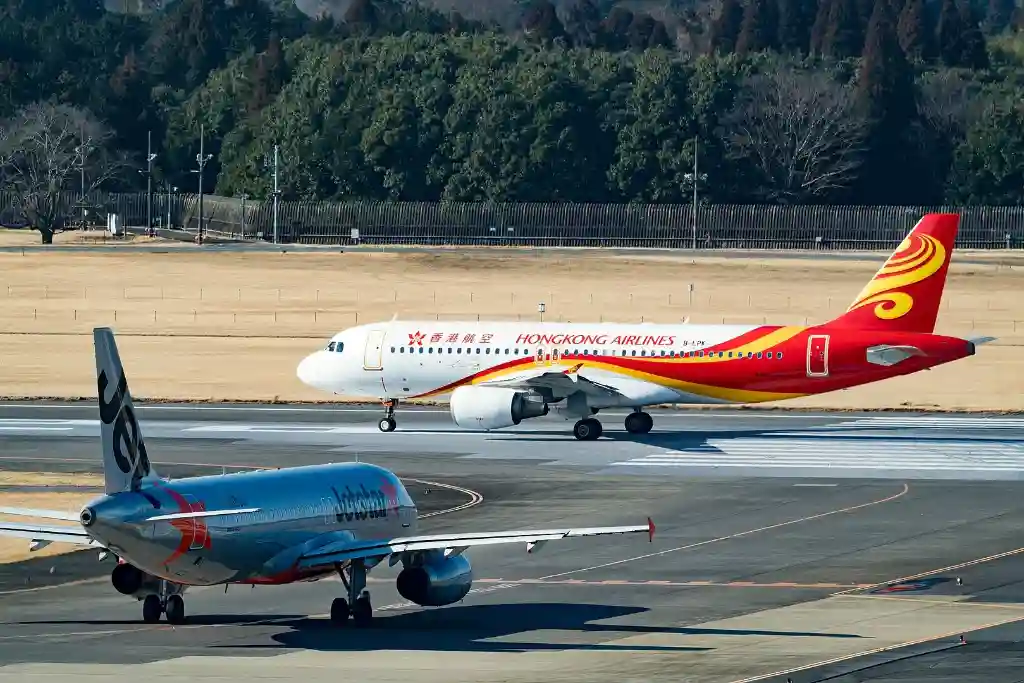
On July 25, 2025, an unusual incident unfolded at Taiwan Taoyuan International Airport (TPE), where a Hong Kong Airlines plane found itself in a head-to-head standoff with a Hainan Airlines aircraft. This unexpected confrontation raised serious questions about aviation safety and air traffic control procedures, particularly during peak travel times in one of East Asia’s busiest airports.
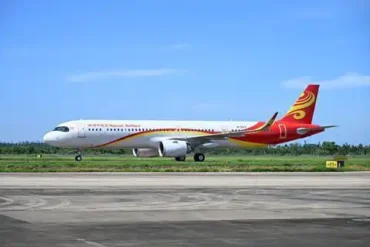
The situation began to unfold shortly after Hong Kong Airlines flight HX252, an Airbus A320, safely landed at TPE from Hong Kong International Airport (HKG). As the aircraft was taxiing towards its designated gate, it inadvertently entered a taxiway already occupied by Hainan Airlines flight HU7987, which had just arrived from Beijing Capital International Airport (PEK). The result was a collision that left both planes immobilized on the apron, necessitating towing by maintenance vehicles to reach their respective stands.
Details of the Incident
Around 11:10 a.m. local time, the chaos began as the aircraft from Hong Kong began its taxi. Preliminary investigations conducted by Taiwan’s Civil Aviation Administration (CAA) pointed to a significant error in communication from the air traffic control tower, leading to the two aircraft operating in opposite directions on the ground. While there were early reports that mistakenly suggested HX6704 had landed on an incorrect runway, Hong Kong Airlines later clarified that all protocols had been followed diligently.
Upon realizing the potential danger posed by the situation, air traffic control quickly intervened, directing the Hong Kong Airlines plane back to the ramp with assistance from a tow bar. Despite the severity of the standoff, Hong Kong Airlines reported that there were no injuries among passengers or crew members, nor any damage to the aircraft involved.
Hong Kong Airlines’ Response
In the aftermath of the incident, Hong Kong Airlines wasted no time in issuing a statement reaffirming that flight HX252 adhered to all necessary protocols dictated by air traffic control. They confirmed that the safety of passengers and crew was their utmost priority. Furthermore, the airline expressed its commitment to cooperating fully with the ongoing investigation led by aviation authorities.
The airline also reached out to the Hong Kong Civil Aviation Department, which acknowledged the incident and pledged to monitor the investigation closely. A spokesperson for Hong Kong Airlines emphasized their intention to learn from this event and improve operational safety in the future.
Investigation and Safety Concerns
Following the incident, the Taiwan Civil Aviation Administration initiated a formal investigation to ascertain the underlying causes of the mishap. The regulator has since mandated that air traffic controllers exercise greater caution when issuing taxiway instructions to prevent similar occurrences. This incident serves as a stark reminder of the critical importance of effective communication within busy airport environments, especially during peak traffic periods.
Aviation experts have noted that as air traffic increases, so too must the rigor of safety protocols. Taoyuan International Airport, known for its high volume of air traffic, is projected to handle up to 651 flights daily and accommodate over 8.53 million passengers during the peak months of July and August in 2025. With this influx, the need for precise and accurate communication becomes not just important but essential.
Impact on Taoyuan Airport’s Operations
The confrontation between Hong Kong Airlines and Hainan Airlines has sparked renewed scrutiny of the operational capabilities of Taoyuan International Airport, which operates like a well-oiled machine amidst a hive of activity. During the summer months, the airport experiences a surge in flights, creating a complex web of logistical challenges in getting aircraft in and out efficiently while maintaining safety standards.
This incident has ignited discussions surrounding the necessity for tightening safety protocols and enhancing communication between ground control and flight crews, particularly during peak operational hours. It serves as a potent reminder that even in a highly regulated environment, errors can occur, necessitating vigilance and continuous improvement in aviation safety measures.
Conclusion
As the investigation unfolds, the aviation community is watching closely to see how both Hong Kong Airlines and Hainan Airlines will adapt and respond to the findings. The incident at Taoyuan International Airport may well serve as a catalyst for broader changes within the industry, emphasizing the need for stringent adherence to safety protocols and improved communication systems across all levels of air traffic management. In an era where air travel is increasingly common, ensuring the safety of passengers and crew remains paramount, and lessons learned from this incident will undoubtedly shape the future of operations at one of the region’s busiest airports.