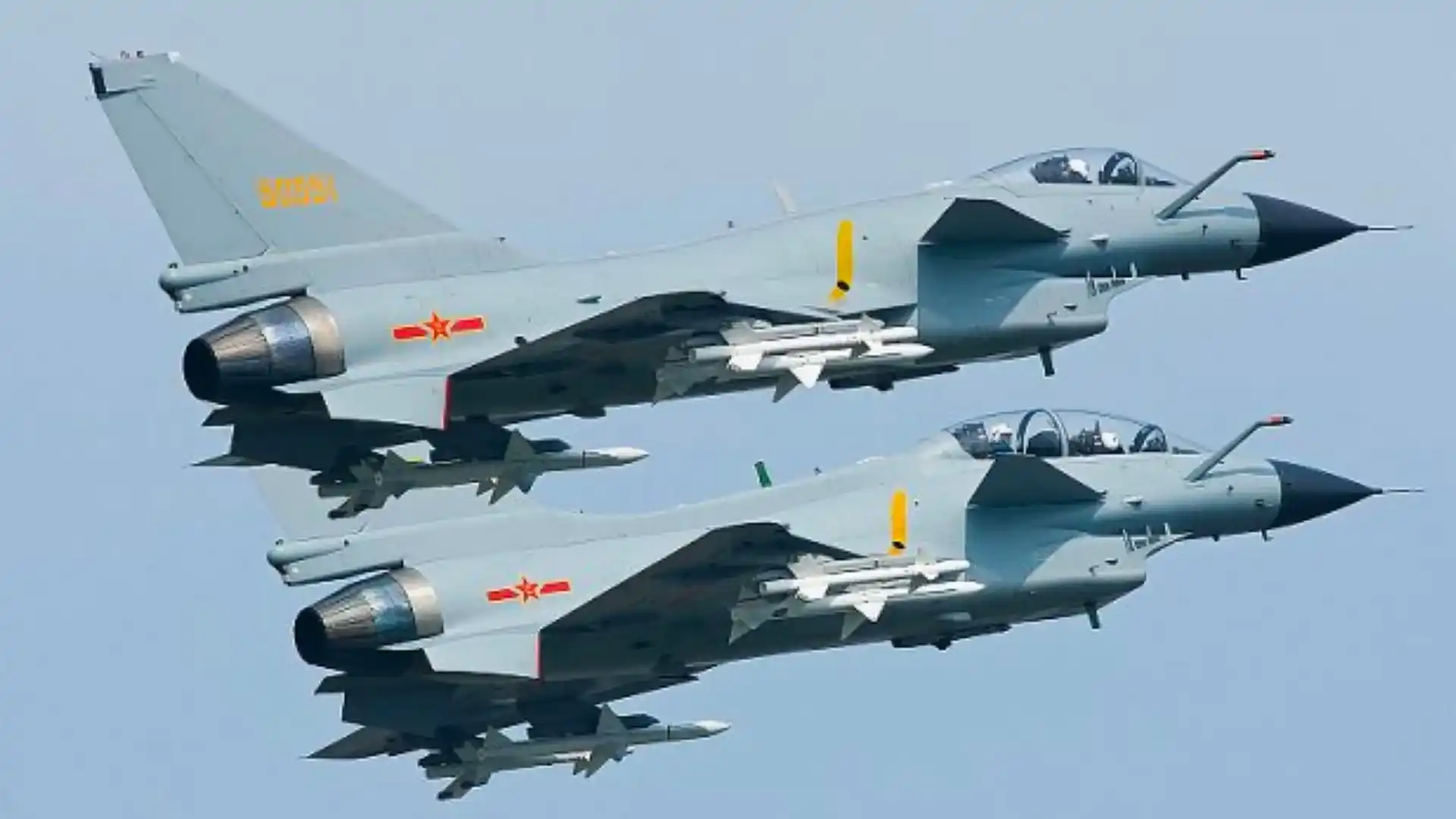
Taipei’s bustling streets fell silent at 1:30 PM on Thursday as air raid sirens wailed across the capital, freezing the lives of 2.5 million residents in a chilling rehearsal for a worst-case scenario: an all-out Chinese military invasion. Taiwan’s annual civilian air defense drill, known locally as the “Wan An” exercise, coincides this year with an alarming spike in People’s Liberation Army Air Force (PLAAF) activity over the Taiwan Strait, amplifying fears of a possible escalation.
The drill, mandated by the Taiwanese government, ordered all vehicles off the roads, and pedestrians into underground shelters, including car parks and metro stations, while loudspeakers issued calm yet firm instructions. For thirty minutes, Taipei resembled a ghost city—not due to pandemic lockdown, but because of war preparations. Underground, locals crouched in designated safe zones as authorities simulated a missile strike, including wartime casualty responses and humanitarian aid distribution. Supermarkets and metro stations became impromptu training grounds for a public slowly adjusting to the grim realities of regional conflict.
Rising Cross-Strait Tensions and China’s Escalating Military Pressure
The timing of these drills is no coincidence. In recent weeks, PLAAF jets have repeatedly crossed the Taiwan Strait median line, the unofficial buffer that has long helped keep peace in the volatile region. These crossings, while still technically in international airspace, are clear political signals from Beijing, signaling its readiness to project power and enforce its claim over Taiwan. The Chinese Communist Party, despite never ruling Taiwan, maintains it is part of its sovereign territory, vowing to reunify it by force if necessary.
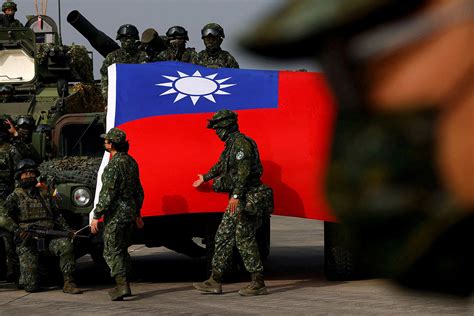
President Lai Ching-te, who assumed office last year, has emphasized public resilience and defense readiness. His administration views this year’s expanded drills, which include a record number of reservists participating in the 10-day “Han Kuang” military exercises, as both strategic messaging and practical defense preparation. Troops rehearsed for a wide array of scenarios—from conventional amphibious assaults to urban warfare against infiltrating Chinese units.
Drills Simulate Reality of War in Civilian Spaces
In a striking visual display, elite military squads armed with U.S.-provided Stinger missiles were seen moving swiftly through Taipei’s subway systems during nocturnal raids, a scene that drew comparisons to modern insurgency containment operations in Middle Eastern urban centers. The drill wasn’t merely performative—it was a live scenario execution aimed at blending military readiness with civilian experience.
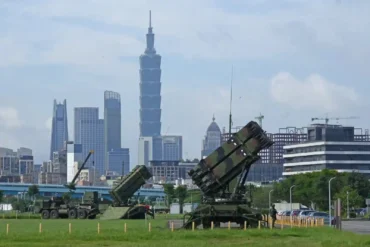
Adding to the tension, mobile missile launchers were visibly stationed throughout the city and surrounding suburbs, bringing the stark image of conflict from television screens to neighborhood intersections. One high-profile exercise even involved a simulated missile strike at a bustling Taipei supermarket, where 70-year-old Yang Shu-ting was among the unaware shoppers.
“I didn’t know there was going to be a drill,” she recalled. “My heart was beating very fast. But I now know where to go if something really happens.”
Such drills are designed not only to test logistics but also to mentally prepare civilians for the psychological burden of sudden conflict—a goal that defense officials argue is as important as training soldiers.
Urban Warfare, Mobility Challenges, and Grey Zone Threats
This year’s military exercises pivoted from traditional defense lines to combat operations in urban settings, signaling a tactical shift to account for a likely modern-day invasion where Chinese paratroopers or special forces infiltrate city streets rather than beaches.
However, these drills revealed more than just tactical preparedness—they exposed Taiwan’s geographic constraints. Several collisions involving armored vehicles highlighted logistical challenges as tanks struggled through Taipei’s narrow roadways and underpasses. According to defense analyst Chieh Chung, this problem affects both defending and attacking forces. “In Taiwan, many roads and bridges create significant limitations for armored vehicles when they move through,” said Chieh, who works at the Association of Strategic Foresight in Taipei.
Beyond physical confrontation, the drills also addressed ‘grey zone’ warfare—a strategy used by China involving continuous pressure without crossing into outright war. This includes electronic interference, propaganda, cyberattacks, and drone incursions, all of which Taiwan has documented in rising frequency over the past two years.
Japan’s Security Alarm as China Pushes Regional Boundaries
Taiwan isn’t the only regional player growing increasingly uneasy. Japan released its annual defense white paper this week, explicitly naming China as the “greatest strategic challenge” to its national security. The document detailed a confirmed PLAAF incursion into Japanese airspace last year and highlighted another incident in which Chinese jets flew within 30 meters of a Japanese surveillance aircraft over the East China Sea.
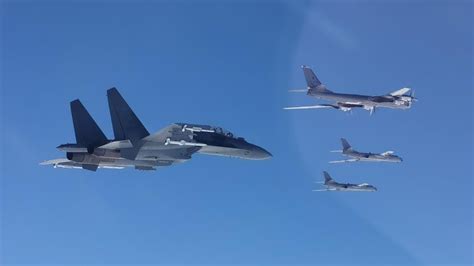
Tokyo also cited the unprecedented dual deployment of Chinese aircraft carriers in the Pacific, including inside Japan’s Exclusive Economic Zone (EEZ). Japan’s Defense Ministry interpreted this as a provocative move, especially considering China’s concurrent joint drills with Russia, a combination perceived as a clear attempt to project dominance over East Asia.
China responded with typical defiance, accusing Japan of “hyping up the so-called China threat” and lodging a diplomatic protest. Still, Japan has moved ahead, boosting its defense budget and enhancing military cooperation with Washington and Canberra, a response directly aligned with U.S. strategic goals in the region.
Washington’s Strategic Balancing Act and Allied Involvement
The United States is now pushing its allies to take clearer stances in the event of a Taiwan crisis. Elbridge Colby, former U.S. under-secretary of defense for policy, revealed that Washington is holding intensive talks with Japan and Australia about their roles in a potential Taiwan contingency. Colby underscored that the Trump administration’s agenda emphasizes shared responsibility: “Urging allies to step up their defense spending and other efforts related to our collective defense.”
These conversations extend into trade negotiations, with the specter of 25% tariffs on Japanese imports dangling in the background. Washington is using both carrot and stick diplomacy to ensure it won’t stand alone in what many analysts believe would be the most consequential war of the 21st century.
A Population Rehearsing for the Unthinkable
For Taipei residents, these drills are more than political messaging—they’re becoming a routine rehearsal for the unthinkable. Whether in office buildings, supermarkets, or metro tunnels, the constant reminder that Taiwan sits at the crossroads of superpower rivalry is inescapable. Civilian participation is increasing, with many younger Taiwanese viewing the exercises as necessary rather than inconvenient.
“It’s not fear,” said 25-year-old Oscar Wang, when asked why he participated voluntarily. “It’s awareness. These drills show us that war might not be far away—and we need to be ready.”
This normalization of wartime simulation is fast becoming a defining feature of Taiwanese life. The drills, military movements, and diplomatic chess pieces moving across the Indo-Pacific map all point to a new reality—one in which peace is no longer assumed, and preparation is paramount.
As Friday marks the conclusion of the Han Kuang exercises, the world watches closely. Taipei may resume its daily rhythm soon, but the threat hovering in the skies remains.
Taiwan is not just practicing defense. It is sending a message.
It will not be caught unprepared.