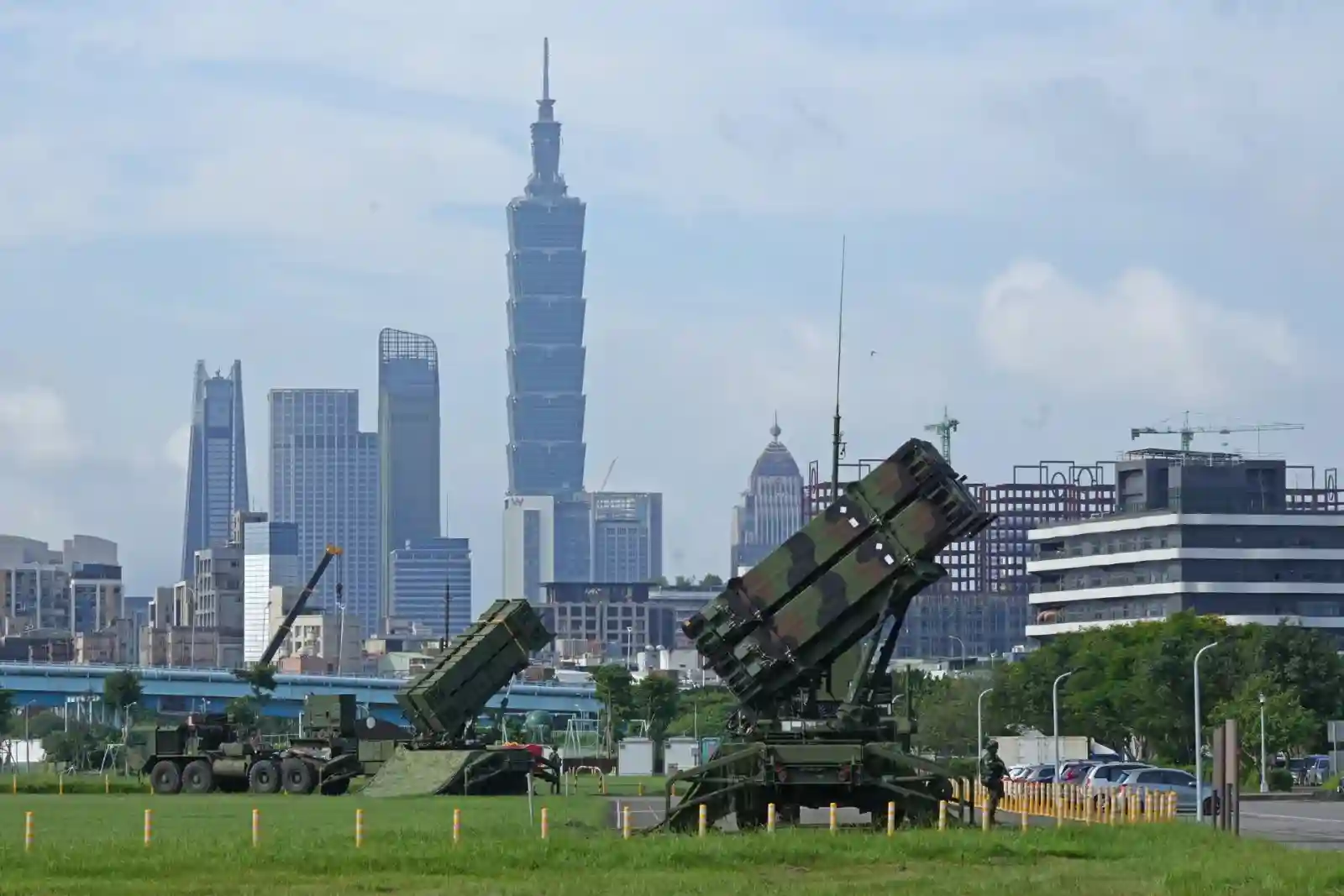
Taiwan’s military readiness entered a new phase during the 2025 Han Kuang exercises, as the island nation conducted its most extensive and visible urban defense drill yet—deploying American-made Patriot missile systems, HIMARS rocket artillery, and Stinger MANPADS across the capital city of Taipei. With rising cross-strait tensions and growing fears of a potential Chinese invasion, Taiwan’s Armed Forces demonstrated a sophisticated response strategy, merging cutting-edge weaponry with the island’s dense urban infrastructure.
Patriot Systems Protecting Taipei’s Skies
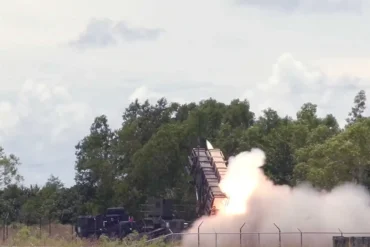
The deployment of Patriot missile batteries in a riverside park near Songshan Airport signaled a deliberate effort to protect critical infrastructure at the heart of the capital. As the People’s Liberation Army (PLA) intensifies its aerial and missile threats, these systems act as the first line of defense against both aircraft and incoming missiles. Taiwan’s configuration allows the use of either Patriot II interceptors, aimed at aircraft and cruise missiles, or Patriot III missiles, specifically engineered to take out ballistic threats such as China’s Dong Feng 15.
This dual-capability offers a layered missile defense architecture—crucial for a city like Taipei, which houses government command centers, military command nodes, and key transportation hubs. The symbolic and strategic impact of deploying such weapons within the urban fabric reinforces Taiwan’s posture: not only is it ready to intercept missiles, but it is also prepared to do so in the middle of a bustling metropolis under direct threat.
HIMARS: Precision Artillery with Strategic Impact
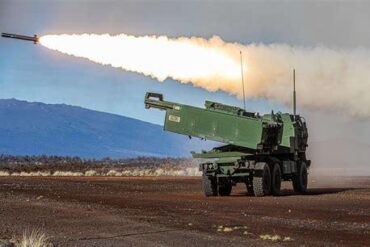
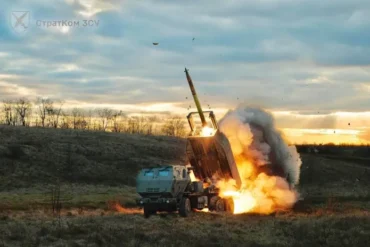
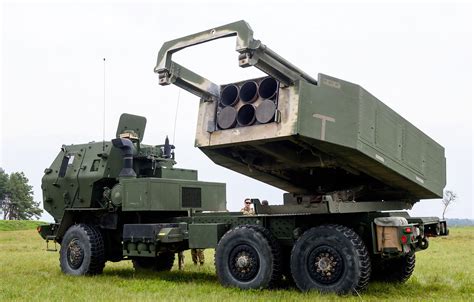
Further south, in central Taichung, Taiwan revealed the presence of two HIMARS (High Mobility Artillery Rocket Systems) units aboard armored trucks. These mobile, GPS-guided rocket launchers, which gained notoriety during the war in Ukraine, provide a potent long-range strike capability capable of targeting enemy concentrations, logistics hubs, or landing forces.
Taiwanese military officials emphasized stealth deployment as a core operational doctrine for HIMARS. Colonel Chen Lian-jia stated that great care is taken to shield these assets from enemy satellites, aerial reconnaissance, and infiltrated agents, preserving the element of surprise. The ability to conceal and maneuver HIMARS systems in urban areas increases their survivability and lethality, especially against PLA forces attempting to establish beachheads or penetrate inland.
Stinger Missiles Bring Mobility to Low-Altitude Defense
Complementing Taiwan’s high-altitude air defense are Stinger surface-to-air missiles, both shoulder-fired and vehicle-mounted. Deployed throughout Taipei’s districts, these man-portable air-defense systems provide a flexible response to low-flying threats, such as helicopters, attack aircraft, and reconnaissance drones.
Stinger-equipped soldiers were seen patrolling alongside civil traffic, blending military presence with everyday urban life. These drills simulate scenarios where Chinese airborne forces—such as helicopter-borne troops or drone swarms—seek to infiltrate or sabotage the capital. The rapid deployment capability of Stingers provides agile defensive coverage, enhancing the city’s vertical shield from street level to high altitude.
Strategic Use of Taipei Metro: The Urban Battlefield
Among the most innovative aspects of the 2025 Han Kuang drill was the militarization of the Taipei Metro system. This vast underground network—spanning over 135 stations and 150 kilometers of track—served as a concealed mobility corridor for troops, weapons, and logistics.
For the first time, Military Police units and the Third Logistics Command navigated the metro tunnels using maintenance wagons to carry Stinger launchers, grenade launchers, machine guns, and anti-tank weapons between Shandao Temple and Longshan Temple stations. Civilian passenger traffic was briefly halted as these covert military maneuvers played out beneath the city.
This underground capability presents Taiwan with two strategic advantages: protection from aerial reconnaissance and missile strikes, and the ability to launch surprise counterattacks in the event of urban combat. Metro stations can also be transformed into command posts, medical stations, or supply depots, blurring the line between civilian and military assets and complicating enemy targeting.
However, this tactic comes with risk. If the PLA were to treat metro infrastructure as valid military targets, civilian casualties and underground combat scenarios could escalate rapidly. The Taiwanese government has yet to fully address how to balance operational advantage with civilian safety in such cases, particularly in a densely populated capital.
Taiwan’s Urban Warfare Doctrine Evolves
The integration of American defense technology with Taiwan’s urban landscape reflects a significant evolution in military doctrine. Instead of relying solely on coastal defenses or traditional force posturing, Taiwan’s Armed Forces are preparing for asymmetrical conflict within urban centers. This preparation aligns with growing intelligence assessments suggesting the PLA may attempt to seize Taipei in a “decapitation strike” to quickly disable the island’s leadership and military command.
As a result, the Han Kuang exercises are not merely about defensive firepower—they are a rehearsal of survival under siege. Troops are trained to move, strike, and regroup within the city, using terrain to their advantage and employing technology as force multipliers. Urban warfare in Taipei would be multi-dimensional, involving rooftop anti-air teams, metro-based logistics, and fortified government facilities acting as last-resort redoubts.
American Arms, Delays, and Strategic Ambiguity
The appearance of Patriots, HIMARS, and Stingers during Han Kuang reflects the ongoing U.S. arms deliveries to Taiwan, despite significant backlogs. According to the Cato Institute, roughly $20 billion in American arms sales remain undelivered as of late 2024. These include not just missile systems but also drones, anti-ship missiles, and advanced surveillance platforms.
The U.S. maintains a policy of strategic ambiguity, officially declining to confirm whether it would militarily intervene in a Taiwan Strait conflict. Nevertheless, its material support—both in weapons and training—has grown significantly in recent years. The goal is to make any PLA invasion costly, slow, and uncertain, buying time for international diplomacy or other forms of intervention.
This “hard deterrence” approach is not about defeating China outright but rather complicating its military calculus enough to prevent it from taking the risk. With China reportedly eyeing 2027 as a potential milestone to gain full invasion capabilities, every year of preparation matters.
Public Awareness and Psychological Readiness
The highly visible nature of the 2025 Han Kuang exercises also serves a psychological purpose. By placing launchers in parks and troops in metro tunnels, Taiwan is signaling to both domestic and international audiences that it is not afraid to militarize its urban core in the face of existential threat. Public reactions have been mixed—ranging from support to anxiety—but the overarching message is clear: Taiwan will not wait passively.
As the civilian population becomes accustomed to military assets sharing their space, Taiwan is also investing in civil defense education, emergency response drills, and infrastructure hardening. Future drills are expected to include blackout scenarios, mass casualty simulations, and shelter conversion protocols, reinforcing the concept of total defense.
A City Transformed for Survival
Taipei, once viewed merely as a diplomatic flashpoint, has now transformed into a theater of potential resistance. The 2025 Han Kuang exercise underscored Taiwan’s shift toward urban defense, showcasing not just new weapons, but a new mindset: survival through adaptability, mobility, and resilience.
The Patriot systems are there to shield the skies. The HIMARS launchers lurk behind buildings, waiting to strike from the shadows. The Stingers patrol the streets and the tunnels beneath. And the Taipei Metro, once a symbol of civilian convenience, now serves as a subterranean artery of resistance.
In preparing for a conflict it hopes to avoid, Taiwan is embracing a doctrine where the city becomes the battlefield—and every square meter counts.