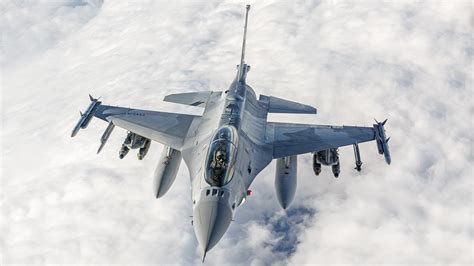
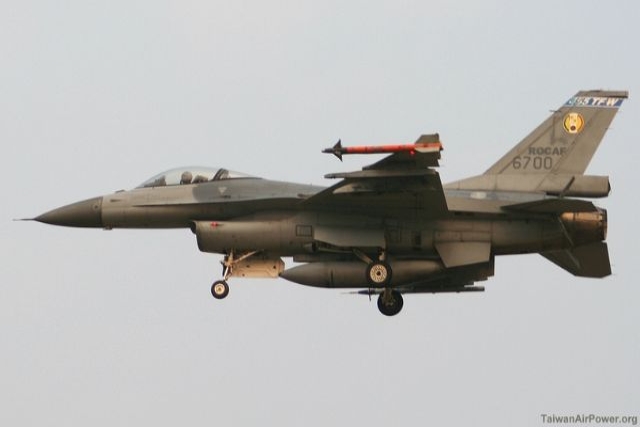
The F-16V Viper occupies a singular position in Taiwan’s national defense strategy. It is not merely another upgraded fighter aircraft; it is the backbone of the Republic of China Air Force’s (RoCAF) ability to monitor, intercept, and if necessary contest the rapidly expanding power of China’s People’s Liberation Army Air Force (PLAAF). When one of these jets plunged into the sea during a routine night training mission on January 6, 2026, the shockwave extended far beyond the loss of a single aircraft. The incident triggered an immediate grounding of the entire F-16V fleet, raised uncomfortable questions about avionics reliability and pilot survivability systems, and cast a harsh spotlight on the fragile balance of airpower across the Taiwan Strait.
From a purely numerical standpoint, the loss of one jet from a fleet of 140 might appear manageable. Modern air forces accept that accidents occur, even among the most advanced platforms. Yet context matters. Taiwan operates under relentless operational pressure, facing near-daily incursions into its air defense identification zone by Chinese aircraft. In such an environment, every sortie, every pilot, and every fully mission-capable airframe carries strategic weight. The F-16V crash therefore became not just an accident report, but a stress test of Taiwan’s air combat readiness at a moment when deterrence depends on visible competence.
The available facts remain limited, and official investigations are ongoing. What is clear is that the aircraft’s onboard systems reportedly issued an ejection alarm, while flight data indicated anomalies severe enough that the jet’s route disappeared from tracking displays. Whether the pilot successfully ejected remains unconfirmed. Taiwanese authorities emphasized that the aircraft had undergone regular maintenance and that no prior faults had been logged in its multi-mission control system. These assurances, however, did little to stem speculation about deeper systemic vulnerabilities in the most modern version of a jet that Taiwan increasingly relies upon.
The Anatomy of the Crash and the Limits of Early Explanations
Initial reporting pointed toward a potential malfunction in the main mission computer, the digital heart that integrates radar, navigation, flight control inputs, and sensor fusion. In a highly automated cockpit like that of the F-16V, a cascading failure in this system can rapidly overwhelm a pilot, especially during night operations over water where visual references are minimal. Loss of display data, degraded flight control feedback, or corrupted navigation cues can induce spatial disorientation, a well-documented killer in military aviation.
Alternative theories briefly surfaced, including the possibility of an engine-related failure or explosion, but none have been substantiated. Taiwanese officials have been careful to characterize these ideas as conjecture rather than conclusions. This caution is warranted. Modern fighter crashes rarely stem from a single fault; they are often the result of interacting technical, environmental, and human factors. The decision to ground the fleet reflects standard global practice when the cause of an accident is unclear, rather than an admission of known defects.
What has drawn sharper scrutiny is not the existence of uncertainty, but the absence of a critical safety net. The crashed aircraft reportedly lacked an Autonomous Ground Collision Avoidance System (Auto-GCAS), a technology designed to intervene when a jet is on a collision course with terrain and the pilot is incapacitated or disoriented. In such scenarios, Auto-GCAS can seize control and execute an automated recovery maneuver within fractions of a second. Its absence has become one of the most contentious aspects of the incident.
Auto-GCAS: A Missing Layer of Last-Resort Protection
The irony surrounding Auto-GCAS is difficult to ignore. Taiwan identified the need for the system as early as 2018, after an F-16V crashed into Wufen Mountain during the Han Kuang exercises, killing its pilot. That tragedy led to a commitment to retrofit the fleet. A second fatal crash in 2022, again attributed to spatial disorientation, reinforced the urgency. Yet as of early 2026, full integration of Auto-GCAS across the fleet remains incomplete, with original timelines extending to 2028.
Following the most recent crash, senior RoCAF officials signaled an intention to press the United States to accelerate the process, potentially completing installations by the end of 2026. This push underscores a broader reality: while the F-16V’s combat capabilities are formidable, survivability enhancements often lag behind offensive upgrades. Auto-GCAS does not make a jet more lethal, but it makes pilots more likely to survive rare but catastrophic moments when technology or physiology fails.
Operational Strain and the Human Factor
Beyond hardware, the human dimension cannot be ignored. Taiwan’s pilots operate under sustained pressure, responding to frequent Chinese military flights that probe airspace boundaries and test reaction times. Such tempos strain not only airframes, but also crews and maintainers. Reports highlighting fatigue and overextension among Taiwanese pilots surfaced quickly after the crash, reflecting legitimate concerns about long-term sustainability.
RoCAF officials were swift to counter claims that the pilot involved had been overworked, noting that he had recently rested over the New Year period and was flying a routine training mission. Both statements can be true. Individual rest does not negate systemic stress. High operational demand increases the margin for error, particularly during complex night sorties that rely heavily on flawless avionics performance and cognitive resilience.
Why the F-16V Still Matters Against the PLAAF
Despite the controversy, it would be a mistake to interpret the crash as evidence that the F-16V is unsuited for Taiwan’s defense needs. On the contrary, the aircraft remains the most capable fighter in Taiwan’s inventory and its best available counter to the PLAAF’s numerical and qualitative advantages. The timing of the incident, coming shortly after China’s large-scale “Justice Mission 2025” exercises, simply magnified its strategic resonance.
China’s drills involved coordinated operations across air, naval, and rocket forces, signaling an ability to conduct complex joint campaigns. Against this backdrop, Taiwan’s F-16V fleet represents a critical first line of response. It is tasked with intercepting Chinese aircraft, gathering targeting data, and maintaining situational awareness in a contested electromagnetic environment.
Facing Stealth: Limits and Countermeasures
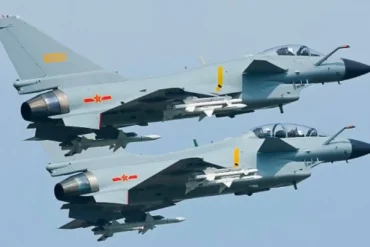
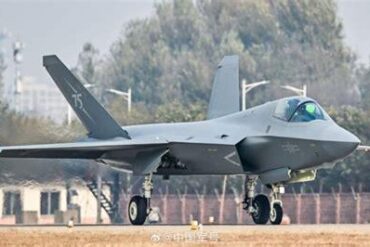
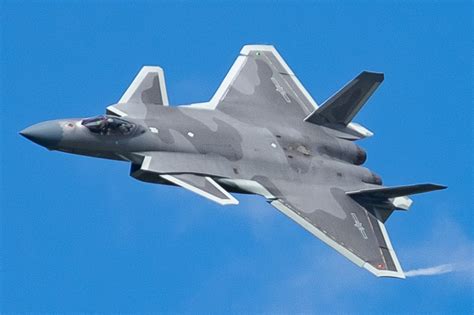
The PLAAF’s introduction of fifth-generation fighters such as the J-20 and the emerging J-35 has reshaped the regional airpower equation. These aircraft are designed to evade radar detection, complicating beyond-visual-range engagements. Reports that a J-20 may have operated near Taiwan during recent exercises without detection intensified concerns about whether even upgraded fourth-generation fighters can remain relevant.
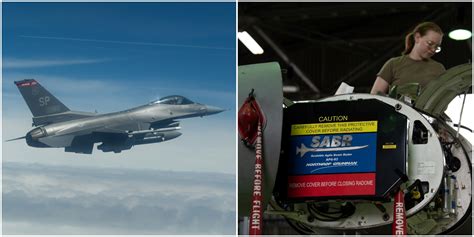
Yet stealth is not invisibility. The F-16V’s AN/APG-83 SABR AESA radar offers significant improvements over older mechanically scanned arrays, including better detection of low-observable targets and enhanced resistance to electronic countermeasures. More importantly, Taiwan is integrating complementary sensors that exploit the physical limits of stealth technology. The approval and contracting of Legion Pod infrared search and track (IRST) systems reflects a strategic pivot toward multi-sensor fusion. By detecting heat signatures rather than relying solely on radar reflections, IRST allows F-16Vs to spot stealth aircraft based on engine exhaust and aerodynamic heating, potentially at ranges exceeding 100 kilometers under favorable conditions.
The Viper’s Technological Edge Within Taiwan’s Fleet
Within the RoCAF, the F-16V stands apart. Taiwan’s Mirage 2000-5 fleet suffers from age, high operating costs, and maintenance challenges that limit availability. Indigenous F-CK-1 Ching-Kuo fighters, while politically and industrially significant, lack the radar performance, payload capacity, and endurance of the Viper. By contrast, the F-16V combines advanced avionics with structural upgrades that extend its service life to 12,000 flight hours, reduce maintenance burdens, and support sustained operations.
Its modular mission computer and Ethernet-based architecture enable smoother future upgrades, a crucial advantage in an era where software improvements can be as decisive as new airframes. The integration of Link 16 datalinks and helmet-mounted cueing systems further enhances pilot situational awareness, allowing Taiwanese fighters to operate as part of a networked defensive web rather than as isolated platforms.
Delays, Deliveries, and Strategic Timing
Complicating matters is the delayed arrival of Taiwan’s new-build F-16V Block 70 aircraft. While 140 older F-16A/B Block 20 jets have been upgraded under the Peace Phoenix Rising program, the additional 66 Block 70 jets are intended to bolster numbers and replace aging airframes. Testing delays have pushed initial deliveries later than planned, compressing timelines at a moment when Taiwan would prefer redundancy rather than vulnerability.
Defense Minister Wellington Koo’s remarks in the Legislative Yuan highlighted cautious optimism that once initial testing hurdles are cleared, production and delivery could accelerate. Even so, the gap between strategic requirement and actual availability remains a source of anxiety. Accidents, groundings, and retrofit programs all consume time, the one resource Taiwan can least afford to waste in a rapidly shifting security environment.
What Truly Went Wrong—and What Did Not
It is tempting to frame the F-16V crash as evidence of a flawed upgrade program or declining reliability. That interpretation does not withstand scrutiny. The available evidence suggests no pattern of systemic failure unique to the Viper configuration. Instead, the incident exposes the harsh reality of operating high-performance aircraft at the edge of human and technological limits, under persistent operational stress.
What went wrong was not the concept of the F-16V itself, but the lag between recognizing critical safety needs and fully implementing them. Auto-GCAS could prove decisive in preventing similar tragedies. Accelerating its integration would address one of the clearest lessons from multiple past accidents. At the same time, continued investment in pilot training, fatigue management, and sensor fusion remains essential.
In the final analysis, the F-16V remains Taiwan’s best bet against the PLAAF, not because it is perfect, but because it is adaptable, well-integrated, and embedded within a broader defensive strategy. The crash is a sobering reminder that deterrence is built not only on advanced hardware, but on relentless attention to detail, safety, and readiness. In an era where margins are razor-thin, learning the right lessons from tragedy may prove as important as any new aircraft delivery.