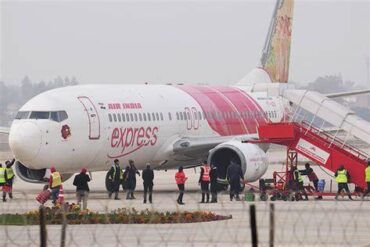
The investigation into Air India has intensified as regulators examine how one of the country’s largest carriers allowed an Airbus A320 to fly eight commercial flights without a valid Certificate of Airworthiness (CoA). This revelation, confirmed by the Directorate General of Civil Aviation (DGCA), adds to a growing pattern of safety lapses that has put the airline’s internal oversight under sharp public and regulatory scrutiny.
The incident traces back to a scheduled engine change on the aircraft, during which engineers identified that the CoA had expired. Despite this, the aircraft was cleared for service and continued operating through late November, only to be grounded after an engineer flagged the discrepancy. Air India has since suspended personnel involved in the release of the aircraft and stated that it is fully cooperating with the DGCA investigation.
The regulator’s early assessment is severe: operating an uncertified aircraft constitutes a Level 1 violation, categorised as a “critical lapse that directly affects flight safety.” Such breaches are exceptionally serious because they expose passengers, crew, and the aircraft itself to risks that regulatory processes are specifically designed to prevent.
The airline continues grappling with the fallout of the devastating Flight 171 Boeing 787-8 crash in June, which claimed 260 lives and triggered unprecedented scrutiny of Air India’s safety culture. Since that tragedy, the airline has consistently been warned for documentation failures, overdue safety checks, and pilot licensing breaches. The DGCA’s most recent annual audit further revealed more than 50 safety lapses, underscoring chronic gaps in compliance.
The uncertified A320 incident further deepens the regulator’s concerns. Engineers are typically required to verify all documentation, regulatory compliance lists, and certifications as part of routine daily checks. Allowing a non-compliant aircraft to fly multiple times without correction suggests not just human error but systemic oversight failure.
A Troubling Pattern in the Narrowbody Fleet
This episode is not isolated. Air India’s narrowbody operations have faced repeated challenges in the past year. In July, three Airbus aircraft—two A320s and an A321—were discovered operating up to three months overdue for mandatory safety checks. The DGCA issued warnings then, noting that such delays were inconsistent with acceptable standards for a mainline carrier.
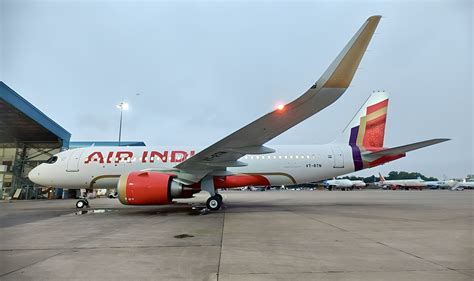
Air India (together with Air India Express) runs a sizeable narrowbody fleet of nearly 160 aircraft, dominated by the A320neo, which has been replacing older A319 and A320 classic models. As the fleet modernizes, the airline is managing a complex mix of generations, configurations, and operational requirements. Airbus data shows the carrier still has 300 additional narrowbody jets on order, including 90 A320neos and 210 A321neos, making it one of the manufacturer’s largest customers globally.
How a Certificate of Airworthiness Works—and Why This Failure Is Alarming
A Certificate of Airworthiness is more than paperwork; it is a formal validation that an aircraft conforms to technical, safety, and operational standards. It must be renewed annually, and airlines typically begin renewal procedures months ahead to avoid operational disruption. Maintenance logs, inspection results, defect rectifications, and parts documentation must all be validated before renewal.
For an aircraft to fly eight times without this certificate represents a breakdown of multiple layers of oversight—maintenance engineering, quality control, operations management, and documentation verification. The DGCA has emphasized that such a lapse is “not expected from a mainline carrier,” especially one already under heightened monitoring.
Potential Penalties and Fallout for Air India
Regulatory consequences are expected. A Level 1 violation may involve:
- Heavy financial penalties, which could reach the upper thresholds permitted under DGCA rules.
- Suspension of senior officials, particularly those overseeing operations, quality control, and engineering.
- Insurance complications, as operating an aircraft without a valid CoA can invalidate coverage—posing risks in the event of an incident.
The airline may also face increased oversight requirements, including mandatory audits, expanded reporting obligations, and stricter compliance reviews across its fleet.
Ultimately, while Air India continues aggressive expansion with major fleet orders and an ambitious modernization plan, this investigation underscores the urgent need to strengthen internal systems, documentation control, and safety culture. Regulators, passengers, and partners will be closely watching whether these systemic issues are corrected or continue to erode confidence in the carrier’s operations.