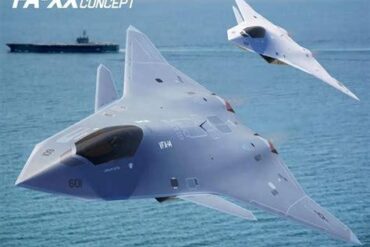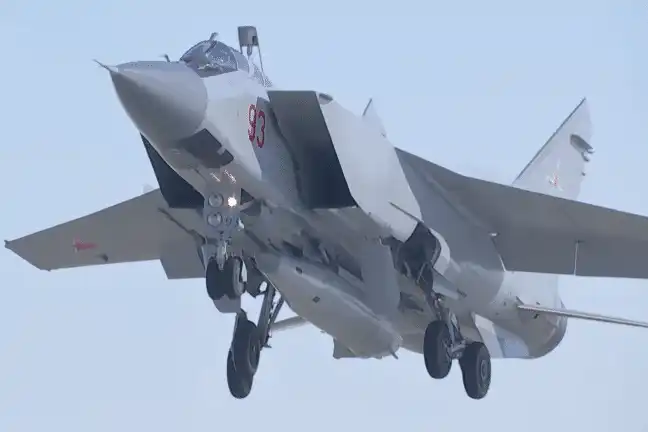
Russia stunned the defense world when it became the first nation to place a hypersonic weapon into operational service. The debut of the Kh-47M2 Kinzhal in 2017 reinforced an image of Russian technological leadership rooted in decades of Soviet aerospace achievements. At the time, Moscow appeared to possess a decisive advantage in one of the most strategically important areas of modern warfare. Yet less than a decade later, the global race has shifted. While the United States, Europe, and China are already investing heavily in sixth-generation combat aircraft and flying advanced prototypes, Russia remains focused on solving problems associated with fifth-generation platforms. The contrast highlights how a country capable of pioneering breakthrough weapons can still fall behind in broader aerospace competition.
The Kinzhal Hypersonic Missile Created An Image Of Russian Technological Supremacy
When Russian President Vladimir Putin addressed the Federal Assembly in March 2018, one announcement dominated international headlines. He unveiled the Kh-47M2 Kinzhal, a missile that had already entered experimental combat duty months earlier. Russian officials claimed the weapon could travel at speeds approaching Mach 10 while maneuvering throughout its trajectory, making interception extremely difficult. At a time when hypersonic technology represented one of the most sought-after military capabilities in the world, the announcement positioned Russia at the forefront of an emerging strategic field.
The significance of the Kinzhal went beyond raw speed. Hypersonic weapons compress response times and complicate the task of missile defense systems. Their ability to strike rapidly over great distances potentially alters calculations regarding deterrence and battlefield survivability. Moscow emphasized that existing Western air defense networks would struggle to intercept such a weapon, reinforcing the image that Russia had achieved a major technological leap ahead of its rivals.
However, analysts soon pointed out that the Kinzhal occupied a somewhat unique category within hypersonic systems. Rather than employing the sophisticated boost-glide architecture associated with next-generation hypersonic vehicles, the missile was largely derived from existing ballistic missile technologies. Although it unquestionably reached hypersonic velocities, its operational profile differed significantly from the advanced concepts under development in the United States and China.
Nevertheless, Russia deserves recognition as the first country to operationally deploy such a capability. The Kinzhal became a symbol of innovation and projected the impression that Moscow had regained the technological momentum once associated with Soviet aerospace achievements.
Soviet Aerospace Excellence Established A Legacy Few Countries Could Match
Russia inherited one of the most impressive aerospace traditions in history. Throughout the Cold War, Soviet engineers consistently produced revolutionary technologies that challenged or surpassed Western achievements. The launch of Sputnik 1 in 1957 demonstrated Soviet leadership in space technology and altered the geopolitical landscape. Four years later, Yuri Gagarin’s historic flight aboard Vostok 1 marked humanity’s first journey into space.
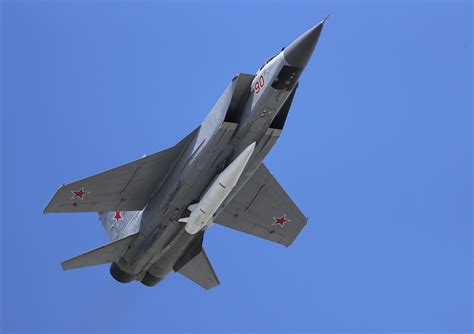
Military aviation achievements followed a similar pattern. The MiG-25 Foxbat became one of the fastest operational fighters ever built, while the MiG-31 Foxhound introduced sophisticated radar capabilities capable of tracking multiple targets simultaneously. Soviet engineers even launched the Tupolev Tu-144 before Concorde, making it the world’s first supersonic transport aircraft to take to the skies.
These accomplishments reflected a massive industrial ecosystem supported by research institutes, specialized factories, and highly educated engineering talent. Experimental projects such as the Sukhoi T-4 Sotka and Su-47 Berkut showcased the willingness of Soviet designers to explore unconventional technologies.
The collapse of the Soviet Union disrupted this foundation. Although Russia inherited much of the aerospace infrastructure, the integrated supply chains that once stretched across multiple republics were fragmented. Collaborative programs involving Ukrainian industries gradually disappeared, eliminating important sources of expertise and manufacturing capacity.
The Global Focus Shifted Toward Sixth-Generation Airpower
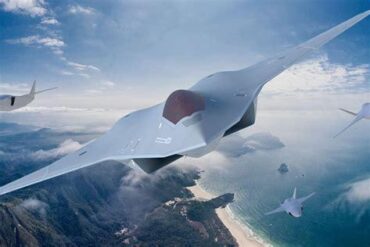
As hypersonic technology attracted headlines, another revolution quietly emerged. The world’s leading powers began investing heavily in sixth-generation fighters designed for a radically different battlefield environment.
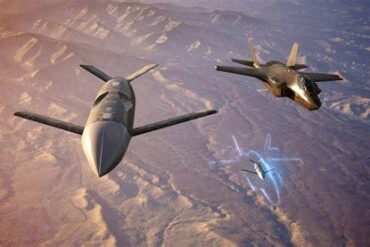
Future aircraft are expected to integrate advanced artificial intelligence, autonomous drone wingmen, sensor fusion, and high-speed networking capabilities. These platforms will function not simply as fighters but as command nodes operating within vast digital ecosystems.
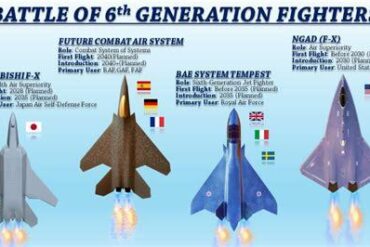
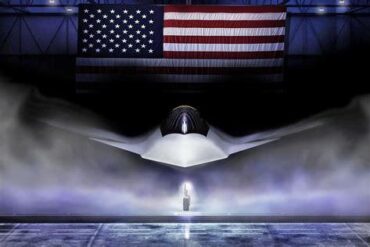
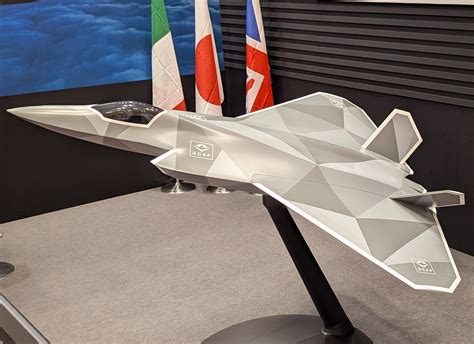
The United States accelerated development through the Next Generation Air Dominance initiative and introduced the F-47, a platform intended to succeed today’s fifth-generation aircraft. Europe launched two major programs, FCAS and GCAP, each seeking to define the future of air combat through multinational cooperation.
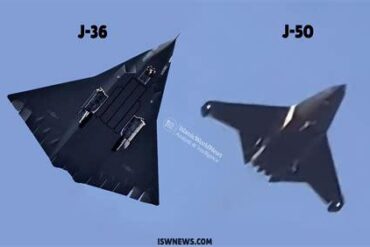
China surprised observers by unveiling and testing advanced concepts often referred to as the J-36 and J-50. These developments demonstrated that the sixth-generation race was no longer theoretical. Prototype construction and systems integration had already begun.
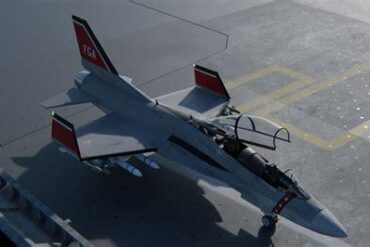
Russia, meanwhile, remained focused on increasing production of the Su-57, an aircraft conceived decades earlier to compete with the F-22 Raptor and eventually the F-35. While competitors pursued entirely new generations of combat aviation, Moscow found itself still attempting to achieve fifth-generation maturity.
The Su-57 Program Revealed Structural Challenges
The Sukhoi Su-57 represented Russia’s answer to American stealth fighters. Intended to restore parity with Western capabilities, the aircraft promised advanced stealth characteristics, supermaneuverability, and sophisticated sensor integration.
Yet the program encountered repeated delays and production bottlenecks. Years after entering service, operational numbers remained relatively modest. Estimates suggested that only around forty aircraft had been delivered by late 2025, with annual output far below initial ambitions.
Such production figures exposed deeper issues within Russia’s defense-industrial base. Building advanced fighters requires precision manufacturing, stable supply chains, and access to high-performance electronics. These requirements have become increasingly difficult to satisfy under current geopolitical conditions.
Low production rates also limit operational experience and technology maturation. Aircraft programs benefit from large fleets because feedback from pilots and maintainers helps improve systems over time. Smaller numbers slow this process and create additional pressure on future development.
As other nations moved toward sixth-generation experimentation, Russia remained occupied with challenges associated with completing its fifth-generation force structure.
The Su-75 Checkmate Was Intended To Become Russia’s Future Export Success
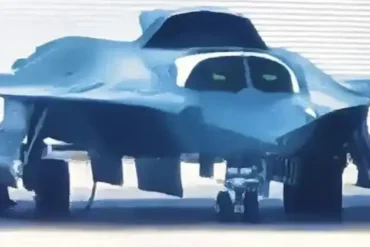
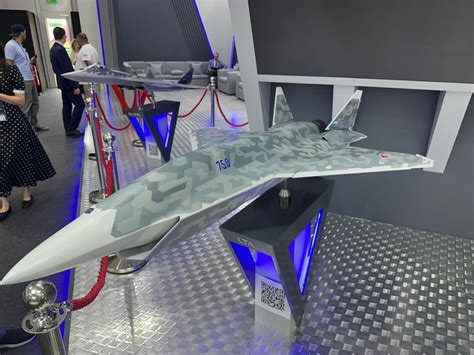
When the Sukhoi Su-75 Checkmate appeared at the MAKS Airshow in 2021, it generated enormous interest. Marketed as a relatively affordable stealth fighter, the aircraft was designed to attract international customers while complementing the larger Su-57.
The project carried significance beyond export opportunities. Successful development would demonstrate that Russia retained the capability to create competitive modern combat aircraft despite economic pressures and sanctions. More importantly, the experience gained through the program could provide a bridge toward sixth-generation technologies.
Initial schedules envisioned a maiden flight by 2023. That date slipped repeatedly. First came delays into 2024, followed by additional postponements into 2025 and then 2026. Despite continued work, the first prototype remains unfinished.
Repeated schedule slippages often reveal deeper problems. Aerospace programs are inherently complex, but constant delays consume resources and postpone technological progress. Every year spent overcoming issues within a fifth-generation platform delays work on technologies essential for future systems.
Radar performance has also attracted criticism. Reports indicated that projected detection ranges lag behind expectations for a modern aircraft. Such shortcomings highlight the challenges associated with developing sophisticated sensor systems that are essential for sixth-generation operations.
Sanctions Have Hit Aerospace Programs Particularly Hard
Unlike armored vehicles or artillery systems, advanced combat aircraft depend heavily on microelectronics and specialized components. Modern fighters require powerful processors, radar modules, communication systems, and integrated avionics built around sophisticated semiconductor technologies.
International sanctions have significantly complicated access to these components. Replacing imported electronics with domestic alternatives remains difficult because advanced chips require manufacturing capabilities that are expensive and technologically demanding.
The impact on aerospace programs has been especially severe. Tanks and conventional weapons can often be produced using less complex industrial inputs. Fifth-generation aircraft, however, demand extraordinary precision and specialized technologies that cannot easily be substituted.
These constraints have slowed production and increased costs. Delays ripple through entire programs because shortages in one subsystem affect every stage of assembly and testing.
The Ukraine War Intensified Existing Weaknesses
The conflict in Ukraine placed enormous pressure on Russia’s defense priorities. Resources have increasingly focused on immediate operational requirements rather than long-term aerospace modernization.
Aircraft programs compete with demands for ammunition, armored vehicles, missile production, and battlefield equipment. Maintaining ongoing combat operations inevitably influences budget allocations and procurement priorities.
At the same time, sanctions linked to the war intensified restrictions affecting advanced manufacturing. Supply chains became more complicated, procurement channels narrowed, and access to critical technologies declined further.
The cumulative effect created challenges that disproportionately impacted aviation. Unlike conventional weapons, stealth fighters cannot be mass-produced quickly through improvised solutions. Their development depends on sustained investment and uninterrupted access to high-end technologies.
Brain Drain And Export Losses Created A Dangerous Feedback Loop
Technology alone does not drive innovation. Human capital remains equally important. Russia’s aerospace industry historically relied on generations of highly trained engineers, scientists, and manufacturing specialists.
Recent years have seen significant emigration and disruptions that reduced the available talent pool. Losing experienced personnel weakens research programs and slows technological advancement. Replacing decades of expertise requires time and extensive investment.
Export markets have also deteriorated. Many countries that traditionally purchased Russian aircraft increasingly worry about sanctions, maintenance support, and spare parts availability. Others are turning toward Chinese alternatives that offer competitive capabilities and fewer political complications.
Reduced exports mean reduced revenue. Historically, international sales helped finance research and sustain production lines. Losing those income streams creates additional strain on already stressed development programs.
This cycle reinforces itself. Lower production leads to fewer exports, which reduces funding for innovation, making future products less competitive.
Russia Lacks A Clearly Defined Sixth-Generation Fighter Program
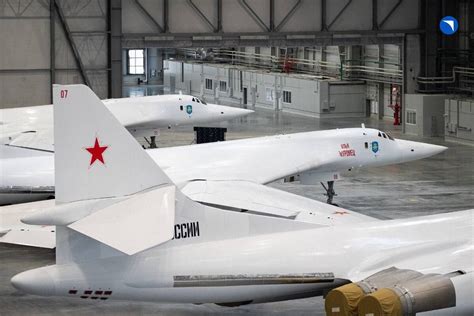
Perhaps the most revealing indicator of Russia’s position is the absence of a mature sixth-generation program. Concepts such as the MiG-41 have appeared periodically, accompanied by ambitious statements regarding hypersonic capabilities and extreme speeds. Yet publicly available evidence suggests these projects remain largely conceptual.
Elsewhere, sixth-generation initiatives have moved beyond conceptual discussions. Engineers are already integrating propulsion technologies, networking architectures, artificial intelligence, and manned-unmanned teaming systems.
Such developments require years of experimentation and continuous investment. Countries that begin later face growing disadvantages because technological ecosystems mature gradually.
The difference between concepts and prototypes is enormous. Building a sixth-generation fighter involves mastering software architectures, sensor fusion, autonomous operations, and advanced materials. Nations already testing prototypes possess a substantial head start.
Why Russia May Face A Decade-Long Gap In Future Airpower
The story of Russian military aviation demonstrates an important lesson. Success in one field does not guarantee leadership across an entire technological ecosystem. The Kinzhal hypersonic missile showcased genuine innovation and placed Russia ahead of competitors in a highly visible category. Yet sustaining leadership requires far more than isolated breakthroughs.
Industrial capacity, advanced electronics, stable financing, engineering talent, and export markets all form part of a broader foundation supporting aerospace innovation. Many of these pillars have weakened over the past decade.
Unless major structural challenges are addressed, Russia could enter the 2030s with limited fifth-generation capabilities while competitors field mature sixth-generation aircraft integrated with artificial intelligence and autonomous combat systems.
That possibility would have seemed improbable when the Kinzhal entered service in 2017. At that moment, Russia appeared to be setting the pace for military technology. Today, however, the country that first operationally deployed a hypersonic weapon risks finding itself a decade behind in the race for the next generation of airpower.
Frequently Asked Questions
Why was the Kinzhal missile considered revolutionary?
The Kh-47M2 Kinzhal became the first operational hypersonic weapon deployed by any country. Its high speed and maneuverability reduced warning times and complicated interception efforts, creating significant strategic implications.
Why is Russia considered behind in sixth-generation fighter development?
Russia remains focused on expanding production of the Su-57 and completing the delayed Su-75 Checkmate, while competitors are already testing prototypes and integrating technologies associated with sixth-generation air combat.
What factors have slowed Russian aerospace programs?
Sanctions, shortages of advanced electronics, war-related priorities, declining exports, production bottlenecks, and the loss of engineering talent have all contributed to slowing modernization efforts.
Does Russia have a sixth-generation fighter project?
Russia has discussed future concepts such as the MiG-41, but no clearly defined program with flying prototypes or publicly demonstrated technologies comparable to Western and Chinese projects currently exists.