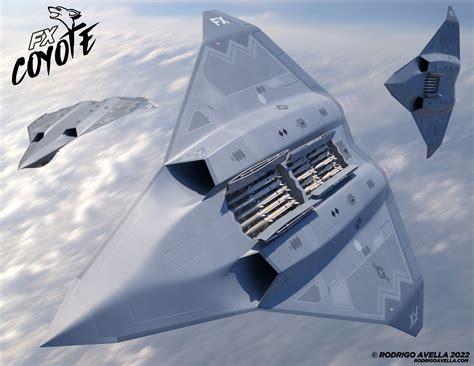
The United States Air Force faces mounting concerns over the timeline of its most ambitious aviation program to date—the F-47 fighter jet, a cornerstone of its Next Generation Air Dominance (NGAD) initiative. Recent disclosures point to a two-year delay in the engine development process, pushing the expected debut of the aircraft’s propulsion system to early 2030, a significant departure from the previously targeted late 2027. This delay raises strategic alarms amid intensifying aerospace competition with China, which is also racing to field its own sixth-generation fighter.
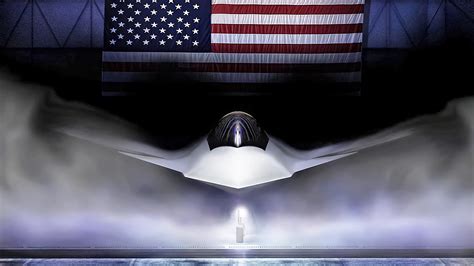
The Engine at the Heart of the Delay
Central to the delay is the Next Generation Adaptive Propulsion (NGAP) program, a parallel effort under NGAD tasked with delivering an engine that can outperform existing technologies in speed, thermal management, stealth, and fuel efficiency. According to 2026 budget documents released in June, the completion of this engine is now anticipated by early 2030, primarily due to supply chain disruptions. These disruptions span critical materials shortages, manufacturing bottlenecks, and delays from subcontractors across both domestic and allied supply networks.
An Air Force spokesperson confirmed the setback, attributing it to ongoing “supply chain challenges encountered by the programme.” The complexity of NGAP, involving high-performance composite materials, advanced thermal systems, and adaptive-cycle engine designs, makes it particularly vulnerable to even minor disruptions in specialized components.
Strategic Implications in the US-China Air Dominance Race
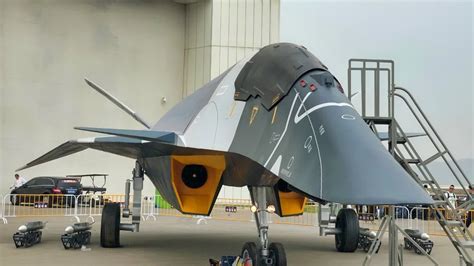
The delay comes at a time when strategic tensions with China are accelerating efforts on both sides to achieve air dominance superiority. China’s own sixth-generation program, reportedly led by state-run defense conglomerate AVIC, has been making strides, with analysts speculating that a prototype might fly as early as 2026.
While China has not disclosed many technical details, the jet is expected to mirror the US’s NGAD concept—optionally manned, incorporating AI-driven mission systems, extensive stealth, and multi-domain operability. In this context, a delayed F-47 could potentially create a window of advantage for Chinese aerospace forces to field their platform first, thereby altering the balance of power in the Indo-Pacific region.
Boeing’s Role and Presidential Endorsement
The stakes surrounding the F-47’s timeline grew more pronounced in March 2025, when President Donald Trump formally announced that Boeing had secured the lead contract to build the fighter jet. The announcement marked a turning point, transferring key responsibilities from Lockheed Martin—the builder of the F-22 Raptor and F-35 Lightning II—to Boeing. This decision followed a highly competitive and politically charged selection process.
Boeing’s selection was backed by its recent progress in unmanned systems and advanced airframes, though some insiders raised concerns about the firm’s past production issues, particularly with the KC-46 Pegasus tanker program. The added pressure of producing a stealth-capable, AI-integrated, optionally manned platform that is years ahead of current operational aircraft is seen as both an opportunity and a risk.

A Jet That Redefines Air Combat
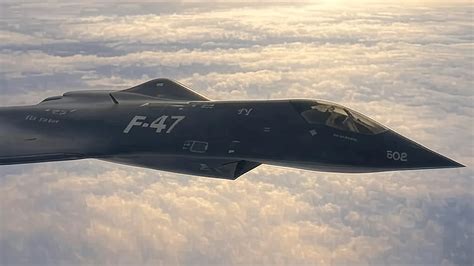
The F-47 is not just a generational leap in aircraft design—it’s intended to redefine how wars are fought in the skies. Unlike traditional fighters, the F-47 will be part of a family of systems, integrated with unmanned drones, satellite networks, and cyber-electronic warfare platforms. This multi-domain architecture will enable the aircraft to project force across space, air, and cyberspace, allowing it to dominate not just airspace, but entire strategic theaters.
Key features expected in the F-47 include:
- Stealth Beyond Line of Sight: With advanced shaping, materials, and thermal signature management, it aims to be virtually invisible to radar and infrared sensors.
- Sensor Fusion & AI: Real-time data from satellites, drones, and AWACS will be processed using machine learning, enabling predictive targeting and mission autonomy.
- Hypersonic Payload Compatibility: Designed to carry and deploy hypersonic missiles, including DARPA’s latest variants.
- Optionally Manned Flight: The cockpit can be manned or entirely autonomous, depending on the mission profile.
These capabilities are designed to counter not just rival fighters, but entire anti-access/area denial (A2/AD) environments, particularly in the South China Sea and Taiwan Strait.
The Logistical Minefield: A Fragile Web of Dependencies
The Air Force’s admission of “supply chain challenges” masks a broader issue—the extreme complexity and fragility of the defense industrial base. The NGAD and NGAP programs rely on a wide array of Tier 1 and Tier 2 suppliers, many of which are specialized, single-source providers of critical materials like heat-resistant alloys, 3D-printed turbine blades, and proprietary stealth coatings.
During the pandemic, several of these firms faced shutdowns or workforce reductions, and some never fully recovered. Now, geopolitical factors—such as export restrictions on rare earth minerals from China and trade disruptions in Southeast Asia—are further compounding the problem. According to internal Pentagon memos, even a shortfall in titanium sponge—a raw form of the metal crucial to airframe components—has been flagged as a potential bottleneck.
Classified Test Flights and the Unknowns
Despite these delays, the F-47 program has not been idle. Sources familiar with the program revealed that classified test flights have been ongoing since 2020, taking place from Groom Lake (Area 51) and other undisclosed locations. These tests focus on validating stealth profiles, engine airflow performance, and AI-integrated flight control systems.
Insiders note that test flights have already demonstrated autonomous threat engagement, wherein the aircraft simulated dogfight scenarios using AI decision-making without pilot input. While much remains classified, this hints at the operational philosophy driving the F-47—a platform that is more machine than man, and yet capable of making split-second kill-chain decisions faster than any human pilot.
Budgetary and Political Ramifications
The NGAD program is among the most expensive in Pentagon history, with projected lifecycle costs nearing US$300 billion. Congress has remained largely supportive, but a prolonged delay in engine development could invite budget scrutiny. Already, some members of the Senate Armed Services Committee have questioned whether the program’s dual-pronged approach (airframe and engine developed independently) is sustainable.
Complicating matters is the 2026 election cycle, which could usher in changes in defense priorities. A delay until 2030 means that several administration cycles could influence the pace, funding, and even the strategic direction of NGAD. While the F-47 is considered untouchable in strategic circles, its delays may affect downstream programs, including Loyal Wingman UAVs, hypersonic deployment platforms, and cyberwarfare integration systems.
Conclusion: A Crucial but Delayed Leap Forward
The delay of the F-47’s engine development, though not catastrophic, is a strategic inflection point. In a geopolitical climate where speed equals dominance, every month lost could widen the window for adversaries to catch up—or worse, gain the upper hand. While the Air Force insists the program remains on track for eventual superiority, the delay underscores how even next-gen warfare is still subject to old-world bottlenecks.
As the global balance of power tilts increasingly toward the Indo-Pacific, the F-47 represents more than technological ambition—it is a litmus test of whether American innovation can withstand the mounting pressures of global supply chain fragility and bureaucratic inertia. The world will be watching closely not only to see how soon the F-47 takes to the skies, but whether it can truly change the face of air dominance as promised.