The escalating trade tensions between the United States and Brazil have taken a potentially catastrophic turn for one of South America’s most high-profile exporters: Embraer. With the Biden administration threatening to impose 50% tariffs on all Brazilian imports, including aircraft, analysts and aviation executives alike are bracing for ripple effects that could shake the global commercial and private aviation sectors.
At the center of the controversy is Embraer’s significant footprint in the US market, where its E175 regional jet remains the aircraft of choice for American carriers operating under scope clause restrictions. The proposed tariffs—slated to take effect on August 1, 2025—could severely hamper Embraer’s ability to remain competitive, dealing a blow not only to the Brazilian manufacturer but also to the regional airline industry in the US.
The Geopolitical Flashpoint: Trade Policy and Political Retaliation
The move to impose sweeping tariffs on Brazilian imports is widely perceived as a political maneuver rather than an economic necessity. Sources within the White House cite grievances ranging from alleged political censorship in Brazil to legal disputes involving a former Brazilian president. While the administration frames the tariffs as part of a broader “America First” economic strategy, the aviation industry sees a dangerous gamble that could backfire.
Trade experts argue that the aircraft industry—one of the most globalized and consolidated sectors—simply cannot be treated like a traditional manufacturing market. Embraer stands as the third-largest civil aircraft manufacturer globally, behind Airbus and Boeing. A blanket tariff would isolate a major player from its second-largest market and destabilize years of bilateral cooperation and investment.
Meanwhile, Brazil is expected to retaliate with reciprocal trade measures, potentially locking Boeing out of the Brazilian market—a country where the US plane maker had once eyed a deeper partnership before a failed merger attempt in 2020.
Embraer’s Portfolio: What’s at Stake in the US Market?
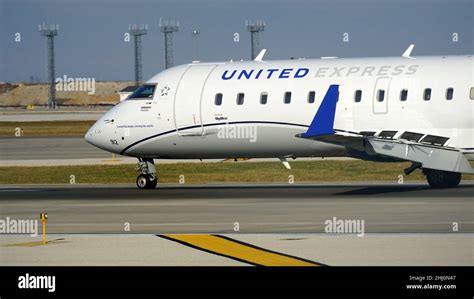
Embraer’s commercial division hinges on three jets: the E175, the E190-E2, and the E195-E2. While the latter two have seen limited success in North America, the E175 remains the backbone of US regional operations, especially for feeder carriers operating under scope clause constraints that limit aircraft size.
More than 80% of E175 deliveries over the past five years have gone to US-based operators such as SkyWest, Republic Airways, and Envoy Air. These airlines rely heavily on Embraer’s regional jets to link secondary and tertiary markets to larger hubs. A 50% tariff would significantly increase acquisition costs, potentially shifting airline preferences toward aging fleets or forcing a re-evaluation of route economics.
Beyond commercial aviation, Embraer has cultivated a strong presence in business aviation through its Phenom and Praetor jet families. In recent years, the private aviation boom has seen robust demand for these jets, particularly in North America. Yet the US is home to Cessna, Embraer’s biggest rival in this segment, which could benefit enormously from tariff-induced price shocks to Brazilian aircraft.
Business Jets at Risk: Embraer’s Midsize Stronghold Under Pressure
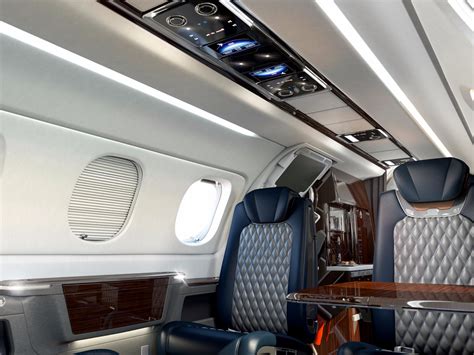
The Phenom 100EV, Phenom 300E, Praetor 500, and Praetor 600 are cornerstones of Embraer’s private jet lineup. These jets are class-leading in range, cabin comfort, and fuel efficiency—attributes that have helped Embraer carve out a lucrative niche among owner-operators and fractional ownership providers.
In the US, however, Textron Aviation’s Cessna Citation series offers a domestic alternative, albeit at times with less performance or higher operating costs. With tariffs potentially pricing Embraer’s jets out of reach, American buyers may pivot toward US-made alternatives, eroding Embraer’s hard-fought market share in the world’s largest business jet market.
A Tactical Response: How Airlines and Operators Are Dodging Tariffs
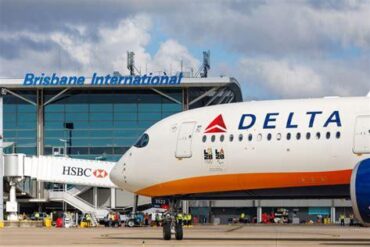
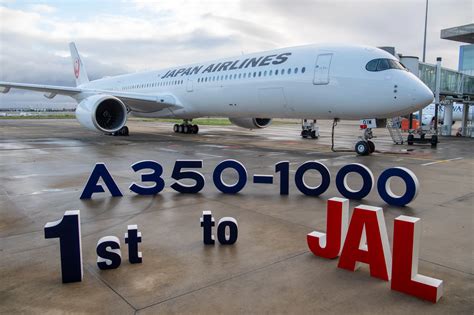
Industry insiders have not remained idle. Airlines and lessors are already deploying creative logistics to circumvent tariff structures. For instance, Delta Air Lines has begun routing new Airbus A350 and A330neo deliveries through Tokyo-Narita, thereby technically avoiding the aircraft being “imported” into the US directly.
This model relies on registering aircraft abroad and inducting them into service on non-US routes before eventual domestic deployment. Such loopholes, while legally gray, are difficult for customs authorities to regulate given the complexity of international aviation operations.
Other international players are taking similar steps. Lufthansa, for example, is considering routing its new Boeing 787-9 Dreamliners through Switzerland, a non-tariff jurisdiction, to skirt retaliatory levies imposed by the EU on American aircraft.
Yet such workarounds are harder to apply to short-haul aircraft like the E175. These planes are designed for regional operations, often under 1,000 nautical miles, and do not offer the range or infrastructure to justify complex international detours. Even if an E175 were delivered via Canada or Mexico, once it begins operating US domestic routes, it would likely be flagged as an imported aircraft, triggering the full tariff penalty.
Contractual Chaos: Long-Term Deals Face Short-Term Disruption
Aircraft contracts are rarely short-term arrangements. Most airlines plan and sign deals years in advance, locking in pricing, delivery slots, and financing arrangements. The sudden imposition of tariffs throws a wrench into these meticulously arranged plans.
US regional carriers that have E175s on order now face a dilemma: absorb the cost and risk unprofitability, or cancel orders and reconfigure fleets. Either choice disrupts business models and diminishes route connectivity, particularly in underserved communities.
Equally impacted are aircraft lessors, many of whom have placed bulk orders with Embraer. The financing of these assets is highly sensitive to value stability. A 50% increase in acquisition cost could devalue leased portfolios, spook investors, and trigger clause renegotiations across the board.
Embraer’s Strategic Options: Limited Paths Forward
Facing this economic cliff, Embraer has few attractive options. The company could attempt to ramp up final assembly operations in third-party countries to neutralize the ‘country of origin’ designation. Embraer already maintains a facility in Melbourne, Florida, where it assembles Phenom jets. However, this site does not currently have the capacity to absorb commercial jet production.
Scaling up US assembly lines would require years and significant capital investment—not a viable short-term fix before the August deadline. Alternatively, Embraer could pursue joint ventures or contract assembly with US-based aerospace firms, but that again would involve complex negotiations, regulatory hurdles, and infrastructure limitations.
Broader Industry Fallout: Winners and Losers
While Embraer stands to lose the most, other stakeholders are positioning themselves to benefit. Cessna, as previously mentioned, could enjoy a surge in orders for its Citation M2 and CJ4 Gen2 aircraft. Meanwhile, Mitsubishi Heavy Industries, though having shelved its SpaceJet program, could reconsider regional jet production if a vacuum emerges.
Airbus, with its Canadian-built A220, might also find increased opportunities, especially since the A220 is assembled in Mobile, Alabama, thereby sidestepping Brazilian tariffs. However, the A220 is significantly larger and more expensive than the E175, which could deter budget-conscious operators.
Conclusion: Turbulence Ahead for Embraer and Global Aviation
With the clock ticking toward August 1, the aviation industry remains in limbo. The looming tariffs are more than a trade dispute—they represent a seismic shock to a delicate global supply chain.
For Embraer, the consequences could be existential. Cut off from its largest market, squeezed by political hostilities, and facing rising domestic alternatives, the Brazilian manufacturer risks losing momentum built over decades. For US airlines, particularly those in the regional space, the absence of Embraer would constrain growth and degrade connectivity.
Unless a diplomatic resolution emerges, the only certainty is disruption—a forced landing of global cooperation in one of the world’s most interdependent industries.