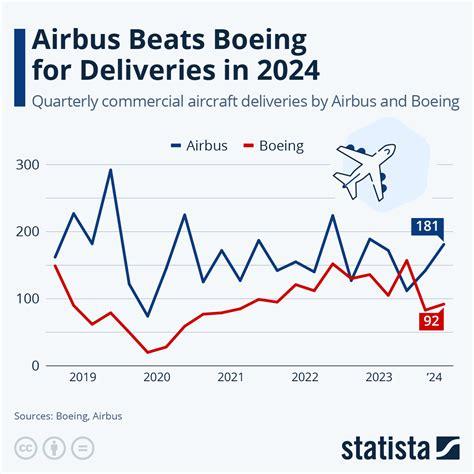
In May 2025, the long-standing rivalry between Airbus and Boeing continued to evolve under the weight of production pressures, order backlogs, and geopolitical uncertainty. While both aerospace giants navigated complex supply chain landscapes, their delivery outputs and order books revealed diverging strategic plays and mounting industry tension.
Airbus Delivers Steady Volume, But Falls Short of Ambition
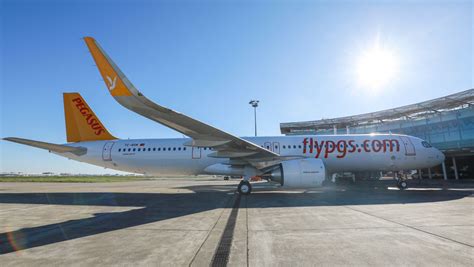
Airbus reported the delivery of 51 commercial aircraft in May, slightly down from 56 in April. This included five A220s, forty A320neo family aircraft, three A330neos, and three A350s. The performance underscores a stagnation in narrowbody production, with just 39 A320neo-family aircraft delivered despite the company’s stated target of reaching 75 units per month by 2027. The discrepancy between projections and current output raises critical questions about Airbus’s short-term scalability and supply chain resilience.
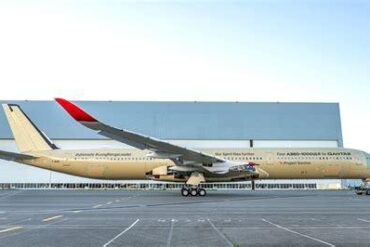
The A350’s numbers continue to lag expectations. With only three deliveries in May and a mere 16 total for the year to date, Airbus had to revise its original production target of 10 units per month to a more modest six. Industry insiders point to persistent component shortages as the primary constraint, echoing throughout the widebody segment.
Meanwhile, the A220 program, though steadily progressing, remains off pace. Five units were delivered out of eight produced in May. Airbus aims to raise monthly A220 output to 14 units by 2026, but with a current backlog of 486 aircraft, analysts at Forecast International are skeptical this can be achieved without fresh, large-scale orders.
Boeing Maintains Output, But Faces Scaling Hurdles
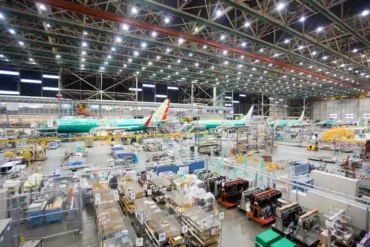
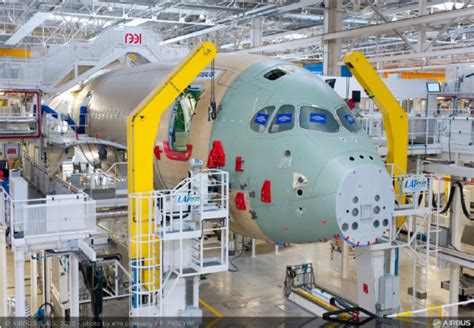
Boeing’s May report mirrored April, with 45 aircraft delivered. The deliveries included 31 737 MAXs, one 737-800A, one 767, five 777s, and seven 787s. Although the numbers reflect steady output, they also underscore Boeing’s current struggle to scale amid logistical disruptions. The 737 MAX line has now reached an FAA-authorized production rate of 38 units per month, a milestone that reaffirms Boeing’s manufacturing intent, albeit tempered by execution risk.
Encouragingly, Boeing resumed 737 MAX deliveries to China in May—a notable geopolitical breakthrough after years of strained trade relations. However, the manufacturer has not committed to a full-year delivery target for 2025, signaling uncertainty about long-term capacity.
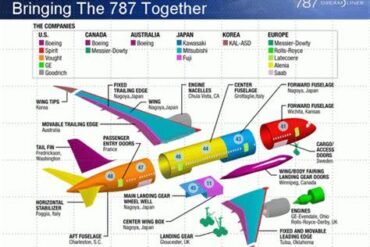
On the widebody side, Boeing’s 787 program led the segment with seven deliveries in May and 28 year-to-date. The company intends to scale this up to ten monthly units by 2026, though challenges linger. The 777 program remains on track with a current average of three monthly deliveries, but certification delays for the 777X continue to disrupt forward planning. The first 777X delivery, scheduled for Lufthansa in 2026, remains subject to FAA approval. The freighter version, the 777-8F, has now seen its entry into service delayed to 2028.
Boeing’s Historic May Orders vs. Airbus’s Strategic Silence
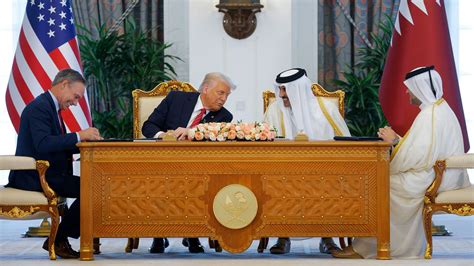
In a stunning display of sales momentum, Boeing recorded 303 gross orders in May—its highest monthly tally in recent memory. This bonanza included 146 737 MAXs, 30 777Xs, and 127 787s. The driving force behind this spike was a landmark $96 billion widebody deal with Qatar Airways, widely seen as the largest of its kind in Boeing’s history. This single agreement not only boosted Boeing’s commercial outlook but also extended its backlog to an estimated 11.5 years of production.
Airbus, by contrast, booked zero new orders in May. While superficially concerning, the absence of bookings is widely interpreted as a strategic pause ahead of the Paris Air Show, where significant deals are anticipated. Forecast International predicts that Airbus will announce at least 225 new orders during the event, including a possible 25-unit A350 deal from Riyadh Air, and significant narrowbody commitments from VietJet and AirAsia, potentially including A220 variants.
This quiet month is not without risks. Analysts warn that post-show momentum may be dampened by external forces such as escalating tariffs and macroeconomic headwinds, which could suppress follow-through from potential buyers.
Supply Chain Woes: The Universal Bottleneck
Both manufacturers continue to wrestle with supply chain instability that has emerged as the defining theme of post-pandemic aerospace manufacturing. From engine delays to component scarcity, these systemic issues are preventing Airbus and Boeing from achieving delivery cadence targets despite healthy demand.
Airbus’s inability to bridge the gap between its A320neo ambitions and actual monthly output serves as a case in point. The goal of 75 per month remains years away, while the average delivery rate continues to hover below 45.
Likewise, Boeing’s 737 MAX line, although ramping up, struggles with part shortages and quality control inspections that inhibit consistency. This is particularly critical given that over 74% of Boeing’s 6,528-aircraft backlog consists of the MAX family.
Order Backlogs Reflect Decade-Long Commitments
As of May 31, Airbus listed a backlog of 8,617 commercial aircraft, with the A220 and A320neo families representing nearly 89% of that total. The company’s current production rate renders this equivalent to 10.5 years of output, reinforcing Airbus’s need to scale efficiently in order to meet contractual timelines.
Boeing’s adjusted backlog stood at 6,528 aircraft, with the 737 MAX dominating at nearly three-quarters of the total. At present production levels, Boeing is looking at over 11.5 years of output commitments. This timeline may expand further if certification delays or supply constraints continue into 2026 and beyond.
Looking Ahead: Paris Air Show and Market Signals
The coming Paris Air Show is poised to reset the narrative, particularly for Airbus, which needs to demonstrate sales strength after a quiet May. Expectations are high for blockbuster deals, which could include large narrowbody orders from Southeast Asia and strategic widebody commitments from the Middle East.
For Boeing, the focus will shift toward execution over promise. With a record-breaking May in the books, the burden now lies in converting orders into deliveries amid industrial volatility. The manufacturer must also navigate certification challenges for the 777X and maintain momentum in the 787 program, all while managing customer expectations across a deeply extended backlog.
Conclusion: Divergent Strategies, Common Challenges
May 2025 exemplifies the complexities confronting Airbus and Boeing in an industry where demand remains robust, but operational friction persists. Boeing’s order surge reflects aggressive commercial positioning, while Airbus’s deliberate pause signals a strategic emphasis on upcoming showcases.
Yet, both face the same harsh reality: without resolving supply chain bottlenecks and scaling production, backlog relief and delivery goals will remain elusive. As the aerospace sector moves deeper into the decade, success will depend not on who sells more, but on who delivers faster, scales smarter, and adapts quicker to a volatile global landscape.