The regional aviation industry is approaching a turning point that could redefine how smaller cities connect to major airline networks. For more than three decades, Bombardier CRJ aircraft and Embraer E-Jet families have formed the foundation of regional flying across North America, connecting communities that could not support larger mainline aircraft. However, many of these aircraft are now reaching a stage where their economic usefulness is becoming increasingly difficult to maintain.
The emerging regional jet cliff is not simply a story about old airplanes being replaced by new ones. It represents a much larger challenge involving aircraft availability, pilot shortages, airline economics, labor agreements, and manufacturer decisions. Unlike previous fleet transitions, the industry does not have a clear successor waiting to take over the role once filled by hundreds of small regional jets.

The Regional Jets That Changed Commercial Aviation
The rise of the regional jet transformed the structure of commercial aviation in North America. Before the 1990s, many smaller cities relied heavily on turboprop aircraft for connections to major hubs. While these aircraft were efficient on short routes, many passengers viewed them as less comfortable and less attractive compared with larger passenger jets.
The arrival of the Bombardier Canadair Regional Jet (CRJ) changed that perception. The CRJ100 and CRJ200 introduced jet service to hundreds of markets, allowing airlines to offer faster and more passenger-friendly transportation while maintaining lower operating costs compared with traditional mainline aircraft.
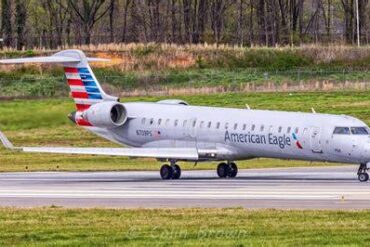
As demand grew, Bombardier expanded the family with larger models including the CRJ700, CRJ900, and CRJ1000. These aircraft allowed regional airlines to increase capacity while maintaining the flexibility needed for thinner routes. By the early 2000s, regional jets had become a core component of airline networks operated under brands such as United Express, Delta Connection, and American Eagle.
At nearly the same time, Brazilian manufacturer Embraer entered the market with the E170 and E175. The E-Jet family introduced a different approach, offering wider cabins, larger windows, improved passenger comfort, and better economics compared with many competing regional aircraft.
The Embraer E175 became especially important because it successfully balanced airline requirements with passenger expectations. It offered enough capacity for profitable regional operations while remaining small enough to satisfy US airline scope clause restrictions.
For years, Bombardier and Embraer competed aggressively, giving airlines multiple choices for regional fleet modernization. However, that competitive environment has disappeared, creating a much more complicated future for regional aviation.
Why the 50-Seat Regional Jet Fleet Is Approaching a Breaking Point
The most vulnerable part of the regional aircraft market is the traditional 50-seat jet category. Hundreds of aircraft such as the Bombardier CRJ200 remain active worldwide, but their economic advantages have largely disappeared.
These aircraft can technically continue flying for many years. Modern maintenance programs allow airliners to remain airworthy far beyond their original design lives. However, regional aircraft experience unusually high utilization patterns. A jet flying several short sectors every day experiences far more takeoff and landing cycles than a long-haul aircraft.
Over time, these repeated cycles increase maintenance demands. Components require more frequent inspections, heavy maintenance events become more expensive, and unexpected downtime becomes a larger operational risk.
The economics of the CRJ200 have also become increasingly challenging. Its older-generation General Electric CF34 engines remain reliable, but newer aircraft benefit from improved fuel efficiency and lower maintenance costs. When fuel expenses, labor costs, and maintenance requirements are combined, operating an aging 50-seat aircraft becomes difficult to justify.

The problem is made more complicated by the absence of a direct replacement. No manufacturer currently produces a new-generation 50-seat regional jet designed specifically for today’s airline environment.
Developing a completely new aircraft would require billions of dollars in investment. However, the potential market is much smaller than it was during the peak of the regional jet boom. Airlines increasingly prefer larger aircraft that can carry more passengers with similar crew requirements.
As a result, the industry faces an unusual situation: airlines still need smaller aircraft for certain markets, but manufacturers have little financial incentive to create them.
The End of the CRJ Program Created a Regional Aircraft Gap
One of the most significant moments in regional aviation was Bombardier’s decision to exit commercial aircraft manufacturing. The company transferred the CRJ program to Mitsubishi Heavy Industries, and production officially ended in 2021.
The decision effectively closed one of the most successful chapters in regional aircraft history. For decades, the CRJ family had been one of the most widely operated regional jet platforms in the world.
However, Mitsubishi did not restart CRJ production. The company had originally planned to develop the Mitsubishi SpaceJet as a next-generation replacement for aging regional aircraft, but that program was eventually canceled.
The disappearance of both the CRJ production line and the SpaceJet replacement created a significant market gap. Airlines were left with aging aircraft but no clean-sheet replacement designed specifically for the regional jet market.
Today, the Embraer E175 remains the dominant solution for US regional operators. Yet its continued popularity does not necessarily represent a technological breakthrough. Instead, it reflects the reality that airlines have very few alternatives.
The aircraft entered service more than two decades ago, but it continues meeting the operational requirements of regional carriers better than newer designs that cannot comply with current restrictions.
Scope Clauses Are Blocking New Regional Jet Technology
One of the most unusual aspects of the regional jet cliff is that the technology to replace aging aircraft already exists.
Embraer developed the E175-E2, an advanced version of the E175 featuring new engines, improved aerodynamics, and significantly better fuel efficiency. Under normal fleet replacement cycles, the aircraft would appear to be the natural successor to today’s E175 fleet.
However, US airline labor agreements have prevented its introduction.
Scope clauses are agreements between major airlines and pilot unions that define what aircraft regional airline partners can operate. These restrictions are designed to protect mainline pilot jobs by limiting the size and weight of aircraft flown by regional subsidiaries.
Current agreements generally restrict regional aircraft to approximately 76 seats and a maximum takeoff weight around 86,000 pounds. The E175-E2 exceeds those limits despite offering better operating economics.
This creates a rare situation where an aircraft is technologically ready but commercially blocked.

Without changes to scope clause limits, airlines cannot use the aircraft for the regional missions it was designed to perform. As a result, carriers continue purchasing older-generation E175 models rather than adopting a more efficient replacement.
This situation demonstrates that the future of regional aviation depends on more than engineering. Labor agreements, economics, and operational strategy are now equally important factors shaping fleet decisions.
Pilot Shortages Are Accelerating the Regional Jet Crisis
Aircraft availability is only one part of the problem. Regional airlines are also dealing with one of the most serious pilot shortages in modern aviation history.
Historically, regional airlines served as a pathway for pilots building experience before moving to larger carriers. However, this model has become increasingly difficult because major airlines continue recruiting experienced regional pilots with higher salaries and improved schedules.
As regional captains leave for larger airlines, regional operators face difficulties replacing them quickly. Producing new pilots takes years because experience requirements cannot be solved immediately through additional training.
The shortage has already forced some airlines to park aircraft that are mechanically capable of flying. In other words, the industry is facing a situation where available airplanes and available pilots are becoming equally important limitations.
The pilot shortage also changes airline economics. A larger aircraft carrying more passengers can often be operated with the same two pilots required for a smaller aircraft.
For example, replacing multiple 50-seat regional jets with fewer larger aircraft can reduce crew requirements while improving efficiency. This makes the smallest regional aircraft categories even harder to justify financially.
How the Regional Jet Fleet Could Change During the Next Decade
The regional jet cliff will probably not happen as a sudden collapse. Instead, the industry is likely to experience a gradual transformation over many years.
The Embraer E175 is expected to remain a critical part of North American regional aviation well into the 2030s because it continues fitting within current operational and labor frameworks.
However, the 50-seat regional jet market is likely to continue shrinking. As older CRJ200 aircraft retire, many routes will face difficult decisions.
Some communities may lose nonstop connections to major airline hubs. Others may see fewer daily flights or larger aircraft replacing smaller jets with reduced frequency.
Airlines will naturally prioritize markets that generate stronger financial returns because aircraft and pilots are limited resources.
The future may also include renewed interest in modern turboprops. Although regional jets became popular because passengers preferred jet service, advanced turboprops have improved significantly and can offer excellent efficiency on shorter routes.
Another possible solution is changing scope clause agreements to allow larger regional aircraft. If restrictions are adjusted, aircraft such as the E175-E2 could finally enter service and provide a more efficient replacement path.
The Regional Jet Cliff Is Bigger Than Aging Aircraft
The challenge facing regional aviation is not simply that thousands of aircraft are getting old. The deeper issue is that the entire ecosystem supporting regional flying has changed.
Aircraft manufacturers have moved away from smaller jets because demand has declined. Airlines are dealing with pilot shortages and rising costs. Labor agreements restrict available solutions. Smaller communities are competing for limited airline resources.
The regional jet revolution once expanded air service across North America by making smaller cities accessible through affordable jet operations. The next phase may look very different.
Instead of replacing every retiring regional jet with a newer equivalent, airlines may operate fewer aircraft, consolidate routes, and rely on larger jets or alternative aircraft types.
The regional jet cliff represents a major transition point for commercial aviation. The future of regional connectivity will depend not on one new airplane, but on how airlines, manufacturers, pilots, and communities adapt to a fundamentally different operating environment.