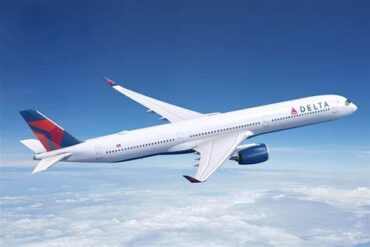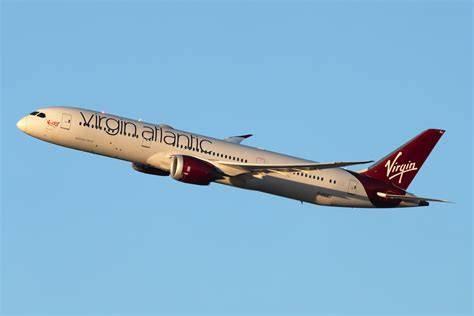
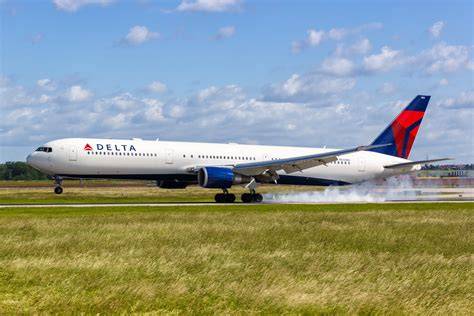
Virgin Atlantic’s decision to let Delta Air Lines operate some of its most recognizable US routes can look strange at first glance. Chicago, Newark and Detroit are hardly obscure destinations, and each is an important market for transatlantic travelers. Yet passengers flying from London Heathrow to these cities are more likely to find themselves aboard a Delta aircraft than one carrying Virgin Atlantic’s distinctive red tail. For an airline that built its identity around challenging established carriers across the Atlantic, surrendering the physical operation of these routes appears, on the surface, almost contradictory.
The explanation becomes much clearer when the routes are viewed through the economics of Virgin Atlantic’s relationship with Delta rather than through the traditional idea that an airline must operate every route under its own metal. Virgin Atlantic does not necessarily need to fly the aircraft to benefit financially from the traffic. Through its transatlantic joint venture with Delta, revenue and costs from eligible services are pooled, allowing the two airlines to behave commercially more like a single network while continuing to operate separate fleets and brands. That changes the calculation dramatically.
For Virgin Atlantic, the question is therefore not simply whether Chicago, Newark or Detroit can support a London flight. The more important question is whether Virgin’s own scarce widebody aircraft produce more value on those routes than they would somewhere else. With a relatively compact long-haul fleet and a growing emphasis on premium cabins, every aircraft represents a significant piece of capital that has to work hard. Allowing Delta to provide the aircraft can preserve Virgin Atlantic’s access to important US markets while freeing its own aircraft for routes where their particular configuration and premium-heavy business model make more commercial sense.
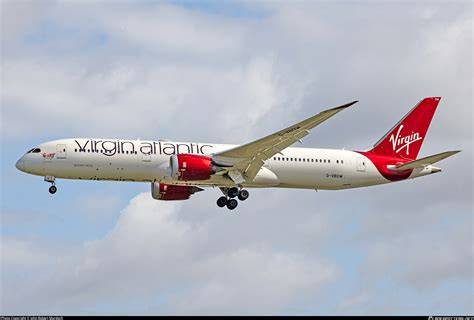
Virgin Atlantic and Delta’s Transatlantic Joint Venture Changed the Equation
The foundation of this strategy is the Virgin Atlantic and Delta Air Lines transatlantic joint venture, which dates back to 2013. The partnership was designed around a metal-neutral approach, meaning passengers and revenue are not treated as belonging exclusively to whichever airline happens to operate a particular aircraft. Instead, eligible transatlantic activity can contribute to a shared commercial operation in which the partners coordinate schedules, pricing, sales and network planning.
That arrangement fundamentally changes what it means for Virgin Atlantic to “serve” a destination. In a conventional airline model, removing Virgin’s own aircraft from London–Chicago would mean giving up the route and its associated revenue. Under the joint venture, the outcome is very different. A passenger purchasing a Virgin Atlantic itinerary that includes a Delta-operated transatlantic flight can still contribute to the economics of the broader partnership. Virgin can therefore retain a commercial presence in Chicago without dedicating one of its own expensive widebodies to the route every day.
This distinction is particularly important for an airline whose fleet is much smaller than those of global network giants. Virgin Atlantic cannot simply add aircraft whenever an attractive opportunity appears. Its long-haul fleet must be allocated carefully across a network where a single aircraft can be worth considerably more on one route than another. The joint venture effectively gives Virgin access to a much larger transatlantic network without requiring it to duplicate Delta’s aircraft, crews, airport infrastructure and domestic connections.
The arrangement also works in the opposite direction. Delta gains access to Virgin Atlantic’s strong position at London Heathrow and London Gatwick, while Virgin benefits from Delta’s enormous US domestic network. Instead of each airline trying to construct an independent network across the Atlantic, they can specialize in the parts of the market where their respective fleets and hubs provide the greatest advantage.
Why Detroit Is Particularly Logical for Delta
Of the three cities, Detroit Metropolitan Wayne County Airport provides perhaps the clearest example of why Virgin Atlantic does not need to operate its own aircraft. Detroit is one of Delta’s most important hubs, giving the airline an enormous advantage when it comes to connecting passengers.
A Virgin Atlantic widebody arriving in Detroit would primarily need to depend on passengers originating in the London market or connecting through carefully constructed itineraries. Delta, by contrast, can fill its aircraft with travelers arriving from across the United States. Passengers from smaller cities can connect through Detroit and continue to London, while London-bound passengers can flow in the opposite direction across Delta’s domestic network.
That distinction matters because a transatlantic widebody has a large number of seats to fill on every departure. Virgin Atlantic’s aircraft are also designed with a particularly strong premium proposition. A modern Virgin aircraft can devote substantial cabin space to Upper Class, Premium and other higher-value products. Such a configuration can be highly attractive when corporate and leisure demand supports strong fares, but it becomes less efficient when the airline needs large volumes of connecting passengers to keep the aircraft full.
Delta can solve that problem naturally because Detroit is its own hub. The airline does not have to manufacture connecting demand through a partnership; the demand is already built into its network. A Delta-operated London–Detroit service can therefore function as one segment of a much larger domestic and international system.
Chicago and Newark Present Different Challenges
Chicago O’Hare and Newark are important for slightly different reasons. Chicago O’Hare International Airport is one of the largest business and aviation markets in the United States, while Newark is one of the principal gateways into the New York metropolitan area. Both generate substantial transatlantic demand, but both are also fiercely competitive markets where the economics of operating a premium-heavy aircraft cannot be separated from the wider network.
Chicago is served by multiple major carriers, and travelers have a wide range of options for reaching London. Virgin Atlantic therefore has to consider not merely whether there is enough demand between London and Chicago, but whether its aircraft can generate an attractive return relative to alternative uses elsewhere in the network. If Delta can operate the route while Virgin continues to participate commercially through the joint venture, Virgin avoids tying up its own aircraft while retaining access to the market.
Newark presents another strategic consideration. The New York area is one of the world’s most important transatlantic markets, but it is also saturated with competing services from Heathrow and other London airports. Virgin Atlantic already has a significant presence in the wider New York market through John F. Kennedy International Airport, where its brand, premium cabins and schedule can be positioned more strategically.
Maintaining a strong New York presence does not necessarily require Virgin to operate every possible New York-area service itself. If Delta can cover Newark effectively, Virgin can concentrate its own aircraft on the parts of the market where its brand proposition is strongest while still offering customers an extensive range of connections.
Virgin Atlantic’s Premium Fleet Makes Aircraft Allocation Critical
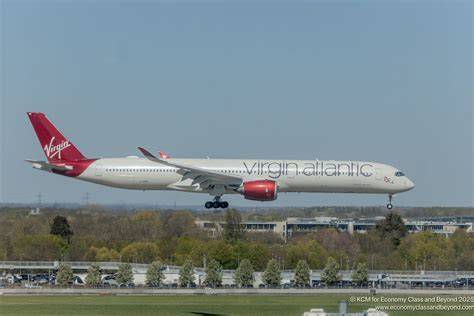
The fleet economics behind the decision are just as important as the partnership itself. Virgin Atlantic operates a comparatively small long-haul fleet built around aircraft such as the Airbus A350-1000, Boeing 787-9 and Airbus A330neo. These aircraft are capable of flying very long sectors, but their economics depend heavily on how their seats are sold.
Virgin’s premium cabins are central to its identity. Upper Class is not simply an upgraded economy product; it represents a substantial portion of the airline’s brand proposition and revenue strategy. That makes aircraft deployment particularly important. A premium-heavy aircraft needs sufficient demand for high-value seats to justify its configuration, especially when compared with an aircraft designed to accommodate a broader mixture of connecting and local traffic.
Delta has greater flexibility because its fleet and network allow it to combine different categories of passengers. A Delta aircraft flying from London to Detroit can carry corporate travelers, leisure passengers and domestic connections originating in dozens of US cities. Virgin can participate in the commercial value of that traffic without having to put one of its own premium-heavy aircraft into the market.
This is effectively an asset-allocation strategy. Virgin Atlantic is not necessarily deciding that Chicago, Newark or Detroit are bad markets. It is deciding that its own aircraft can potentially earn more elsewhere.
The Austin Experience Offered a Warning
Virgin Atlantic’s former service to Austin provides a useful example of the risks involved when a long-haul airline depends heavily on point-to-point corporate demand. The London Heathrow–Austin route launched in 2022 with Virgin’s Boeing 787-9, targeting the rapidly growing technology sector in central Texas.
The proposition made sense on paper. Austin had developed into a major technology and business center, while Virgin could offer a direct premium connection to London. But the post-pandemic environment changed the assumptions behind the route. Corporate travel budgets remained under pressure in the technology sector, weakening one of the most important sources of premium long-haul revenue.
Without the sort of domestic hub feed available to Delta at Detroit or Atlanta, Virgin had fewer ways to compensate for weaker local demand. The result demonstrated how exposed a long-haul carrier can become when a route depends heavily on a narrow group of high-paying passengers.
Virgin ultimately withdrew its dedicated Austin service in early 2024. The lesson was broader than one route. A prestigious business market is not automatically a profitable widebody market, particularly when demand is volatile and there is no large connecting network to provide additional passengers.
That experience helps explain why Virgin Atlantic has become more disciplined about where it deploys its own aircraft. A destination can remain strategically valuable to the airline while no longer justifying a dedicated Virgin-operated widebody.
Heathrow Slots Make Every Virgin Aircraft More Valuable
There is another scarce resource behind the strategy: London Heathrow slots. Heathrow is one of the world’s most constrained major airports, and a valuable slot can represent a significant strategic asset.
Virgin Atlantic therefore has to think about every Heathrow departure as more than simply another flight. If one of its aircraft is tied up operating a route where the airline struggles to achieve attractive yields, the opportunity cost can be substantial. That aircraft could potentially be deployed on a route with stronger premium demand, higher fares or better network economics.
The same principle applies to aircraft utilization. Long-haul aircraft are expensive assets that need to spend as much productive time in the air as practical. But maximizing flying hours alone is not enough. Virgin needs to maximize the economic return generated by those hours.
This is why the joint venture is so valuable. Delta can use its own fleet to provide the physical service to markets where its network has a structural advantage, while Virgin can redirect its aircraft toward routes where the airline believes its premium product has a stronger revenue opportunity.
Virgin Atlantic Is Concentrating on Its Strongest Markets
Rather than interpreting the withdrawal of Virgin-operated flights as a broad retreat from North America, it is more accurate to see it as network concentration. Virgin continues to have a substantial transatlantic presence, but it is increasingly selective about where its own aircraft operate.
The carrier can place its largest aircraft on markets where demand supports their premium-heavy configurations. Routes such as London–New York and London–Orlando can generate a mixture of premium and leisure demand at a scale that makes dedicated Virgin operations more attractive. Manchester also provides an important base for leisure-focused long-haul flying, allowing the airline to use its fleet in markets where its brand has strong recognition.
This strategy is especially relevant as Virgin Atlantic continues developing its fleet. Additional A330-900neos and further Boeing 787-9 cabin upgrades can increase the proportion of premium seating available across the fleet. As the airline becomes more dependent on premium revenue, the cost of putting a premium-heavy aircraft into a market that requires substantial connecting traffic becomes more visible.
The objective is therefore not simply to fly farther or serve more cities. It is to extract the greatest possible value from each aircraft.
Delta Gives Virgin Access to More Than Its Own Aircraft Could Reach
The most powerful advantage of the partnership is that Virgin Atlantic can effectively present a much larger North American network to its customers than its own fleet could support.
A passenger booking through Virgin Atlantic can connect onward through Delta and its wider network, while Air France and KLM provide additional European and North American connectivity through the broader alliance structure. This gives Virgin customers access to destinations that would be impractical for Virgin to serve with dedicated widebody aircraft.
For the airline, that means geographic reach does not have to equal aircraft deployment. Virgin can maintain commercial relevance in cities such as Chicago, Newark and Detroit even when the aircraft itself belongs to Delta.
For passengers, the distinction may be almost invisible during the booking process. A traveler may purchase an itinerary through Virgin Atlantic and find that one sector is operated by Delta. From the airline’s perspective, however, the difference is enormously important because the operating carrier bears the aircraft, crew and operational costs.
That is the fundamental transformation created by modern airline joint ventures. Network breadth can increasingly be achieved through partnership rather than fleet expansion.
Why Virgin Atlantic Let Delta Fly Chicago, Newark and Detroit
Virgin Atlantic’s decision ultimately reflects a straightforward but powerful principle: an airline does not have to operate a flight itself to benefit from the passengers traveling on it.
Chicago, Newark and Detroit remain valuable markets, but their value does not automatically justify allocating Virgin Atlantic aircraft to them. Detroit is particularly well suited to Delta because of its enormous hub operation. Chicago and Newark are highly competitive markets where Virgin can preserve access through the partnership while concentrating its own aircraft on routes that better match its premium-heavy fleet.
The strategy also protects Virgin Atlantic from some of the risks associated with long-haul expansion. Instead of adding aircraft simply to increase the number of cities served under its own flag, the airline can use Delta’s network as a form of capacity extension. That allows Virgin to remain visible across North America without accepting the full financial and operational burden of operating every route itself.
The result may look unusual when viewed from the aircraft window. A passenger flying from London to Detroit might see a Delta aircraft and wonder why Virgin Atlantic is not there. But from the perspective of airline economics, the absence of a Virgin aircraft does not necessarily mean the absence of Virgin value.
Virgin Atlantic has effectively traded metal for network access. By allowing Delta to operate selected US routes, it can preserve its commercial reach while directing its own limited fleet toward markets where premium demand, brand strength and aircraft economics align more closely.
That is less a retreat from Chicago, Newark or Detroit than a recognition that modern transatlantic competition is no longer defined solely by whose aircraft is parked at the gate. In a mature joint venture, the most important question is not which airline operates the flight. It is which combination of aircraft, network, passengers and revenue produces the strongest return across the entire partnership.