Private jet travel has long occupied a rarefied part of the aviation market, but a new airline is preparing to test whether travelers will pay for something in between conventional premium cabins and full private charter. Magnifica Air plans to begin operations in the third quarter of 2027 with just eight aircraft, yet its unusually low-density cabins could make it one of the most distinctive airline startups in the United States.
The Florida-based carrier plans to operate six Airbus A220-300s and two Airbus A321neos, with the aircraft configured to carry dramatically fewer passengers than their conventional airline counterparts. The A220-300s are planned to accommodate only 45 passengers, while the A321neos will carry 54. Rather than maximizing seats, Magnifica is building its proposition around space, premium service and an experience intended to sit above traditional domestic first class.
That strategy places the airline in an unusual position. It is not attempting to become another low-cost carrier, nor is it simply copying the FBO-based model associated with JSX. Instead, Magnifica is pursuing Part 121 certification and plans to operate as a scheduled airline while selling an experience designed to resemble a more affordable form of private aviation.
Magnifica Air Will Start With Just Eight Aircraft
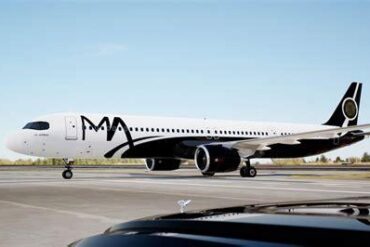
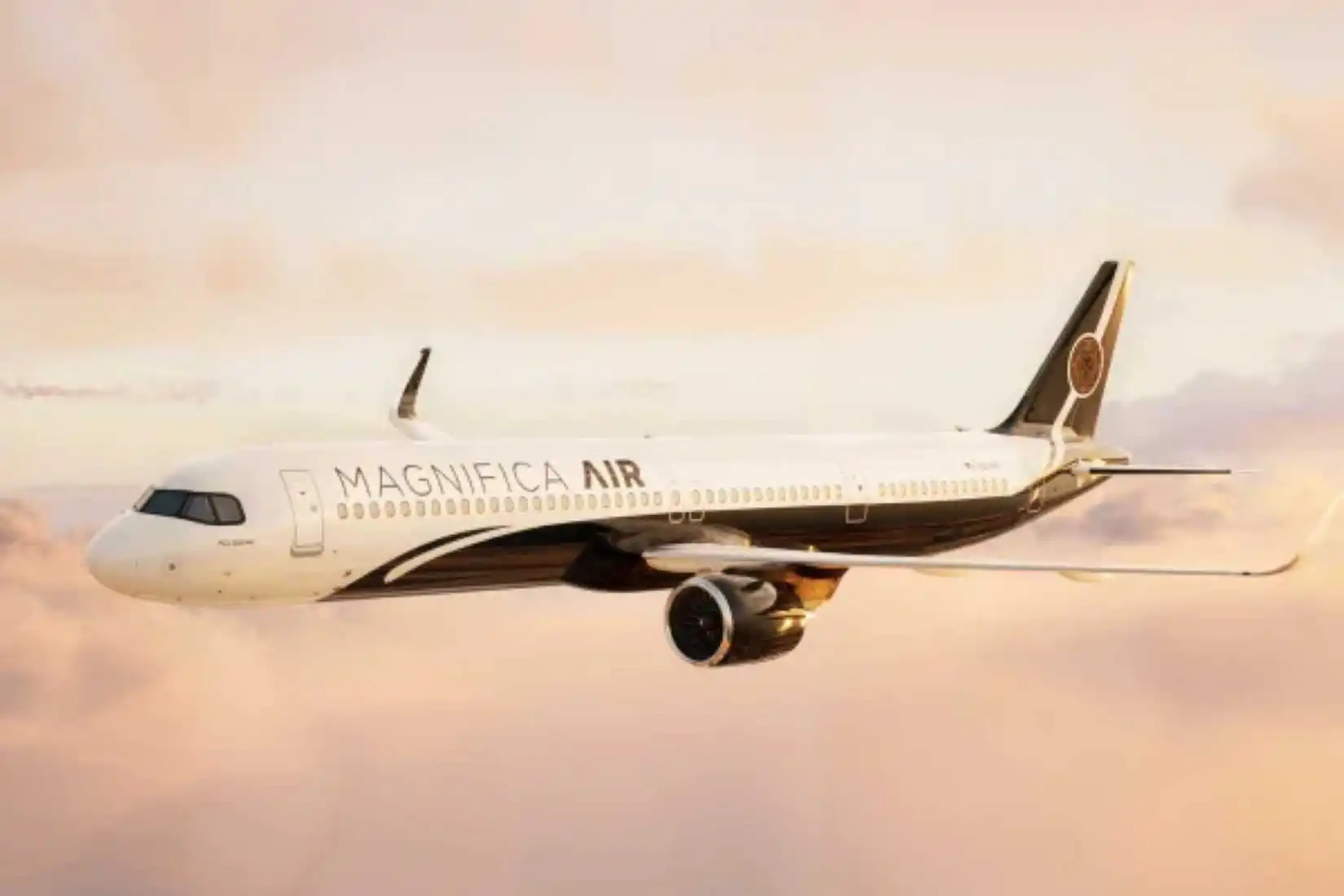
Magnifica’s initial fleet is striking because of both its size and its configuration. The carrier has signed lease agreements with Air Lease Corporation and Azorra covering the eight aircraft, and its first aircraft has already been delivered. That aircraft is an Airbus A321neo previously operated by Spirit Airlines and has appeared in Magnifica branding as an ACJ321neo.
The six A220-300s will become the backbone of the initial operation. Although the A220 is designed to serve efficiently across a broad range of airline missions, Magnifica intends to transform the aircraft into an extremely low-density premium platform. A configuration of just 45 passengers gives the airline enormous flexibility in cabin layout compared with conventional A220 operators.
The two A321neos will provide additional capacity, but even these larger narrowbodies will carry only 54 passengers. That is exceptionally low for an aircraft family normally used for high-density domestic and international operations. The cabin is therefore being treated less like a conventional airline interior and more like a large private aircraft with an airline-scale airframe.
Magnifica ultimately wants to expand beyond its initial eight aircraft. The company has stated ambitions to operate more than two dozen aircraft within only a few years, making the launch fleet a starting point rather than the intended long-term scale.
The economics, however, will depend heavily on whether enough travelers are willing to pay for the additional space and service. Carrying fewer than half the passengers that a conventional narrowbody might accommodate fundamentally changes the revenue model. Every occupied seat has to generate significantly more revenue, while the aircraft itself still consumes fuel, requires maintenance and must be supported by crews and airport infrastructure.
The Cabin Is Designed Above Traditional Domestic First Class
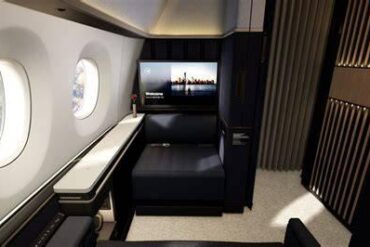
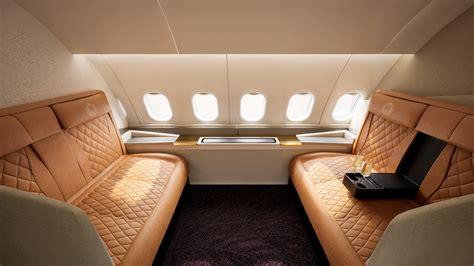
The central feature of Magnifica’s strategy is the cabin itself. The A220s will use large recliner seats similar to US domestic first class, but the extremely low passenger count will create substantially more room throughout the aircraft.
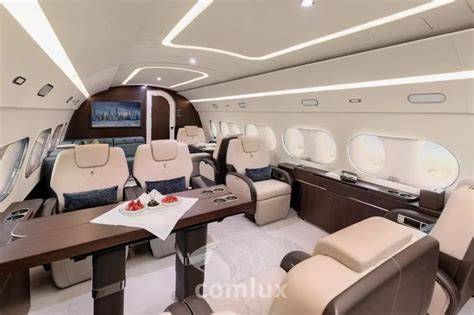
The carrier also plans to install private suites at the front of both aircraft types. This gives Magnifica another layer of differentiation because its most premium passengers will receive an experience that goes beyond the standard wide domestic first-class recliner offered by major US airlines.
The A321neos will take the concept even further with a lounge at the rear of the aircraft. That feature is particularly unusual on a narrowbody aircraft operating domestic routes. Rather than treating every square foot as an opportunity to install another revenue-generating seat, Magnifica is deliberately allocating valuable cabin space to social and relaxation areas.
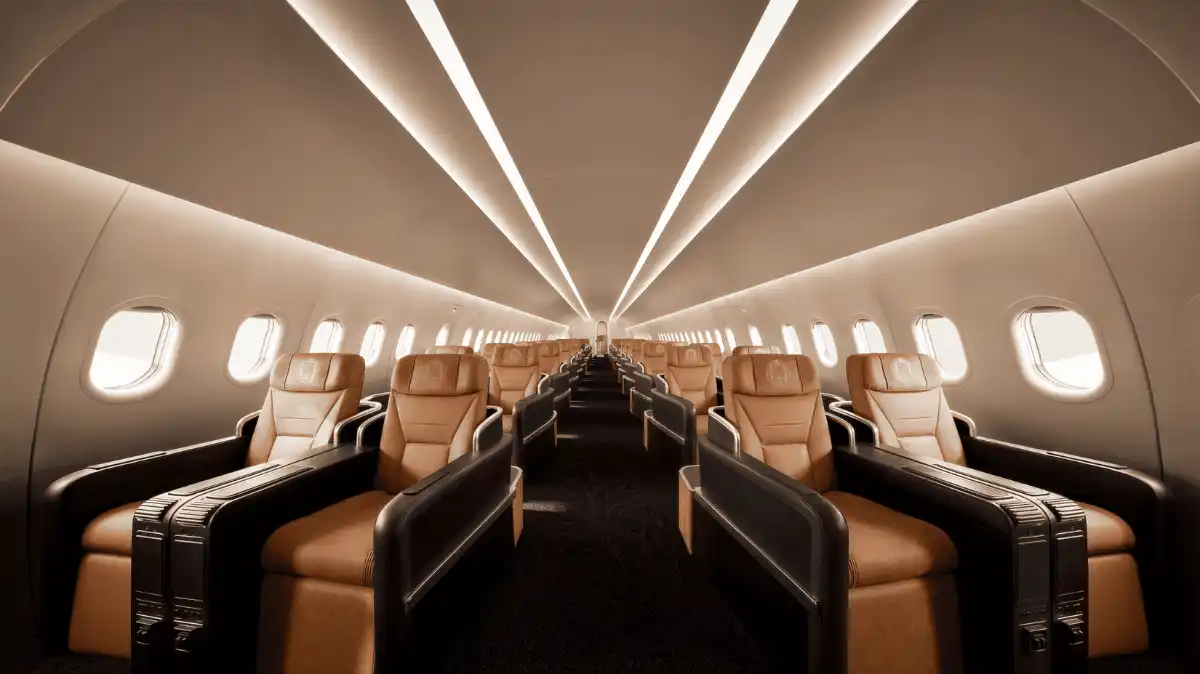
This configuration explains why Magnifica’s business model is so different from that of most startup airlines. A new carrier usually needs to maximize seat utilization and keep costs low enough to compete with established operators. Magnifica is doing almost the opposite. It is reducing capacity to create a premium product and then relying on high fares and high-value customers to make the aircraft financially viable.
That makes the airline’s eventual pricing especially important. If fares approach conventional premium-airline levels, passengers may question why they should abandon established carriers. If prices move too close to actual private charter rates, the airline could lose the value proposition that makes the concept attractive in the first place.
Magnifica Is Not Simply Another JSX
The most obvious comparison is JSX, which has spent years developing a near-private-jet travel model in the United States. JSX is known for using fixed-base operators, or FBOs, rather than conventional airport terminals on many routes, allowing passengers to experience a much faster airport process.
The fundamental appeal is convenience. Passengers can generally arrive much closer to departure because FBO facilities avoid many of the time-consuming processes associated with large commercial terminals. The experience is designed to make a commercial flight feel more like general aviation.
Magnifica shares part of that philosophy but approaches it differently.
JSX’s appeal is strongly connected to time savings and convenience, while Magnifica is placing greater emphasis on luxury. Magnifica plans to offer private or dedicated facilities, expedited TSA screening, white-glove baggage handling and chauffeur services. It is also promoting the possibility of arriving roughly 30 minutes before departure.
That sounds similar to the FBO advantage, but there is a major regulatory distinction.
JSX’s operating structure involves Part 380 charter arrangements with flights operated by a Part 135 subsidiary. Magnifica, by contrast, is pursuing FAA Part 121 certification, the regulatory framework used by large scheduled airlines.
Part 121 Certification Changes the Equation
Part 121 is one of the most demanding regulatory environments in commercial aviation. Airlines operating under the framework must meet extensive requirements covering aircraft operations, maintenance, crew qualifications, dispatch, training, safety procedures and security.
For Magnifica, that creates both credibility and additional complexity.
The airline cannot simply reproduce every aspect of an FBO-based private aviation operation while claiming the advantages of a conventional scheduled airline. Its facilities and passenger-processing arrangements must fit within the requirements associated with Part 121 operations and TSA-approved screening.
That makes Magnifica’s promise of rapid airport processing particularly important. The company expects dedicated or repurposed facilities to make the process much faster than at major airport terminals, but the operational details will determine how closely the passenger experience actually resembles private aviation.
The distinction matters because private aviation’s greatest advantage is not necessarily luxury.
A private jet passenger does not need an elaborate suite or an onboard lounge to justify flying privately. The real benefit is often the amount of time saved before and after the flight. A passenger can arrive at an FBO shortly before departure, board immediately and avoid waiting for hundreds of other travelers. The same process occurs on arrival.
Magnifica can imitate part of that experience, but it cannot offer the same degree of flexibility. An airline still operates scheduled flights, meaning passengers must adapt to a published timetable and share the aircraft with other customers.
The Private-Jet Market May Be the Hardest Target
Magnifica is therefore entering a market where its potential customers already have several alternatives.
A wealthy traveler might book a private aircraft for maximum flexibility. Another might fly first class on Delta Air Lines or United Airlines because those carriers offer extensive schedules, loyalty benefits and global networks. A third customer might choose JSX because the time savings associated with FBO operations are more important than an ultra-luxurious cabin.
Magnifica has to persuade each group that its particular combination of features is worth changing behavior.
The airline’s proposed network reflects this challenge. Initial markets are expected to include Miami, New York, Los Angeles, Dallas, Houston and the San Francisco Bay Area, with additional destinations planned later.
These are logical markets for a premium airline. They contain large concentrations of wealthy travelers, corporate customers and businesses that routinely spend heavily on air transportation.
Yet established airlines have an enormous advantage in these cities. Delta, United and American can offer hundreds of destinations, multiple daily departures and extensive connections. Private aircraft, meanwhile, can reach thousands of airports without requiring passengers to depend on an airline network.
Magnifica sits between those two systems.
It will have more structure than private aviation but potentially offer a more refined experience than a conventional airline. Whether that middle ground represents an attractive market or an awkward compromise will become clearer only after the airline starts flying.
The Seven Club Could Give Magnifica a Different Revenue Model
Another unusual element is the Seven Club, Magnifica’s planned membership program. Rather than operating purely like a traditional airline frequent-flyer program, the membership is intended to provide benefits such as fixed-rate pricing and priority services.
That makes the program resemble a jet card in some respects.
The concept could be important because Magnifica needs a stable base of high-value customers. A membership program may encourage travelers to commit to the airline rather than purchasing individual premium tickets based solely on price.
For frequent business travelers, predictable pricing can also be valuable. Instead of watching fares fluctuate with demand, a member could potentially gain greater certainty over travel costs while receiving additional priority benefits.
However, the program will also face competition from existing airline loyalty systems and private aviation memberships. Premium customers often accumulate substantial value through airline status, credit-card benefits, lounge access and international partnerships. Convincing those customers to build a relationship with a completely new carrier could take more than an attractive cabin.
Magnifica Must Justify a Premium Fare
The biggest question surrounding Magnifica is ultimately economic rather than technological.
The Airbus A220 and A321neo are both proven aircraft families, and leasing them provides a more realistic path for a startup than purchasing an entirely new fleet outright. But an aircraft carrying only 45 or 54 passengers has to generate extraordinary revenue per seat.
That revenue must cover aircraft leases, fuel, crews, maintenance, airport costs, insurance, training, sales and marketing. The airline also has to absorb the normal operational risks associated with a small fleet.
An eight-aircraft operation has limited redundancy. An aircraft unavailable because of maintenance can represent a meaningful percentage of total capacity. Schedule disruptions can therefore have a larger effect than they would at a major carrier with hundreds of aircraft.
This is where Magnifica’s premium positioning becomes both its greatest opportunity and its greatest risk.
If customers genuinely value the product, the airline could command fares that make the unusual seating density work. But if passengers regard the experience as simply a more expensive version of first class, the economics become much harder.
Magnifica Is Betting on the Space Between Airlines and Private Jets
The most interesting aspect of Magnifica is that it is not trying to beat conventional airlines at their own game. It is deliberately creating a product for passengers who believe standard first class is not enough but do not necessarily want to pay the full price of private aviation.
That gap exists, particularly in major US business markets.
The question is whether it is large enough to support a standalone airline.
Private aviation customers may still prefer complete privacy, flexible departure times and access to smaller airports. Premium airline customers may prefer established loyalty programs, broader networks and more frequent schedules. Magnifica must therefore create a sufficiently strong combination of comfort, exclusivity, service and pricing to make switching worthwhile.
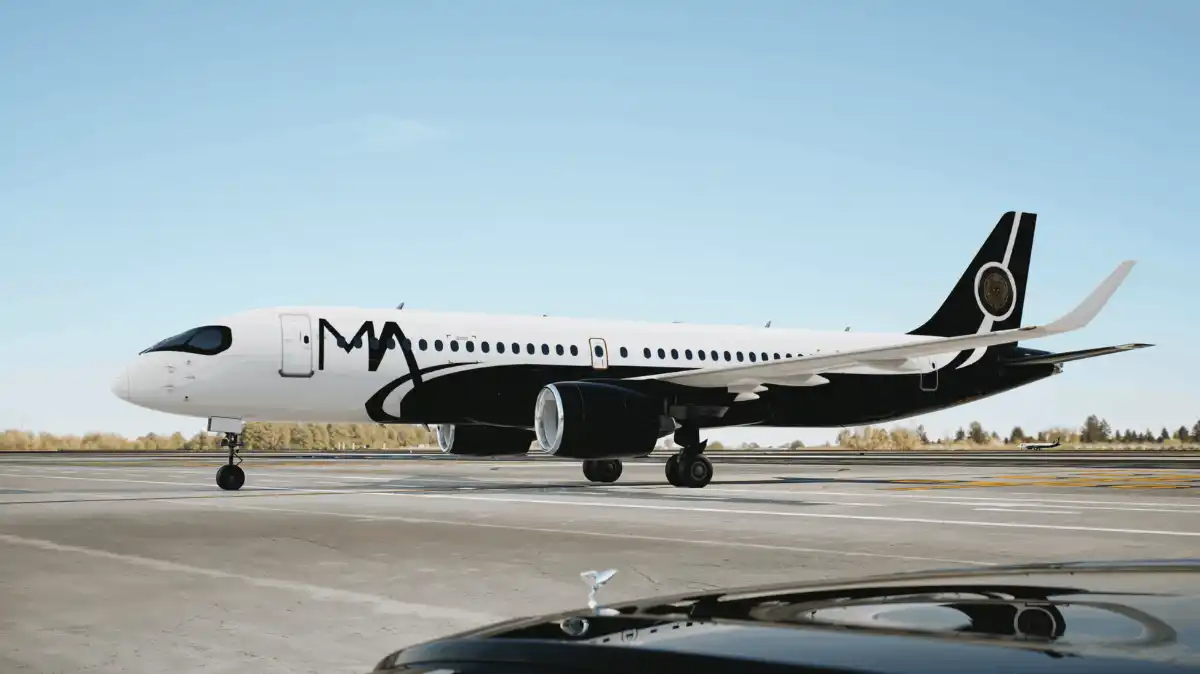
The company is not entering the market as a purely theoretical startup. It already has aircraft commitments, financing sources, experienced leadership and an active Part 121 certification process. Its first aircraft has also arrived, giving the project a physical presence well before its planned 2027 passenger launch.
The next major milestone is certification. Magnifica hopes to receive its Air Carrier Certificate during 2026 before spending additional months completing its operating and business preparations. If that schedule holds, commercial flights could begin during the third quarter of 2027.
Eight Aircraft Could Test a Much Bigger Aviation Idea
Magnifica’s initial eight-aircraft fleet is small, but the business idea behind it is much larger. The carrier is effectively asking whether an airline can combine the economics of scheduled commercial aviation with the experience expectations of private aviation.
Its answer is an aircraft with dramatically fewer seats, private suites, premium recliners, dedicated airport facilities, chauffeur services, lounges and a membership program. The strategy deliberately sacrifices seat volume in exchange for a higher value per passenger.
That makes Magnifica one of the more unusual airline launches expected in 2027.
The company does not need to replace traditional airlines or private jets entirely. It only needs to persuade enough affluent travelers that there is value in occupying the middle ground. If it can offer meaningful time savings while delivering a cabin substantially more exclusive than conventional domestic first class, the concept could establish a distinct premium niche.
But the same positioning creates its central challenge. Magnifica must charge enough to make its unusually low-density aircraft profitable without charging so much that customers decide to fly privately instead. Its success will ultimately depend on whether that narrow pricing gap is wide enough to build a sustainable airline.