The private Boeing 747 stands as the defining symbol of airborne extravagance, representing an aviation category where size, engineering brilliance, and bespoke craftsmanship intersect. Often celebrated as the Queen of the Skies, the 747 serves not merely as transportation but as a declaration of global influence. In private ownership, it transcends its already legendary commercial role and becomes a fully personalized airborne residence, designed to meet the complex demands of heads of state, multinational executives, and individuals whose lifestyles require more than standard private jet capabilities.
Its transformation from a commercial giant to an ultra-luxurious private jet is rooted in the aircraft’s inherent design advantages: unmatched volume, intercontinental range, and the iconic upper-deck profile that has shaped decades of aviation identity. When refitted for private use, these traits become the foundation for a flying palace capable of global missions with uninterrupted comfort.
Even before customization begins, the 747 offers a blank canvas unlike any other aircraft in the world. The distinctive hump, the multi-deck layout, and the structural endurance engineered for long-haul passenger loads create a platform adaptable to virtually any interior vision imagined by designers or owners.
A Legacy of Engineering Grandeur
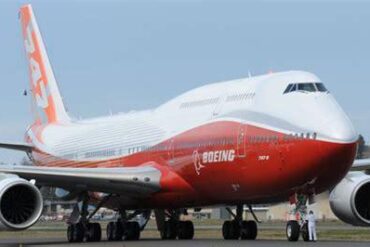
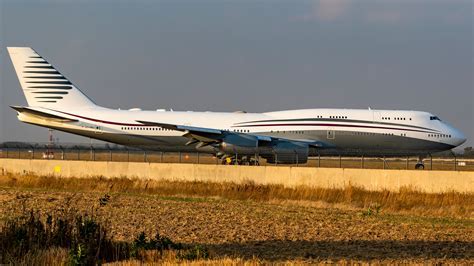
The Boeing 747 first redefined travel in 1969, emerging as the world’s first wide-body airliner and the machine that democratized long-haul flying. Its unprecedented capacity and range reshaped airline networks, yet it also caught the attention of those who recognized the potential for a more exclusive use case. Over decades, variants such as the 747-400 and the 747-8 Intercontinental evolved into preferred platforms for private transformation, thanks to their structural reliability and enormous cabins.
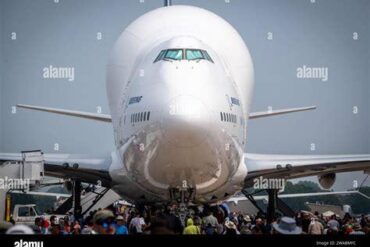
The 747-8, the most advanced and longest version ever built, spans 250 feet 2 inches in length, with a wingspan of 224 feet 7 inches. Standing 63 feet 6 inches tall, it commands presence on any tarmac. Its four GEnx-2B67 engines each push 66,500 pounds of thrust, securing dependable performance at range without sacrificing the refinement expected in private travel.
Performance remains a central selling point. Cruising efficiently at Mach 0.86, the aircraft links cities like New York and Hong Kong with ease. A range of 7,730 nautical miles provides near-global reach, making the private 747 a tool for diplomacy, corporate command, or luxury leisure without the need for intermediate stops.
The Cabin as an Artistic Canvas
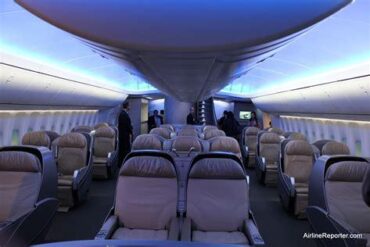
The customization potential of a private Boeing 747 is unmatched in aviation. With over 4,800 square feet of interior floor space, the aircraft provides more room than many urban apartments and boutique hotels. This enables designers to construct multi-zone environments that mirror high-end residential architecture while incorporating aviation-specific engineering and safety requirements.
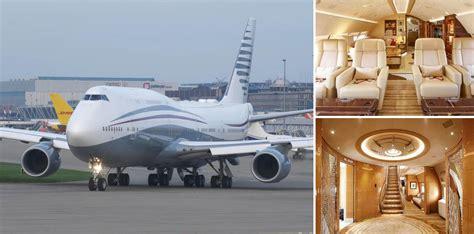
Owners often treat the interior not as a transport vessel but as an extension of their private estates. Design teams collaborate with meticulous precision, curating materials and layouts that reflect cultural preferences, personal aesthetics, and functional needs. Rare stone surfaces, handcrafted wood veneers, and imported textiles often form the foundation of these airborne sanctuaries.
Interior Architecture of the Flying Palace
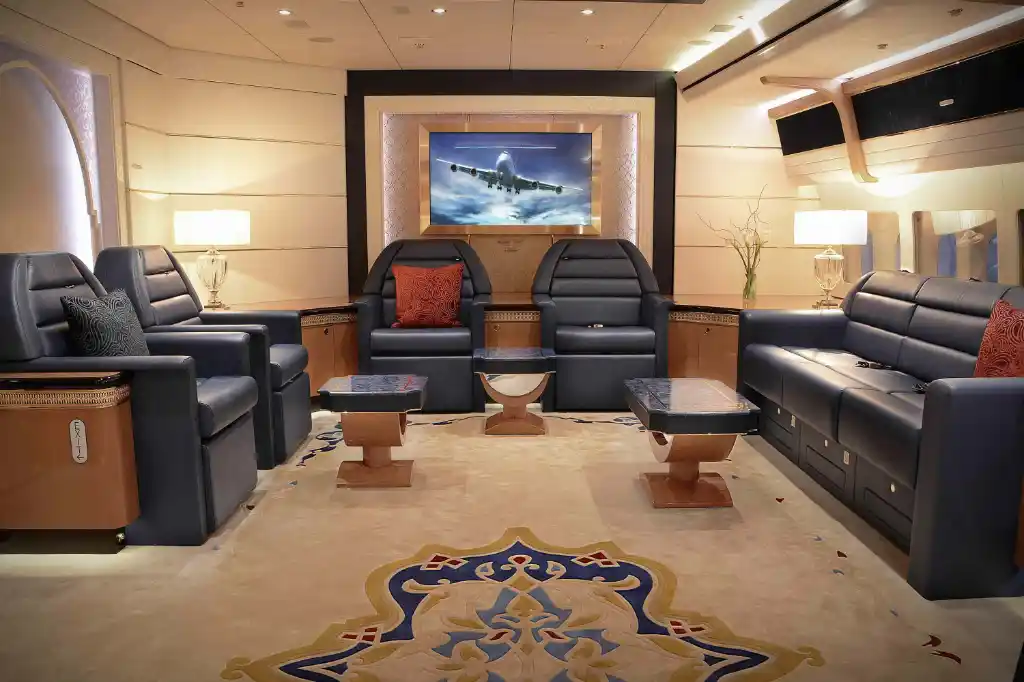
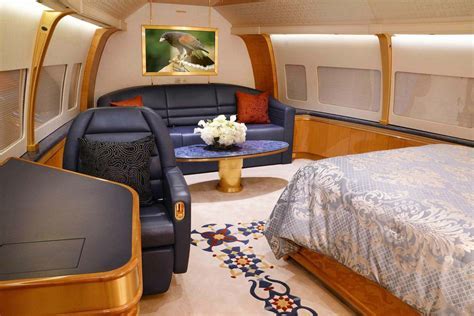
Luxury inside a private 747 is not merely decorative; it is spatial luxury on a scale that smaller private jets cannot approach. Floor plans typically include a full master suite with a king-size bed, ensuite bath, and dressing room, mirroring the comfort of a high-end residence. Lounges may be arranged as living rooms with panoramic window lines that heighten the sense of open air.
Dining salons often support full-service catering, enabling multi-course meals onboard. Entertainment zones incorporate cinematic audio systems, broad-format displays, and sound isolation engineered to maintain clarity even during cruise. The upper deck frequently becomes an executive office or an intimate relaxation space, benefiting from the distinctive curved cabin contours that make the 747’s silhouette instantly recognizable.
Some owners integrate features rarely found in airborne environments: spas, private theaters, gyms, medical rooms, and library suites. The aircraft’s scale allows functional division, ensuring that business activities, leisure, and rest each have dedicated zones.
Advanced Technology Beneath the Elegance
Behind the opulence lies sophisticated aviation technology. The 747-8 flight deck incorporates digital avionics, optimized navigation systems, and real-time weather analytics that support long-range flight safety. Connectivity systems include satellite broadband suitable for encrypted communication, streaming, and global conferencing.
Acoustic engineering plays a central role. Modern soundproofing materials reduce ambient noise significantly compared to earlier variants, producing an interior environment more akin to a luxury hotel than a pressurized metal fuselage. Structural improvements in wing design enhance fuel efficiency and aerodynamic stability, allowing the aircraft to perform more sustainably than earlier generations.
Operational Realities and Financial Dimensions
A private 747 delivers a caliber of capability unequaled by smaller jets, but its operation comes with substantial demands. The aircraft requires long runways, specialized ground handling, and storage infrastructure typically available only at major international airports. Its operations are managed by dedicated teams: full-time pilots, cabin crew, engineers, and logistics staff who oversee maintenance schedules, fuel planning, and flight routing.
The financial commitment places the aircraft squarely within the domain of national governments and extreme-net-worth individuals. A new 747-8 carries an acquisition cost around $418 million, with interior customization often extending costs by tens of millions depending on materials, amenities, and technology installations. Hourly operating expenses can exceed $25,000, driven by fuel consumption, crew salaries, and maintenance cycles.
For owners, these costs are justified by the practical and symbolic advantages offered. Large delegations can be transported globally without commercial dependencies. Privacy, security, and convenience achieve levels impossible to replicate elsewhere in aviation.
High-Profile Ownership and Mission Versatility
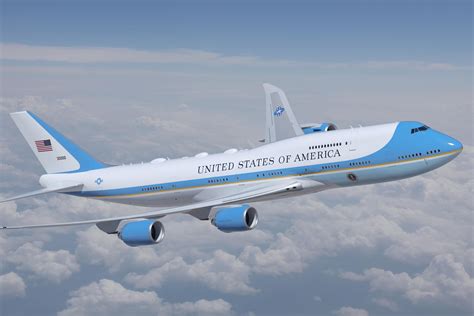
The private Boeing 747 is a platform favored by some of the world’s most influential figures. National governments fly heavily modified versions, including the well-known configuration used by the President of the United States under the Air Force One program. Royal families, political leaders, and international organizations also employ custom 747s for diplomatic travel.
Business elites, such as Prince Alwaleed bin Talal, have commissioned extravagant configurations, integrating lounges, reception halls, and multi-room suites. These aircraft serve not only as transport but as extensions of brand identity or political stature.
The versatility of the 747 also supports unique missions. Humanitarian organizations have leveraged private or government-operated 747s to deliver rapid-response supplies to crisis zones, taking advantage of the aircraft’s substantial cargo capabilities. Corporations occasionally repurpose 747 interiors as mobile venues, hosting product showcases, strategic meetings, or media events while airborne.
Environmental Considerations and Evolving Sustainability
The scale of the 747 naturally brings environmental impact into focus. Its fuel burn exceeds that of smaller long-range aircraft, and its carbon footprint is significant relative to modern twin-engine private jets. However, the GEnx engines on the 747-8 improve fuel efficiency and reduce emissions compared to earlier variants.
Owners increasingly adopt mitigation strategies such as carbon offset programs and, when available, sustainable aviation fuels (SAFs). While these steps cannot fully eliminate emissions, they reflect a shift toward responsible stewardship in the high-end aviation sector.
An Enduring Icon of Prestige and Engineering Excellence
The private Boeing 747 stands at the pinnacle of ultra-large private jet travel. Its imposing presence, extensive cabin space, intercontinental range, and limitless customization potential secure its position as the ultimate airborne residence. Although operational costs and environmental considerations are substantial, the aircraft’s unique combination of scale, sophistication, and symbolic impact ensures its enduring relevance.
Ownership of a private 747 transcends convenience. It is a declaration of global capability—an airborne expression of power, culture, and personal identity. While the aviation landscape continues to evolve with more efficient aircraft, none have matched the distinct aura or architectural magnificence of the private Boeing 747 Jumbo Jet, securing its legacy as one of the most extraordinary achievements in private flight history.