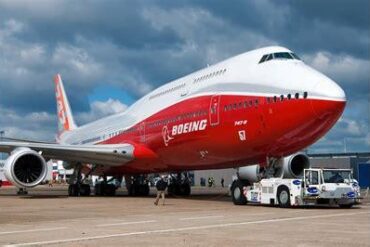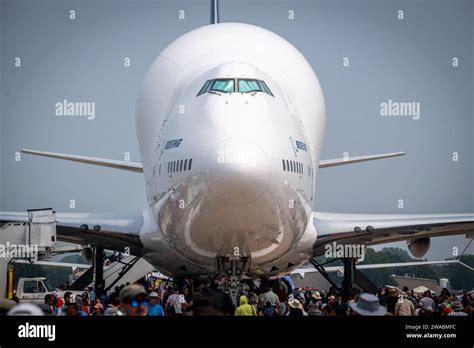
For decades, the Boeing 747 symbolized the golden age of long-haul air travel. Its distinctive hump-backed profile, enormous size, and intercontinental reach transformed commercial aviation and made it one of the most recognizable aircraft ever built. Yet by the late 2010s, the aviation industry appeared ready to close the chapter on the legendary jumbo jet. Airlines increasingly favored fuel-efficient twin-engine aircraft such as the Boeing 787 Dreamliner and Airbus A350, both capable of flying similar routes with significantly lower operating costs.
As passenger carriers accelerated fleet modernization programs, hundreds of aging Boeing 747s faced retirement. Industry observers widely assumed that many would spend their final years parked in desert storage facilities before eventually being dismantled for parts and scrap. Instead, a remarkable reversal unfolded. Aircraft that were once considered obsolete suddenly became some of the most sought-after assets in global aviation.
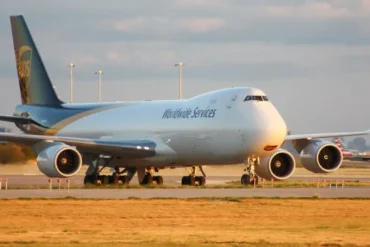
The catalyst was not passenger demand but cargo. As international freight volumes surged, supply chains became increasingly complex, and e-commerce reshaped global logistics networks, the Boeing 747 discovered a second life. Retired passenger aircraft emerged from storage, underwent extensive modifications, and returned to the skies as highly profitable freighters. What seemed like the end of an aviation icon ultimately became the beginning of an entirely new chapter.
The Boeing 747’s unexpected comeback highlights a unique reality within aviation: retirement is not always permanent, especially for an aircraft possessing capabilities that few modern alternatives can match.
The Boeing 747’s Unique Cargo Advantage
The reason behind the Boeing 747’s resurgence begins with a simple fact: no other commercial aircraft combines payload capacity, cargo volume, range, and loading flexibility in quite the same way.
Modern passenger airlines prioritize efficiency. Twin-engine aircraft consume less fuel, require fewer crew members, and generally produce lower operating costs than four-engine jets. For passenger operations, these advantages often outweigh the benefits of sheer size.
Cargo operators, however, evaluate aircraft differently.
In the freight world, volume frequently matters more than fuel efficiency. A single aircraft capable of carrying an enormous shipment can often prove more valuable than multiple smaller aircraft operating the same route. The Boeing 747 excels in precisely this area.
Its cavernous main deck allows operators to transport exceptionally large shipments, including industrial machinery, aerospace components, automotive equipment, oil and gas infrastructure, military vehicles, and oversized manufacturing equipment. Many of these loads simply cannot fit inside smaller freighters.
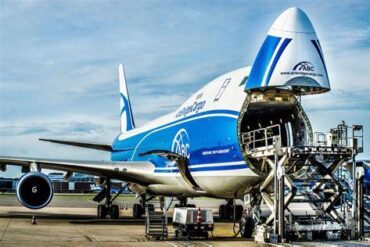
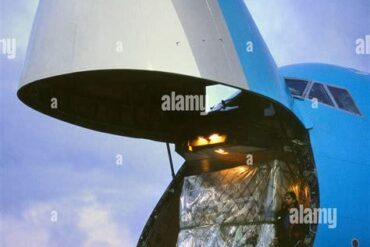
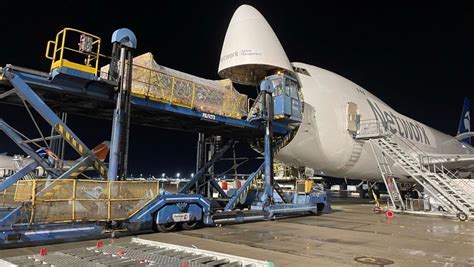
The aircraft’s famous nose-loading capability further separates it from competitors. Dedicated freighter variants feature a hinged nose door that swings upward, allowing cargo to be loaded directly into the fuselage. This design eliminates dimensional restrictions associated with conventional side-loading doors and enables transportation of unusually long or bulky cargo.
For logistics companies serving industries where oversized freight is common, the Boeing 747 remains irreplaceable. Even newer cargo aircraft often struggle to replicate the flexibility provided by the jumbo jet’s unique design.
As a result, while passenger airlines retired the aircraft in large numbers, cargo operators saw opportunity where others saw obsolescence.
Why Global Supply Chains Suddenly Needed More Jumbo Freighters
The timing of the Boeing 747’s revival coincided with one of the most disruptive periods in modern logistics history.
The COVID-19 pandemic fundamentally altered global transportation networks. Manufacturing delays, shipping bottlenecks, port congestion, labor shortages, and changing consumer behavior placed unprecedented pressure on supply chains worldwide.
At the same time, online shopping experienced explosive growth.
Consumers increasingly expected rapid delivery of goods sourced from manufacturers located thousands of miles away. Retailers and logistics companies responded by expanding air freight operations to maintain delivery schedules and inventory levels.
The result was a dramatic increase in demand for air cargo capacity.
Traditional shipping methods struggled to keep pace. Ocean freight experienced delays lasting weeks or even months. Businesses requiring urgent transportation turned to aviation despite its higher costs. Suddenly, large freighters capable of moving vast quantities of cargo across continents became essential.
The Boeing 747 was uniquely positioned to benefit.
Many cargo operators discovered that acquiring retired 747s from passenger airlines offered a faster and more economical solution than ordering new aircraft. Since Boeing had already announced the eventual closure of its 747 production line, available aircraft represented a finite and increasingly valuable resource.
As freight rates climbed and demand remained strong, aircraft that had recently been viewed as retirement candidates became strategic assets.
The Critical Role Of America’s Aircraft Boneyards
The Boeing 747’s return would not have been possible without the vast aircraft storage facilities scattered across the American Southwest.
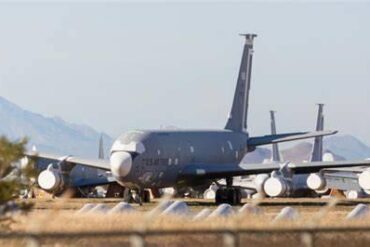
Locations such as Marana, Victorville, and Mojave have long served as repositories for retired and inactive aircraft. Popularly known as aircraft boneyards, these facilities perform a function far more sophisticated than simple storage.
The desert environment offers ideal preservation conditions. Low humidity dramatically reduces corrosion, while expansive open spaces provide room for thousands of aircraft. Rather than abandoning retired jets, operators place them into carefully managed preservation programs designed to maintain their long-term viability.
When a Boeing 747 enters storage, technicians perform extensive procedures to protect critical systems. Engines receive protective coverings, hydraulic systems are stabilized, fuel tanks undergo treatment, and sensitive avionics are safeguarded against environmental degradation.
Aircraft owners can choose varying levels of preservation depending on future plans. Some aircraft remain in short-term storage, allowing rapid reactivation if demand returns. Others enter deeper preservation programs intended for longer periods of inactivity.
During the pandemic, these facilities became crowded with widebody aircraft as airlines drastically reduced operations. Numerous Boeing 747s arrived from carriers including Qantas, KLM Royal Dutch Airlines, and Virgin Atlantic.
Many observers expected these aircraft to remain permanently grounded.
Instead, cargo operators began evaluating stored jets as potential fleet additions. Because the aircraft had been preserved rather than abandoned, many remained recoverable despite years of inactivity.
This unexpected shift transformed America’s aircraft boneyards from retirement destinations into strategic reservoirs of future cargo capacity.
How Retired Passenger Boeing 747s Are Converted Into Freighters
One of the most fascinating aspects of the Boeing 747’s second life involves the extensive engineering work required to transform former passenger aircraft into cargo specialists.
Passenger-to-freighter conversion programs represent some of the most complex modification projects in commercial aviation.
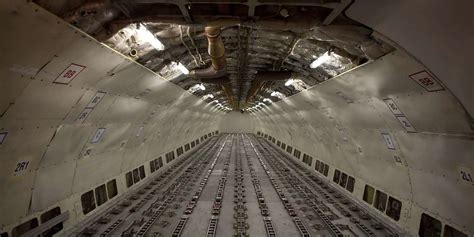
The process begins with the complete removal of passenger amenities. Seats, overhead storage bins, galleys, lavatories, carpeting, insulation, entertainment systems, and cabin furnishings are stripped from the aircraft. What remains is essentially a bare airframe ready for structural transformation.
Engineers then reinforce portions of the floor structure to support concentrated cargo loads. Freight pallets can exert enormous pressure on specific sections of the aircraft, requiring significant strengthening measures.
Large cargo doors are installed along the fuselage, while sophisticated loading systems allow containers and pallets to move efficiently throughout the aircraft. Fire suppression systems, cargo restraints, and specialized monitoring equipment are also integrated.
Although these modifications cost millions of dollars, the resulting aircraft often remains considerably less expensive than purchasing a factory-built freighter.
For operators seeking maximum capability at manageable cost, converted Boeing 747-400 aircraft represent an attractive solution.
These conversions have effectively extended the operational lives of numerous airframes that otherwise might have been permanently retired.
Why Atlas Air And Kalitta Air Continue To Depend On The Boeing 747
Despite ongoing advances in cargo aviation, several major American operators remain deeply committed to the Boeing 747.
Among the most prominent are Atlas Air and Kalitta Air, both of which continue operating substantial fleets of jumbo freighters on international routes.
Their continued reliance on the aircraft reflects the unique missions these carriers perform.
Unlike passenger airlines focused on maximizing seat occupancy, cargo operators frequently transport shipments requiring exceptional capacity. Industrial equipment, military hardware, aerospace components, humanitarian aid supplies, and oversized commercial freight all benefit from the Boeing 747’s capabilities.
Military contracts further reinforce demand.
The United States Department of Defense regularly charters civilian cargo operators to transport helicopters, armored vehicles, engines, and logistical equipment around the world. Few commercial aircraft can handle these assignments as effectively as the Boeing 747.
Another advantage lies in infrastructure and expertise.
After decades of service, a vast global support network exists for the aircraft. Maintenance facilities, spare parts suppliers, overhaul specialists, and trained technicians remain readily available. This extensive ecosystem reduces operational risk and helps keep aging fleets economically viable.
Even though the aircraft is no longer in production, operators continue finding practical and profitable reasons to keep it flying.
The Remarkable Economics Of Reactivating Stored Aircraft
Bringing a Boeing 747 back from storage is neither simple nor inexpensive.
Aircraft emerging from long-term preservation require exhaustive inspections and maintenance before returning to service. Technicians must evaluate engines, hydraulics, avionics, structural components, landing gear assemblies, fuel systems, and flight controls.
Software updates often become necessary. Corrosion inspections can reveal unexpected issues requiring repair. Engines may undergo complete overhauls. Test flights must verify that every system performs according to certification standards.
The process can take months and cost millions of dollars.
Yet operators repeatedly choose to make the investment.
The reason is straightforward: revenue potential.
When freight demand remains strong, a reactivated Boeing 747 can generate substantial income by transporting high-value cargo across global markets. For certain routes and mission profiles, the aircraft’s earning potential far exceeds the costs associated with returning it to service.
This economic reality explains why aircraft once destined for dismantling have instead received extensive refurbishment programs.
In many cases, the return on investment justifies the effort.
Why The Boeing 747 Still Has No True Replacement
Perhaps the most compelling aspect of the Boeing 747’s ongoing relevance is the absence of a direct successor.
Modern aircraft such as the Boeing 777 Freighter and the upcoming Airbus A350F offer impressive efficiency and advanced technology. They represent the future of cargo aviation in many respects.
However, neither fully duplicates every capability that made the Boeing 747 famous.
The nose-loading design remains particularly difficult to replace. Certain oversized cargo simply requires front-loading access that alternative aircraft cannot provide.
Additionally, the Boeing 747’s combination of payload capacity and cargo volume continues to make it highly effective for specialized operations involving unusually large freight.
As global manufacturing becomes increasingly interconnected, demand for these niche capabilities remains significant.
The closure of Boeing’s production line has created an additional factor supporting the aircraft’s value. Every surviving airframe now represents a limited resource. No new examples will enter service, meaning existing aircraft have effectively become strategic assets.
For cargo operators, this scarcity enhances the importance of preserving and utilizing recoverable aircraft whenever possible.
The Future Of The Queen Of The Skies In Cargo Aviation
The passenger era of the Boeing 747 may be largely over, but its freight career appears far from finished.
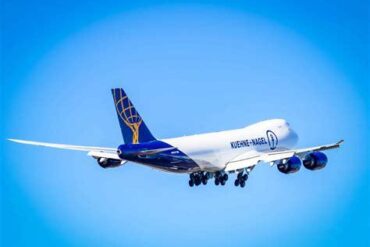
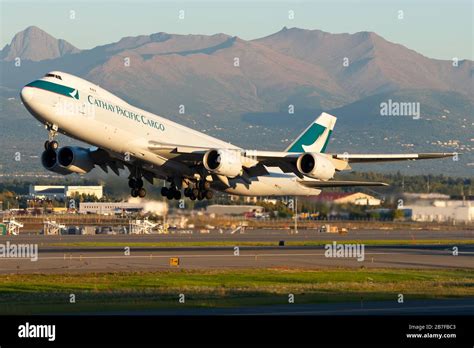
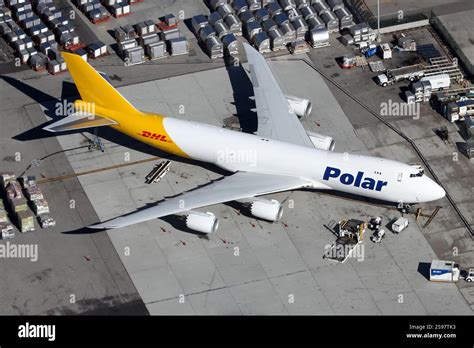
Dedicated freighter variants, particularly the Boeing 747-8F, are expected to remain active well into the coming decades. Their ability to move enormous cargo loads across long distances continues to support industries ranging from manufacturing and defense to humanitarian logistics and e-commerce.
Environmental pressures and rising fuel costs will eventually challenge older aircraft. Yet cargo aviation has historically extended airframe lifespans far beyond those seen in passenger service. As long as operators can generate profitable revenue, aging aircraft often remain economically viable.
The Boeing 747 exemplifies this principle better than perhaps any other commercial aircraft in history.
What once appeared to be a slow march toward retirement evolved into one of aviation’s most remarkable comebacks. Aircraft parked in desert storage yards, presumed destined for scrap, returned to active service carrying the goods that power the modern global economy.
The transformation underscores the enduring brilliance of the Boeing 747’s original design. Built for scale, strength, and versatility, the jumbo jet continues proving its value decades after entering service.
Far from becoming an obsolete relic, the aircraft has reinvented itself as one of the most important freight platforms in the world. Its resurrection from the boneyard demonstrates that while the age of passenger jumbo jets may have ended, the reign of the Boeing 747 in cargo aviation is still very much alive.