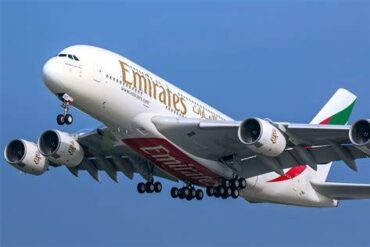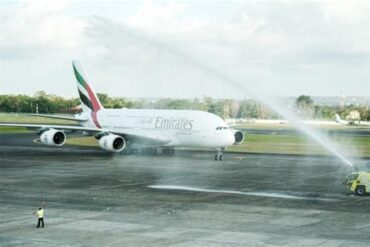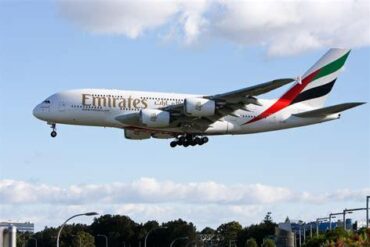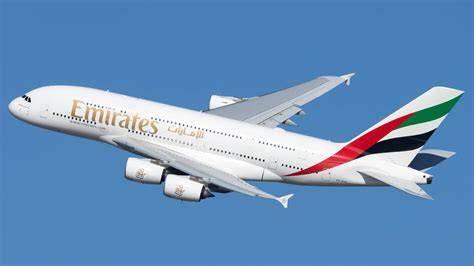
Emirates is preparing to double its Airbus A380 flights to Bali on one of its most important Southeast Asian long-haul routes, restoring a level of superjumbo capacity that has been largely absent in recent years. From March 28, 2027, the Dubai-based airline plans to operate two daily A380 services between Dubai International Airport (DXB) and Bali’s Ngurah Rai International Airport (DPS).
The move is significant for both Emirates and Bali. The Indonesian island is one of the world’s most popular leisure destinations, while Dubai functions as a major connecting hub for passengers traveling between Europe, the Middle East, Africa, and Asia-Pacific. By returning two daily A380 rotations to the route, Emirates is signaling that it expects sustained demand across this broad connecting network.
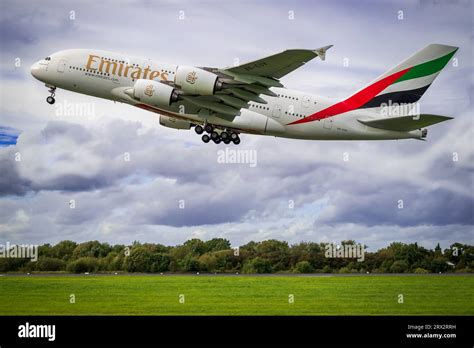
Emirates Airbus A380 Flights to Bali Will Double in 2027
Emirates currently operates the Airbus A380 to Bali twice daily, but that pattern is scheduled to change temporarily in late October. The airline had previously planned to reduce the superjumbo to one daily service through the northern winter and into the following summer. Its latest schedule update now indicates that the second A380 will return from March 28, 2027.
The date is important because it coincides with the beginning of the IATA summer scheduling season. Rather than being a short-term adjustment, the new schedule provides a clearer indication of Emirates’ intended long-term capacity on the route. Unless operational circumstances force another revision, travelers heading between Dubai and Bali can expect two daily A380 departures from late March 2027.
The restoration is particularly notable because Emirates has only briefly operated two A380 flights per day to Bali in the past. The superjumbo was introduced on the route in June 2023, initially alongside the Boeing 777-300ER. By July 2026, the A380 had effectively taken over the route, although the 777-300ER is scheduled to return for part of the transition period before the route becomes an all-A380 operation again.
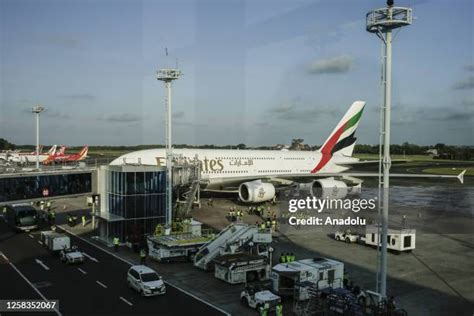
Bali Has Become a Major Emirates Connecting Market
Emirates has served Bali for more than 11 years, establishing the route as an important part of its Southeast Asian network. The airline’s first Bali service launched in June 2015 using the Boeing 777-300ER. The eventual arrival of the A380 represented a major increase in both capacity and visibility for the route, particularly among international leisure travelers.
The scale of connecting demand helps explain why Emirates is willing to dedicate two A380s per day to Bali. Booking data for the 12 months through July 2026 shows that more than 530,000 round-trip passengers connected through Dubai when traveling to or from DPS. Europe generated more than three-quarters of that traffic, demonstrating that Bali is not simply a point-to-point destination for Emirates.
The Middle East accounted for around 9% of connecting traffic, followed by North America at approximately 7% and Africa at roughly 6%. This geographic spread gives Emirates an advantage that many competing airlines cannot easily reproduce. A single Bali flight can collect passengers from numerous markets and funnel them through Dubai before continuing toward Indonesia.
London is particularly important. Among the leading sixth-freedom city markets, London–Bali via Dubai was the largest for Emirates. The airline carried approximately one-fifth of the passengers traveling between those two cities, although Singapore Airlines transported more passengers in the overall market.
Other important Emirates markets include Amsterdam, Paris, Frankfurt, Moscow, Warsaw, Manchester, Düsseldorf, Jeddah, Istanbul, Miami, Barcelona, Madrid, Munich, and Copenhagen. The diversity of these markets illustrates why an A380 can make economic sense even when the aircraft is not filled exclusively with passengers originating in Dubai.
Emirates Will Use Its New 569-Seat A380 Configuration
The aircraft itself makes the 2027 schedule especially interesting. Emirates operates one of the world’s largest and most diverse A380 fleets, with multiple cabin configurations designed for different markets. Some aircraft emphasize premium cabins, while others are configured to maximize passenger volume.
For Bali, Emirates plans to use its 569-seat A380 configuration on both daily flights. This aircraft replaces the older 615-seat layout and introduces a more balanced cabin while retaining exceptionally high overall capacity.
The 569-seat configuration includes 76 Business Class seats and 56 Premium Economy seats, while Economy Class provides 437 seats. The result is fewer economy seats than the 615-seat aircraft, which carried a remarkable 557 passengers in Economy, but the newer arrangement gives Emirates additional premium capacity and a more differentiated product.
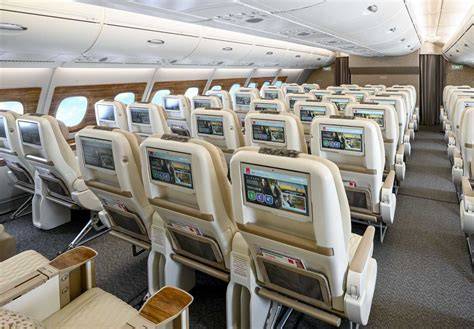
That configuration is expected to become particularly important as Emirates continues its A380 refurbishment program. Premium Economy is being introduced across the fleet, allowing the airline to capture passengers who want more comfort than Economy without necessarily paying for Business Class. On a leisure-heavy route such as Bali, that middle-market product can be particularly valuable.
The 569-seat aircraft is also notable because it will become Emirates’ highest-capacity A380 configuration in regular service, while offering a substantially different cabin mix from the older 615-seat version. Bali therefore provides an important showcase for how Emirates is adapting the A380 for modern demand.
The Bali Route Highlights the A380’s Continuing Role
The renewed A380 schedule also demonstrates why Emirates continues to invest heavily in the world’s largest passenger aircraft despite many airlines having retired their superjumbos. Emirates remains overwhelmingly the largest A380 operator, with a fleet of more than 100 aircraft and a network that reaches dozens of destinations from Dubai.
The airline’s ability to fill such a large aircraft depends heavily on its hub-and-spoke connecting model. Bali is a strong example. Instead of relying only on passengers traveling Dubai–Bali, Emirates can combine demand from dozens of European, Middle Eastern, African, and North American cities onto the same aircraft.
That model gives the A380 an important advantage. Operating one very large aircraft can provide substantial capacity without requiring multiple departure slots. At congested airports, that can make a high-capacity aircraft particularly attractive. Bali also benefits from strong international tourism demand, giving Emirates another reason to concentrate capacity rather than spread it across several smaller aircraft.
Emirates’ Bali A380 Schedule Remains Subject to Change
The planned return to two daily A380 flights is an important development, but travelers should remember that airline schedules can change. Emirates’ network has faced significant operational disruption in recent years, including the impact of geopolitical developments and airspace restrictions connected with the war in Iran.
Those circumstances affected the airline’s ability to deploy the A380 at the planned frequency during the current summer season. The 2027 schedule therefore represents Emirates’ present intention rather than an absolute guarantee that both flights will operate exactly as currently published.
For passengers, however, the broader message is clear. Emirates expects Bali to remain a major long-haul market, and the airline is preparing to restore two daily Airbus A380 services from March 28, 2027. With more than half a million annual connecting passengers already moving through Dubai toward DPS, the route has developed into far more than a simple leisure connection.
The return of two daily superjumbos also reinforces the enduring role of the A380 in Emirates’ strategy. While other airlines have moved away from four-engine widebody aircraft, Emirates continues to find markets where sheer capacity, premium seating, and global connectivity can work together. Bali is one of the clearest examples, and from spring 2027, travelers will once again have two daily Emirates A380 opportunities between Dubai and the Indonesian island.