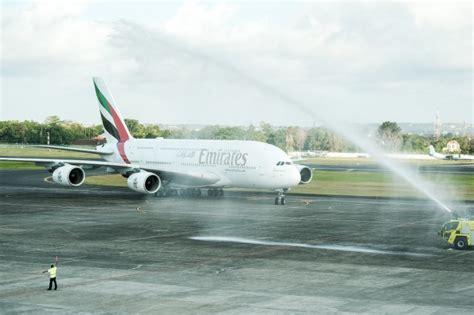
The sudden disappearance of the Emirates Airbus A380 from Bali has triggered a wave of speculation across the global aviation industry. Since mid-2023, the double-decker superjumbo had been a powerful symbol of Bali’s post-pandemic tourism recovery, connecting Dubai and Denpasar with unmatched capacity and prestige. Then, without warning, January 2026 arrived and the A380 vanished from the route, replaced entirely by the smaller Boeing 777. On the surface, it looked routine. Beneath the surface, it may be anything but.
The A380 is not just another aircraft. It is a strategic tool, a scarce asset, and a political bargaining chip when governments and airlines collide. Bali, as Indonesia’s tourism crown jewel, sits at the center of that collision.
Emirates’ A380 Presence in Bali and Why It Matters
When Emirates introduced the Airbus A380 to Ngurah Rai International Airport (DPS) in June 2023, it marked a milestone. Bali joined a very short list of global leisure destinations capable of handling the world’s largest passenger aircraft on scheduled service. For Indonesia, the optics were powerful: a full A380 arriving daily meant tens of thousands of additional tourists per month, premium connectivity to Europe and the Middle East, and global validation of Bali’s infrastructure readiness.
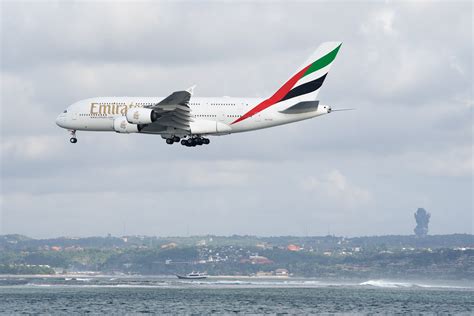
For Emirates, the route made sense. Bali draws high-yield leisure traffic, the airline’s A380 fleet needed productive deployment, and the aircraft’s premium cabins aligned well with long-haul resort demand. Operationally, the route worked. That is precisely why the abrupt downgrade raised eyebrows.
The Official Claim: Indonesia Puts the A380 “On Hold”
The controversy escalated when Lukman Laisa, Indonesia’s Director General of Civil Aviation, publicly addressed the issue. His remarks suggested the A380’s removal was not driven by airline economics, but by regulatory pressure.
According to Laisa, Indonesia had made three requests of Emirates: deeper involvement in local MRO (Maintenance, Repair, and Overhaul) operations, increased employment of Indonesian pilots and crew, and expanded service to Indonesian cities beyond Jakarta and Bali. Because progress on these points was deemed insufficient, approvals for three A380 aircraft to Bali were allegedly being withheld.
That statement sent shockwaves through the industry. An MRO facility is not a minor concession; it represents hundreds of millions of dollars in investment and a long-term strategic shift for an airline that already operates one of the world’s largest maintenance ecosystems in Dubai. The expectation that a foreign carrier would establish heavy maintenance operations abroad purely for market access is highly unusual.
Equally puzzling was the focus on nationality-specific crew assignments. Airline pilots are not route-locked assets. They are rostered across networks, fleets, and schedules. Demanding specific crew nationalities for a specific aircraft type on a specific route misunderstands how global airlines operate at scale.
A Contradictory Explanation From the Airport Authority
Just as the narrative seemed to crystallize into a regulatory standoff, another Indonesian official offered a completely different explanation. Gede Eka Sandi Asmadi, Head of Communication and Legal Affairs at Denpasar International Airport, stated that Emirates had voluntarily downgraded the route due to seasonal demand softness.
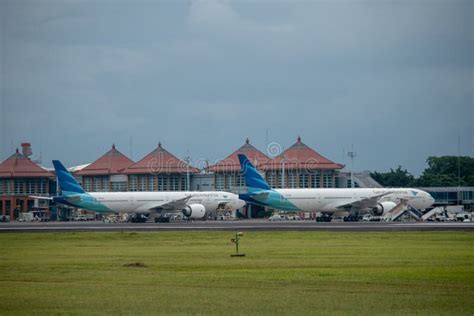
According to this account, the switch from A380 to Boeing 777 was a standard commercial decision, driven by lower winter demand and entirely at the airline’s discretion. No regulatory block, no political leverage, no aviation brinkmanship.
This contradiction is the heart of the mystery. Two senior officials, speaking publicly, describing fundamentally incompatible realities. One suggests state-level pressure. The other insists on routine seasonality.
Why the Seasonal Downgrade Explanation Still Raises Questions
Seasonal aircraft changes are common, but the Bali case remains odd. Emirates has historically used the A380 precisely to manage high-volume leisure flows during peak and shoulder seasons. Bali’s tourism patterns, while cyclical, remain robust year-round, particularly for long-haul markets transiting Dubai.
Moreover, the A380’s withdrawal was absolute. No reduced frequency, no mixed fleet operation, no announced return timeline. For an aircraft type as scarce as the A380, such all-or-nothing decisions typically reflect strategic constraints rather than marginal demand fluctuations.
Silence from Emirates has only amplified speculation. In aviation, when airlines decline to comment on fleet redeployments, it often signals ongoing negotiations behind closed doors.
Aviation Policy, Protectionism, and Indonesia’s Broader Strategy
Indonesia has long pursued policies aimed at strengthening its domestic aviation ecosystem. Encouraging local employment, attracting MRO investment, and expanding connectivity beyond primary gateways are legitimate national goals. The tension arises when access to high-demand markets is used as leverage.
Limiting capacity to Bali, Indonesia’s most internationally visible destination, risks unintended consequences. Reduced seat availability drives up fares, suppresses inbound tourism growth, and nudges travelers toward competing destinations in Thailand or Vietnam. For a country seeking to maximize tourism revenue, that is a dangerous trade-off.

There is also a reputational dimension. Foreign airlines watch these disputes closely. If access becomes conditional on unrelated commercial concessions, carriers may think twice before allocating premium assets to the market.
What Happens Next for the Emirates A380 in Bali
The key question is whether the A380 returns. A reappearance in the coming months would support the seasonal downgrade narrative and quietly bury the controversy. A prolonged absence would lend weight to claims of regulatory pressure and unresolved negotiations.
Either outcome will shape how airlines interpret Indonesia’s aviation environment going forward. The A380 may be nearing the twilight of its global dominance, but where it flies still sends a powerful signal.
Bottom Line
The removal of the Emirates Airbus A380 from Bali sits at the intersection of aviation economics, national policy, and political signaling. One version of events paints a picture of strategic bargaining by Indonesian authorities seeking long-term industry benefits. Another frames the change as a mundane seasonal adjustment.
The truth likely lives somewhere in between, shaped by negotiations that neither side is eager to discuss publicly. Until the A380 either returns or stays away indefinitely, Bali’s superjumbo mystery remains unresolved—and closely watched by the global aviation community.