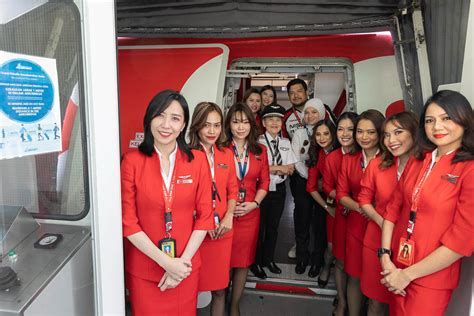
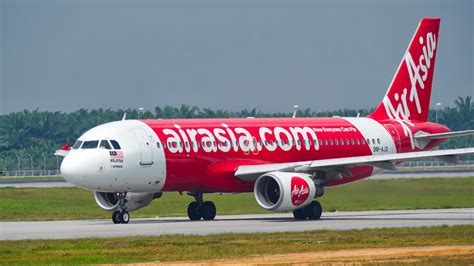
Indonesia AirAsia has officially launched its direct service from Adelaide to Bali, marking a historic expansion in the airline’s Australian network. This move not only cements Bali as a vital hub in the region but also connects South Australians to 130 destinations across Asia, reshaping the landscape of budget international travel for the region.
The airline’s inaugural flight took off to much anticipation, initiating a four-times-weekly schedule between the South Australian capital and Denpasar’s Ngurah Rai International Airport. The timing of this route reflects growing demand and strategic planning aimed at capitalizing on the region’s resurgent appetite for travel.
A Game-Changer for South Australian International Connectivity
With Indonesia AirAsia now operational in Adelaide, South Australians benefit from their first non-stop, low-cost Asian carrier since 2015. This is more than just a new route—it represents a shift in how South Australians access the world, especially Southeast Asia. Adelaide Airport, already experiencing a surge in international demand, now anticipates a further boost with the addition of 74,000 annual seats through this new connection.
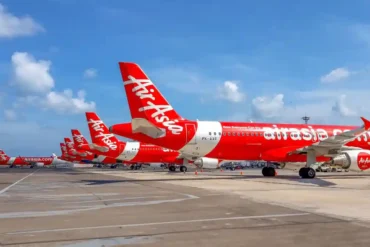
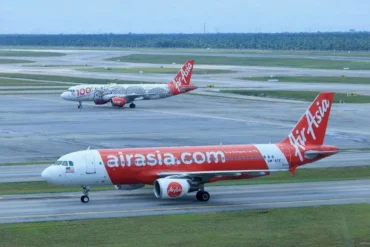
The airline is deploying its reliable Airbus A320-200, with a capacity of 180 seats, making each flight an affordable and efficient link to Bali and beyond. Departures from Adelaide are scheduled for Mondays, Tuesdays, Thursdays, and Saturdays, with return flights every Monday, Wednesday, Friday, and Sunday—a configuration optimized for both short getaways and extended holidays.
Bali as a Gateway to Asia: FlyThru Opens Up the Continent
Far beyond just a beach escape, Bali serves as Indonesia AirAsia’s primary regional transit hub, linking travelers to cities across Asia via its FlyThru service. Once in Bali, passengers can conveniently continue to Kuala Lumpur, Bangkok, Singapore, Phuket, Jakarta, and even Labuan Bajo, home to the world-renowned Komodo National Park.
Captain Achmad Sadikin Abdurachman, Acting CEO of Indonesia AirAsia, emphasized the airline’s commitment to cultural exchange, regional development, and affordable access. “This new service expands the options for travellers seeking an affordable gateway to AirAsia’s network of over 130 destinations,” he stated. The sentiment is echoed in the airline’s dedication to promoting people-to-people diplomacy, tourism, and economic collaboration.
Strategic Boost for South Australia’s Tourism Economy
The introduction of this direct route has sparked celebration from South Australia’s tourism and economic stakeholders. Brenton Cox, Managing Director of Adelaide Airport, labeled Bali as the airport’s largest and fastest-growing international destination, noting that the presence of AirAsia will broaden choice, lower prices, and enhance connections across Southeast Asia.
Meanwhile, Zoe Bettison MP, South Australian Minister for Tourism, highlighted how this expansion contributes to the region’s $1.3 billion international tourism sector. “With connections to over 130 destinations, Indonesia AirAsia makes it even easier for our $783 million Asian market to discover South Australia’s pristine nature, unmatched food and wine, and generous hospitality,” she remarked.
Indonesia-Australia Relations Strengthened Through Air Connectivity
This move also holds deep diplomatic significance. Dr. Siswo Pramono, Indonesian Ambassador to Australia, underscored the role of direct air links in enhancing bilateral ties between the two nations. “This is diplomacy in its most tangible form,” he said. “It fosters broader exchanges in tourism, education, economy, and people-to-people relations.”
These routes not only facilitate leisure travel but also make it significantly easier for Indonesian nationals living in South Australia to reconnect with family and culture, enriching the multicultural fabric of the state.
Competitive Launch Fares Drive Travel Demand
To celebrate the route’s launch, Indonesia AirAsia introduced a suite of attractive promotional fares, giving South Australians budget-friendly access to a vast array of Asian cities. Some of the standout prices include:
- Adelaide to Bali: From AUD 249
- Adelaide to Jakarta (via Bali): From AUD 337
- Adelaide to Labuan Bajo (via Bali): From AUD 334
- Adelaide to Kuala Lumpur (via Bali): From AUD 316
- Adelaide to Singapore (via Bali): From AUD 298
- Adelaide to Bangkok (via Bali): From AUD 354
- Adelaide to Phuket (via Bali): From AUD 405
These fares are expected to catalyze a surge in outbound travel from South Australia, appealing particularly to families, young travelers, and the growing remote work segment seeking cost-efficient relocation.
The Bigger Picture: Strategic Growth in AirAsia’s Australian Network
Indonesia AirAsia’s inclusion of Adelaide as its fourth Australian destination—after Perth, Darwin, and Cairns—reflects a broader regional strategy. The airline has identified Australia as a key market for tourism inflows, education travel, and cross-cultural exchange, and this route is a significant step in realizing that potential.
In addition to Adelaide’s outbound travel growth, the reverse flow of tourists from Southeast Asia into South Australia is also poised to rise. With Asia’s middle class growing rapidly, destinations like Adelaide—offering wine country, dramatic coastlines, and indigenous cultural experiences—stand to benefit immensely.
Strong Government and Institutional Support
Behind the scenes, the success of this route has been the result of collaborative efforts involving Adelaide Airport, the Government of South Australia, the South Australian Tourism Commission, and Indonesia AirAsia. Each stakeholder played a crucial role in ensuring the viability and launch of the new connection.
AirAsia’s positioning also complements South Australia’s aviation strategy, which aims to diversify and increase inbound connectivity beyond traditional Western markets. This helps create a resilient tourism sector that isn’t overly reliant on any single market, thereby enhancing economic sustainability.
Meeting the Demand of a Post-Pandemic Travel Surge
With international travel rebounding in 2025, especially in the Asia-Pacific corridor, the Adelaide-Bali route arrives at an opportune moment. Travelers are seeking affordable, flexible, and well-connected flight options—criteria that AirAsia’s low-cost model fulfills seamlessly.
As more Australians resume overseas holidays and business trips, the frequency and pricing flexibility offered by this new service are major selling points. Coupled with Bali’s cultural allure and its status as a travel hub, this makes Indonesia AirAsia’s latest offering one of the most compelling new routes of the year.
A Win-Win for Regional Aviation and Global Travellers
Ultimately, Indonesia AirAsia’s move to launch direct flights from Adelaide to Bali is a win for all stakeholders: travelers gain more choices and lower fares, Adelaide boosts its international profile, and AirAsia cements itself as a powerhouse in regional aviation.
As global connectivity continues to evolve, strategic routes like this one will play a pivotal role in reshaping the future of air travel in Oceania and Asia. For South Australians, the skies to Asia have never looked clearer—or more affordable.