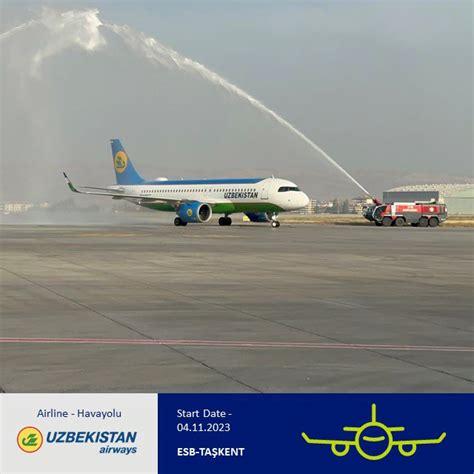
The skies above Central and South Asia witnessed a historic breakthrough as Uzbekistan Airways inaugurated its first-ever direct flight between Tashkent and Islamabad, a bold move that signals a new era in regional connectivity, diplomacy, tourism, and economic exchange. This landmark event is more than an operational milestone—it is a symbolic leap toward deeper cooperation between Uzbekistan and Pakistan.
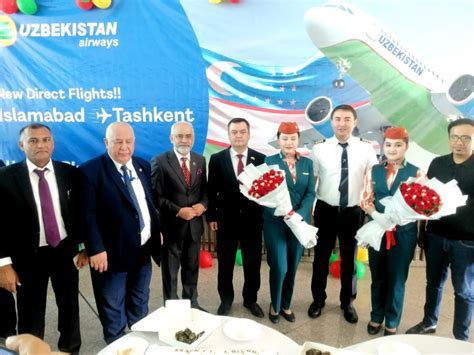
The inaugural flight, which touched down at Islamabad International Airport on a bright Saturday, was met with ceremonial enthusiasm and strategic anticipation. Distinguished dignitaries graced the occasion, including Uzbekistan’s Ambassador to Pakistan Alisher Tukhtaev, PTDC Managing Director Aftab ur Rehman Rana, and Islamabad Airport Manager Syed Aftab Ali Shah Gilani, alongside diplomats and aviation officials from various Central Asian and Pakistani institutions.
Strategic Leap: Reinforcing Bilateral and Regional Relations
In his address to attendees, Ambassador Alisher Tukhtaev emphasized the broader geopolitical and economic ramifications of the newly inaugurated route. By reducing physical travel time and fostering logistical ease, the direct air corridor becomes a tangible extension of both countries’ foreign policy ambitions—a bridge between Central Asia’s steppes and South Asia’s dynamic plains.
Tukhtaev highlighted the strategic vision underlying this development, stating that the direct link stands as a commitment by both governments to nurture trust, trade, and mutual understanding. “This is not merely about distance; it is about destiny,” he remarked, referring to the long-standing aspirations for enhanced regional cooperation through aviation diplomacy. This connection aligns closely with broader frameworks like the Shanghai Cooperation Organization (SCO) and the Economic Cooperation Organization (ECO), both of which have continuously advocated for interregional mobility as a path to peace and progress.
A Game-Changer in Regional Air Mobility
The weekly operation of the Tashkent-Islamabad route is far more than a scheduling adjustment—it is a revolution in cross-regional accessibility. Prior to this, travelers often faced circuitous journeys involving multiple stopovers, visa complications, and logistical hurdles. The new route has effectively collapsed barriers that previously stood between Central and South Asia’s commercial and cultural exchanges.
Aftab ur Rehman Rana, the head of the Pakistan Tourism Development Corporation, declared the launch as a watershed moment in the region’s transportation narrative. “This route has been a long-cherished dream for both policymakers and citizens,” he asserted. “We’re witnessing the start of greater people-to-people connections, enhanced business travel, and growing educational and cultural interactions.”
Fueling Tourism and Cross-Cultural Exploration
Tourism stands to gain immensely from this air route. With Uzbekistan’s cities such as Samarkand, Bukhara, and Khiva offering a rich historical palette, and Pakistan’s natural and spiritual sites beckoning explorers, the new connection opens up dual tourism corridors. Pakistani travelers now have easier access to Central Asia’s Silk Road heritage, while Uzbek visitors can explore Pakistan’s mountainous north, home to Gilgit-Baltistan, Hunza Valley, and Azad Kashmir.
Rana noted that tourism flows between the two countries were previously hampered by limited connectivity and regulatory complexities. The new direct flight resolves many of those issues, fostering an environment where cultural curiosity and economic opportunity can flourish simultaneously.
Additionally, this connectivity is expected to fuel religious tourism. With shared Islamic heritage, both nations offer significant spiritual sites that will now be far more accessible to pilgrims and history enthusiasts alike.

Educational and Youth Exchange: A Future-Oriented Benefit
Beyond tourism, the direct air bridge is poised to reinvigorate academic and youth exchange programs. With universities in both nations expanding their international collaborations, the availability of a convenient direct route will encourage student mobility, faculty exchanges, and joint research initiatives.
Uzbek students will now have easier access to Pakistani universities, particularly in the fields of medicine, engineering, and Islamic studies, while Pakistani scholars can explore Central Asian perspectives on politics, economics, and the arts. Youth delegations and cultural forums are expected to increase their engagements, creating a vibrant ecosystem of academic diplomacy.
Economic Impact: Accelerating Trade and Investment
A direct air link naturally stimulates trade, and both Uzbekistan and Pakistan are already eyeing new business horizons. Uzbekistan, a landlocked country seeking broader access to sea routes, sees Pakistan as a vital gateway to ports in the Arabian Sea. The new route makes it more feasible for entrepreneurs, exporters, and investors to travel, evaluate opportunities, and build long-term partnerships.
Trade delegations and industry representatives are already scheduling business missions that would have previously been delayed or abandoned due to logistical constraints. Sectors such as textiles, agriculture, pharmaceuticals, technology, and energy stand to benefit, as companies can now pursue joint ventures, distribution partnerships, and supply chain collaborations with greater agility.
Cultural Revival: Rekindling Shared Heritage
Historically, Uzbekistan and Pakistan share deep cultural and spiritual ties. From the influence of Sufi saints and Persian-influenced poetry to shared culinary and architectural traditions, both nations possess overlapping cultural identities that have been subdued by distance.
With the direct flight, artistic collaborations, exhibitions, and musical exchanges are expected to flourish. Institutions such as the Pakistan National Council of the Arts (PNCA) and Uzbek cultural bodies are preparing to host joint art festivals, museum exhibits, and literature events.
These initiatives are more than symbolic. They reaffirm a cultural continuum that stretches back centuries, now rejuvenated through modern-day mobility.
Political Will and Visionary Diplomacy
The success of this flight is also a testament to the political resolve and shared vision of both countries’ leadership. The diplomatic machinery that coordinated the launch of this route navigated bureaucratic, regulatory, and technical complexities, indicating the high level of commitment toward long-term strategic alignment.
Future expansions of the route—including additional weekly flights and potential cargo services—are already under discussion. Officials in both countries have hinted at developing intermodal transport solutions, integrating road and rail logistics that could further deepen connectivity.
A Gateway to Pan-Asian Integration
While the Tashkent-Islamabad route is inherently bilateral, its implications stretch far beyond. It stands as a critical component in the dream of transcontinental integration—a vision where Central, South, and even West Asia are interconnected through seamless air, rail, and digital infrastructure.
This initiative complements projects like the Trans-Afghan Railway, the China-Central Asia-West Asia Economic Corridor, and CPEC (China-Pakistan Economic Corridor). Aviation, in this broader network, becomes the fastest enabler, reducing not just physical distances, but geopolitical and economic inertia.
Conclusion: A Historic Milestone with Enduring Impact
The launch of Uzbekistan Airways’ direct flight from Tashkent to Islamabad is more than a commercial move—it is a statement of intent, a visionary step into a future where nations bridge divides not just through treaties, but through tangible connectivity. It touches lives by opening doors—for a tourist planning a dream vacation, a student seeking international education, or a business leader exploring new markets.
As both nations celebrate this aviation milestone, they also reaffirm their shared commitment to mutual growth, peace, and prosperity. The Tashkent-Islamabad flight is not merely a passage through the clouds—it is a bridge across destinies, and a flight path into a more united Asian future.