Founded in the immediate aftermath of the Soviet Union’s dissolution, Azerbaijan Airlines (AZAL) has steadily transformed from a regional carrier into a respected international airline. Headquartered at Heydar Aliyev International Airport in Baku, AZAL represents not just the flag carrier of Azerbaijan but a symbol of national pride and technical ambition. Today, the airline boasts a Skytrax 4-Star rating, serves 54 destinations across Europe, Asia, and the CIS, and maintains a modern and diversified fleet of 35 aircraft. Its continued investment in service quality, infrastructure, and strategic alliances has helped secure its position as a dominant force in Central Asian aviation.
A Storied Foundation Built on Legacy and National Ambition
The historical roots of Azerbaijan’s civil aviation trace back to June 2, 1938, when the country’s first air squadron was established—now celebrated as Civil Aviation Day. With Azerbaijan emerging as an independent republic in the early 1990s, the separation from Aeroflot became inevitable. On August 17, 1992, under the leadership of Vagif Sadykhly, Azerbaijan Airlines was formally founded, inheriting a sizable but outdated Soviet fleet that included over 20 Tupolev aircraft, 90 light planes, and 50 helicopters.
The first major international route, Baku–Istanbul, began in January 1991, symbolizing the country’s opening to the West. Soon after, a Baku–Dubai route was added in November 1994, establishing connections to the Gulf.
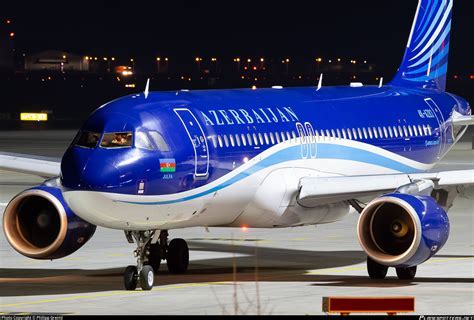
Despite the challenging post-Soviet economic landscape, AZAL exhibited resilience. By the end of the 1990s, the airline trimmed non-profitable regional operations and began transitioning to Western aircraft, leasing Boeing 727s and partnering with Canadian-based Buffalo Airways for cargo services and pilot training.
Strategic Modernization in the 2000s: From Survival to Sophistication
The early 2000s signaled the beginning of AZAL’s transformation. With a $66 million loan from the U.S. Export-Import Bank, the airline acquired two Boeing 757s—an investment that enabled the launch of the Baku–Paris route in January 2001 in cooperation with Air France. Even after the downturn following 9/11, AZAL remained financially stable, initiating a process to retire its Soviet-built aircraft.
By October 2002, AZAL diversified into offshore helicopter services, ordering six Eurocopters to support Caspian Sea oil operations. A controversial privatization process followed, transferring significant assets into the hands of politically connected firms, notably those associated with Arzu Aliyeva, daughter of President Ilham Aliyev.
While some setbacks emerged—including the impounding of aircraft in Turkey in 2004—the airline pushed forward with renewed fleet acquisition strategies. A major milestone occurred in 2010, when AZAL ordered a mix of Boeing 737s, 767s, and two 787-8 Dreamliners. These advanced aircraft paved the way for non-stop long-haul routes, such as the Baku–Beijing service launched in May 2013.
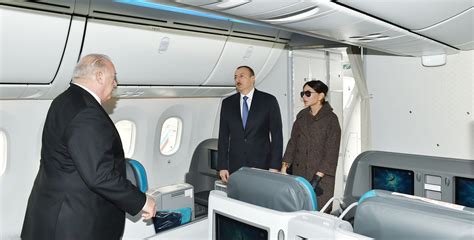
The delivery of two Boeing 787 Dreamliners on December 23–24, 2014, marked a new chapter in passenger experience, enabling AZAL to introduce its Premium Economy Class—a rare move among regional competitors. Innovations in comfort, cabin design, and onboard amenities helped distinguish AZAL from its regional peers.
A Low-Cost Transformation and Unified Identity
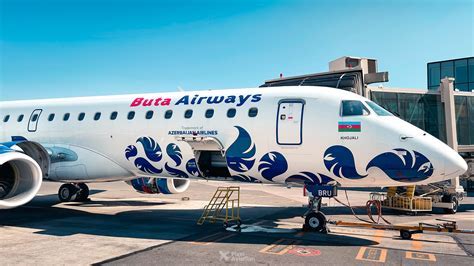
To cater to the growing market for budget travel, AZALJet was introduced in December 2016, but was quickly replaced by Buta Airways in January 2018, operating Embraer aircraft. Buta captured a strong market segment, particularly among younger travelers, and went on to win a Skytrax regional award in 2022.
By July 2023, AZAL and Buta merged under a single, unified brand. This move streamlined operations, reduced marketing redundancy, and consolidated their brand image across all travel classes—from economy to luxury.
In June 2024, AZAL was again recognized with a Skytrax Best Regional Airline award. The airline began Baku–Fuzuli flights in July 2024, integrating Karabakh into its growing domestic network. Looking ahead, direct Baku–Seoul (Incheon) flights are scheduled to launch between May and July 2025, reinforcing the airline’s pan-Asian ambitions.
Executive Leadership and Corporate Structure
The airline’s governance has evolved in tandem with its operational success. Since March 30, 2021, the Supervisory Board has been chaired by Rashad Nabiyev, a key figure in Azerbaijan’s transport and communications policy. Other board members include Khalid Ahadov, Elnur Aliyev, Rahman Hummatov, Ruslan Alikhanov, Anar Novruzov, and Fikrat Shirinov.
Beyond its central hub in Baku, AZAL maintains sales offices in Ganja, Nakhchivan, and international outposts in cities like Moscow, Beijing, Paris, and Seoul. Key subdivisions include the National Air Carrier, Azeraeronavigation, and AZALOIL, which handles aviation fuels and lubricants.
An Expansive Network of Routes and Alliances
AZAL serves 54 destinations with a robust web of codeshare agreements. It partners with major airlines including:
- Lufthansa
- Turkish Airlines
- Qatar Airways
- Etihad Airways
- Air Astana
- Austrian Airlines
- El Al
- Belavia
- airBaltic
- S7 Airlines
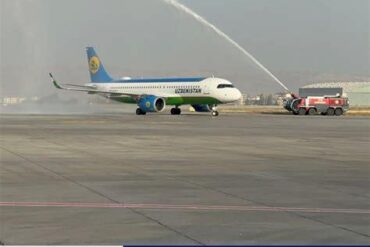
Additionally, AZAL maintains interline arrangements with carriers such as Emirates, KLM, Air India, Delta Air Lines, and Uzbekistan Airways—allowing passengers seamless global connections.

A Tiered In-Flight Experience: Elevating Regional Travel Standards
AZAL’s three-tiered cabin service is crafted to suit a range of travelers:
- Economy Class: Offers reclining seats, 10.6-inch entertainment screens on select aircraft, Wi-Fi streaming capabilities, and complimentary baggage allowances.
- Premium Economy: Features expanded legroom, priority boarding, porcelain service, lounge access, and specialized children’s kits.
- Business Class: Offers full-recline seats, dedicated lounges, priority services, and an extensive beverage selection.
Entertainment options are robust, including Hollywood films, documentaries, music videos, cartoons, and games, delivered in multiple languages to cater to international clientele.
The airline’s frequent-flyer program, AZAL Miles, includes five status levels and offers redemptions on award tickets, cabin upgrades, birthday miles, and more. Family accounts and priority check-ins enhance the loyalty ecosystem.
A Fleet that Reflects Modern Aspirations
As of December 2024, AZAL’s active fleet includes:
- Airbus A319-100: 3 units
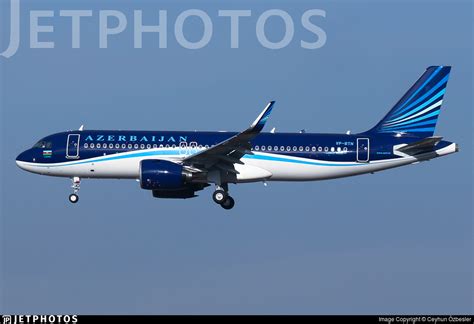
- Airbus A320-200: 10 units
- Airbus A320neo: 3 in service, 12 on order
- Boeing 767-300ER: 2 units
- Boeing 787-8 Dreamliner: 2 in service, 12 on order
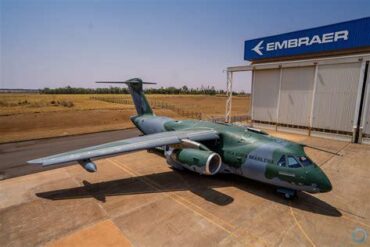
- Embraer 190: 7 units
VIP fleet highlights include Airbus ACJ319, ACJ320, A340-600, and a Boeing 777-200LR for governmental and executive use.
Tragedies and Triumphs: A Record of Incidents
Though safety remains a core principle, AZAL has faced its share of aviation tragedies. Notable incidents include:
- November 30, 1995: A Boeing 707 crash near Baku, killing 2 crew members.
- December 5, 1995: A Tu-134 crash near Nakhchivan, resulting in 52 fatalities.
- December 23, 2005: An Antonov An-140 crashed into the Caspian Sea, killing all 23 on board.
- December 25, 2024: Flight 8243, an Embraer E-190AR, crashed near Aktau, with 38 fatalities and 29 injured.
Despite these losses, the airline has implemented substantial reforms in maintenance, training, and crisis response.
Conclusion: The Sky Is No Longer the Limit
From its Soviet-era origins to its modern Dreamliner-equipped fleet, Azerbaijan Airlines has emerged as a key player in the Eurasian aviation market. With strategic expansions, award-winning service, and a growing network of international alliances, AZAL stands not just as a flag carrier—but as a symbol of Azerbaijan’s ascent in global air transport. As new routes and aircraft join its ranks, the airline continues to evolve, writing the next chapter of its storied flight path with ambition, discipline, and distinction.