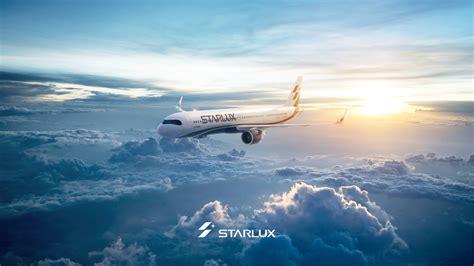
Founded in the heart of Taipei, Starlux Airlines has rapidly emerged as a premium full-service carrier redefining luxury air travel in Asia and beyond. Since its inception on 2 May 2018, and inaugural flight on 23 January 2020, the airline has built a reputation for elite service, modern fleet technology, and ambitious global expansion.
Despite launching just before the COVID-19 pandemic, Starlux has demonstrated remarkable resilience, transforming obstacles into opportunities and earning a firm foothold among the world’s high-end carriers.
Foundations in Vision: The Birth of a Premium Carrier
The name “Starlux”—derived from the Chinese characters 星 (star) and 宇 (universe)—embodies the airline’s lofty ambitions and universal aspirations. Brainchild of Chang Kuo-wei, the former chairman of EVA Air, Starlux was designed from the ground up to offer premium, detail-oriented service to discerning travelers. With headquarters in Taipei and a strategic hub at Taoyuan International Airport, the carrier positions itself as a connector between Asia and North America.
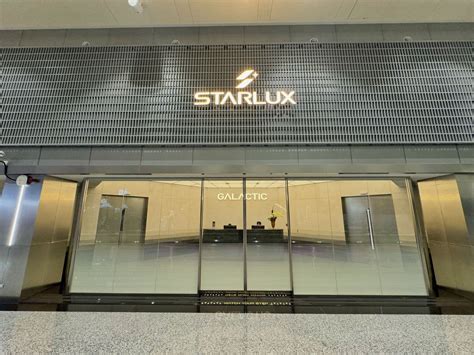
From early on, Starlux was meticulous in its preparations. The airline registered its name in 2016 and 2017, secured its Air Operator Certificate (AOC) in December 2019, and launched bookings with a clear focus on premium experiences rather than mass volume. In October 2019, the first Airbus A321neo joined the fleet, setting the tone for an all-Airbus commitment centered around efficiency and luxury.
Crisis and Resilience: Navigating the Pandemic
Barely a month after takeoff, Starlux faced the brunt of the COVID-19 pandemic, leading to the suspension of most operations. However, the airline maintained strategic planning, resuming flights to Macau in June 2020, and kept its focus on delayed but high-value launches to Naha and Cebu.
The pandemic, rather than halting momentum, became a proving ground for Starlux’s adaptive capacity and long-term vision. By mid-2021, it was evident that the airline was preparing not just for survival but for accelerated growth.
Fleet Innovation: The All-Airbus Strategy
Starlux’s commitment to modern aviation excellence is reflected in its entirely Airbus fleet, comprising:
- A321neo for short to medium haul routes
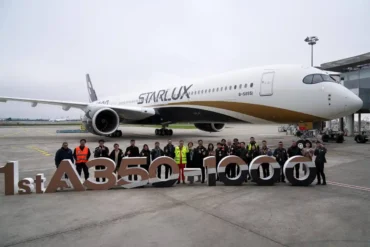
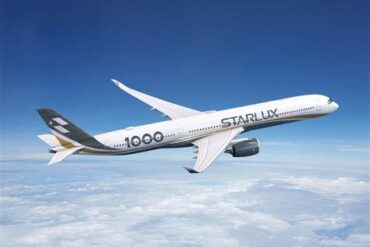
- A330-900 and A350-900/1000 for long-haul service
- Five Airbus A350F freighters ordered in January 2025 to bolster cargo capabilities
This diverse yet harmonized fleet supports efficient operations while delivering a consistently premium passenger experience.
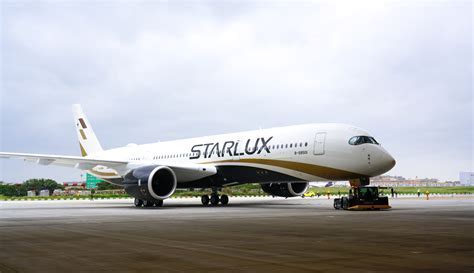
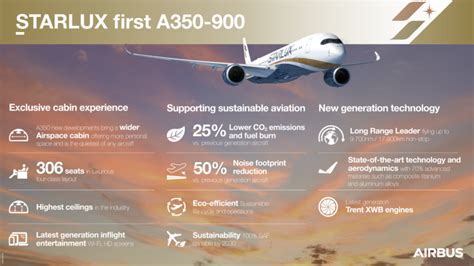
Fleet acquisitions have been strategically staggered. A major milestone occurred in October 2022 with the arrival of the first A350-900, marking the airline’s readiness for transpacific routes.
Cabins Designed for Elegance and Comfort
Starlux stands apart through its lavish cabin design and technology-forward amenities. Onboard, passengers experience:
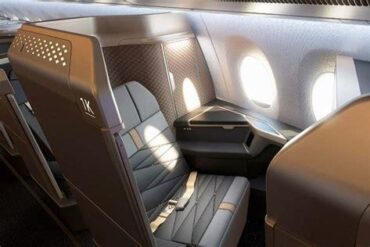
- First Class (A350-900): Only four private suites in a 1-2-1 configuration, each featuring lie-flat seats with doors, personal mini-bars, wardrobes, and access to exclusive VIP terminals.
- Business Class: Available on A350-900 and A330-900, these feature full lie-flat beds, individual screens, and premium privacy.
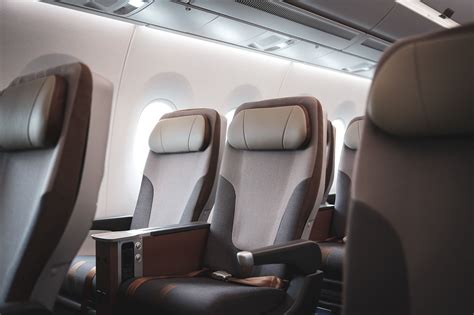
- Premium Economy (A350-900): Fitted with Recaro seats in a 2-4-2 layout, designed for comfort with added legroom.
- Economy: Modern 3-3-3 or 2-4-2 Recaro seats on widebodies and 3-3 Collins Meridian on A321neo, all offering complimentary meals and messaging-level Wi-Fi.
Passengers across all cabins enjoy Safran RAVE Ultra Plus IFE systems with AVOD, and many flights allow meal preordering for enhanced personalization.
Strategic Expansion: From Asia to the U.S.
With a growing fleet and stable operations, Starlux has aggressively pursued international expansion. As of 2025, the airline serves 31 destinations spanning Southeast Asia, Northeast Asia, and the U.S. West Coast, with future additions including Ontario (June 2025) and Shimojishima (August 2025).
In April 2023, Starlux launched its long-anticipated Los Angeles service, marking its formal entry into the North American market. This move followed its September 2022 declaration to link Southeast Asia to the U.S. via Taipei—a bold initiative supported by its growing A350 fleet.
The airline has also opened a new office in Taichung (December 2023) and entered regional marketing partnerships, such as a high-profile Hong Kong Tramways branding initiative (July 2024).
Partnerships and Alliances: Forging a Global Network
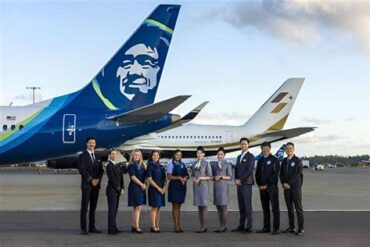
Beyond organic growth, Starlux has leveraged strategic alliances to scale its global reach. A codeshare agreement with Alaska Airlines, established in March 2023 and expanded in July 2024, enables seamless connectivity between Asia and North America, particularly as Starlux prepares for Seattle service in August 2024.
An official application to join the Oneworld alliance is planned by late 2025, signaling Starlux’s intent to compete with the world’s top-tier carriers. Meanwhile, codeshare and interline arrangements—especially with Hahn Air—already extend the airline’s distribution footprint into multiple global markets.
Branding and Sponsorships: Building Global Recognition
Starlux’s commitment to brand elevation is evident in its high-profile marketing strategies. In March 2023, the airline became an official sponsor of the NBA’s Los Angeles Clippers, aligning itself with U.S. pop culture and elite sports entertainment.
Such moves reflect a clear understanding of the premium traveler demographic: educated, affluent, and experience-oriented. These investments aren’t just about visibility—they reinforce Starlux’s identity as a modern luxury brand.
Financial Performance: Climbing Toward Profitability
Starlux’s financial trajectory has mirrored its operational growth. From a modest NT$0.010 billion in revenue in 2019, the airline skyrocketed to NT$22.472 billion in 2023. Key figures for 2023 include:
- Operating income: NT$0.479 billion
- Net profit: NT$0.149 billion
- Total assets: NT$79.07 billion
- Equity: NT$11.06 billion
- Load factor: 76.39%
- Employees: 4,398 as of April 2024
While margins remain slim, the shift into net profitability is an essential benchmark for an airline that weathered global lockdowns and began long-haul flights only in the past two years. The growth in assets and equity underscores long-term viability and investor confidence.
Cargo Ambitions and the Next Chapter
In January 2025, Starlux took a pivotal step by ordering five A350F freighters, signaling a foray into the air cargo market. This move complements its passenger operations while tapping into growing demand for high-value logistics between Asia and North America.
These cargo aircraft will not only diversify revenue but also strengthen the airline’s case for Oneworld membership by broadening operational scope.
Conclusion: A Star Among Giants
From a niche startup in a saturated market, Starlux Airlines has grown into a symbol of precision, elegance, and strategic clarity. Every element—from aircraft selection and cabin design to route planning and brand alignment—reflects a commitment to premium service without compromise.
In a world where low-cost carriers dominate the headlines, Starlux reminds us that luxury aviation is far from obsolete. Instead, it’s evolving—and this Taiwanese airline is setting the benchmark.