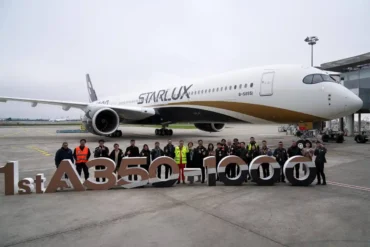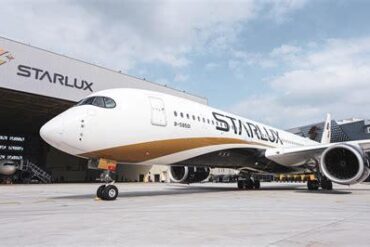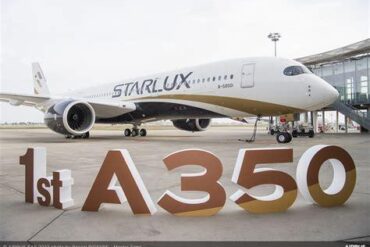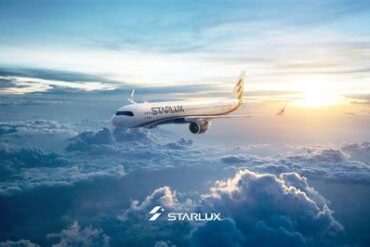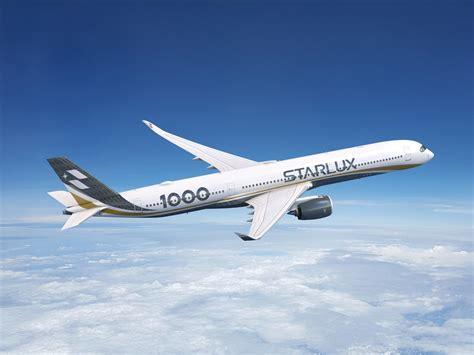
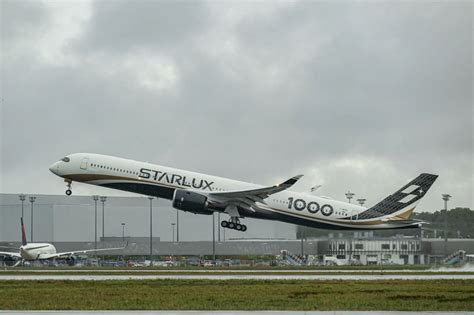
Taiwanese full-service airline STARLUX Airlines is making a bold move in the transpacific market, announcing that Phoenix Sky Harbor International Airport (PHX) will become the first long-haul destination operated with its Airbus A350-1000. This strategic upgrade, scheduled for July, signals the carrier’s confidence in growing demand along the Taipei-Phoenix corridor, which it entered earlier this year. The move not only expands seating capacity but also underscores STARLUX’s ambition to cement its position among Taiwan’s top-tier airlines.
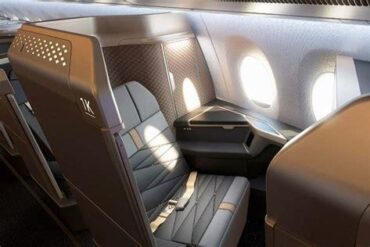
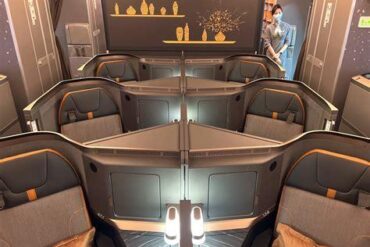
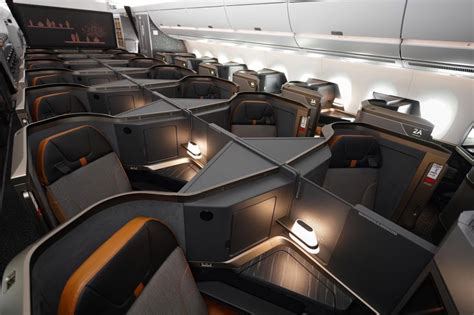
The transition from the smaller A350-900 to the A350-1000 on the Phoenix route represents a calculated enhancement of passenger experience and operational efficiency. While the A350-900 accommodates 306 passengers, the A350-1000 adds 44 additional seats, bringing total capacity to 350. This aircraft swap reflects both strong early performance on the route and the airline’s broader growth strategy. Passengers will benefit from four first-class suites with full recline and Zero Gravity mode, alongside 40 business class seats, 36 premium economy, and 270 economy seats. This configuration not only maximizes comfort but positions STARLUX to compete effectively with China Airlines, which also serves Phoenix.
Flights on the upgraded route are scheduled four times weekly. Departures from Taipei Taoyuan International Airport (TPE) leave at 8:10 PM, arriving in Phoenix at 6:10 PM local time, while return flights from Phoenix depart at 11:55 PM, landing in Taiwan at 4:55 AM. The aircraft swap demonstrates STARLUX’s commitment to providing premium long-haul travel with increased capacity and enhanced cabin offerings, aligning with evolving passenger expectations for comfort, connectivity, and onboard amenities.
Founded in 2018, STARLUX Airlines has rapidly distinguished itself in Taiwan’s competitive aviation market. The airline was created by Chang Kuo-wei, a trained pilot and aviation visionary, who piloted the airline’s maiden flight in 2020 and now serves as board chair. While STARLUX operates outside of major global alliances, it has developed a robust network with Taipei Taoyuan International Airport as its base and a focus city at Taichung International Airport (RMQ). The carrier now serves 36 destinations with a modern fleet exceeding 30 aircraft, including narrowbody Airbus A321neos and widebody A330-900neos and A350 variants.
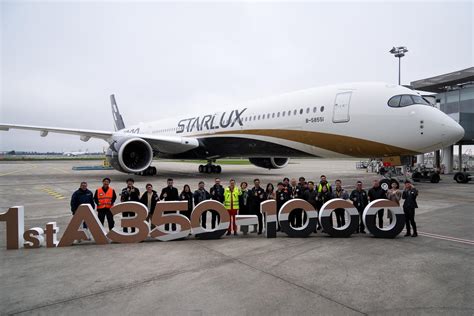
The addition of the A350-1000 to Phoenix highlights STARLUX’s strategic approach to fleet utilization. Currently, the airline operates two A350-1000s, with an additional 16 on order. The aircraft represents a leap forward in efficiency and passenger experience, offering extended range, higher capacity, and advanced cabin amenities. This move also complements STARLUX’s other U.S. services, which include Los Angeles International Airport (LAX), San Francisco International Airport (SFO), and Ontario International Airport (ONT), reinforcing the carrier’s commitment to the North American market.
Looking ahead, STARLUX has an ambitious expansion plan for 2027. The airline will introduce long-haul services to Europe, including Barcelona-El Prat Airport (BCN) and Zurich Airport (ZRH), while making its Oceania debut with flights to Sydney Kingsford Smith Airport (SYD) and Auckland Airport (AKL). These additions will further diversify STARLUX’s route network and position the airline to challenge established carriers on key transpacific and European routes. Notably, while competition in Europe is minimal, the airline will directly compete with China Airlines on routes to Sydney and Auckland, testing its capacity to attract long-haul travelers seeking superior service and comfort.
The operational and passenger experience advantages of the A350-1000 are significant. Its advanced aerodynamics and fuel-efficient design allow STARLUX to operate longer routes without compromising comfort. Full recline first-class seats with Zero Gravity mode, spacious business class configurations, and thoughtfully designed premium economy and economy cabins enhance the in-flight experience. Travelers on the Taipei-Phoenix route can expect a journey that combines luxury, practicality, and the reliability associated with modern Airbus technology.
The Phoenix service also exemplifies STARLUX’s broader strategic approach to fleet growth and network planning. With additional orders for A321neos, A330-900neos, and A350-1000s, the airline is steadily scaling its operations to meet international demand. Cargo operations are slated to expand as well, with 10 A350Fs expected to enter service from 2028. By investing in larger, more capable aircraft, STARLUX is not only enhancing passenger experience but ensuring operational flexibility for future market expansion.
The A350-1000 swap for Phoenix represents more than a simple aircraft upgrade. It reflects STARLUX Airlines’ growing confidence in transpacific demand, its commitment to offering a world-class travel experience, and its strategic ambition to become a leading global player from its base in Taiwan. By combining operational efficiency with superior comfort and a carefully selected route network, STARLUX is steadily rewriting the playbook for Taiwanese carriers seeking long-haul success. Passengers flying between Taipei and Phoenix this July and beyond can expect a journey that exemplifies modern aviation excellence, with space, comfort, and service tailored to meet the highest international standards.
This strategic deployment of the Airbus A350-1000 to Phoenix underscores the airline’s commitment to sustainable growth, innovative service offerings, and establishing a strong foothold in the North American market, all while signaling the rise of STARLUX as a formidable contender in global aviation.