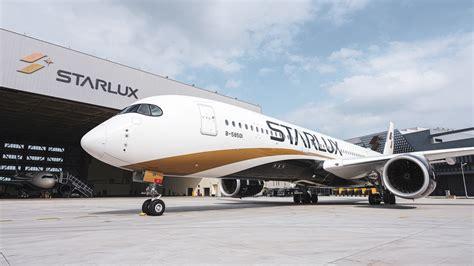
Taiwan’s Starlux Airlines is poised to redefine the travel landscape of the American Southwest with its latest announcement: the launch of Phoenix’s first-ever nonstop flight to Taipei. Beginning January 15, 2026, the luxury airline will connect Phoenix Sky Harbor International Airport to Taipei Taoyuan International Airport, offering an unbroken link between Arizona and Asia. This move marks a major advancement not only for Starlux Airlines but also for the Southwestern United States, long underserved in terms of direct transpacific connections.
A Milestone in Global Aviation: First Asia Nonstop from Phoenix
Phoenix, one of the fastest-growing metropolitan areas in the United States, is entering a new era of global connectivity. This new route will be the only nonstop service from Phoenix to Asia, transforming the region’s access to the global stage. Until now, travelers seeking to reach East Asia had to transit through hubs like Los Angeles, San Francisco, or Seattle. Starlux’s move eliminates that detour, bringing Taipei within a 14-hour direct flight from Phoenix.
Flights will operate three times per week—Tuesdays, Thursdays, and Sundays—before increasing to four weekly flights by March 2026 with the addition of a Saturday service. This frequency reflects the anticipated strong demand across business, tourism, and academic sectors, and could expand further depending on market response.
Flying in Style: Airbus A350-900 Takes Center Stage
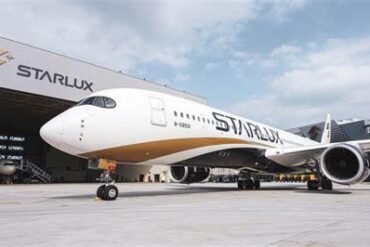
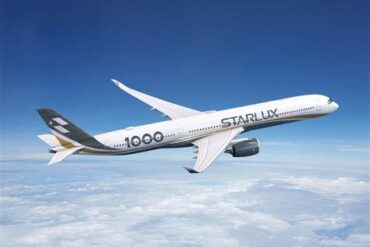
The Phoenix–Taipei route will be operated with Starlux’s flagship Airbus A350-900, a next-generation long-haul aircraft known for its fuel efficiency, cabin quietness, and passenger comfort. The 306-seat layout is meticulously designed to cater to every type of traveler:
- 4 First Class suites with full privacy and lie-flat beds
- 26 Business Class seats with direct aisle access and full recline
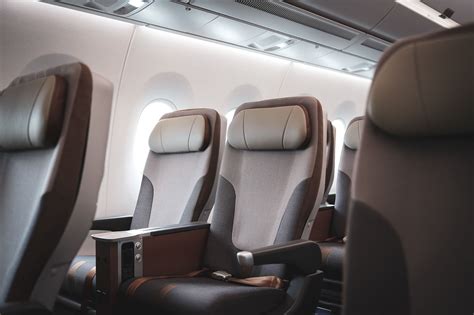
- 36 Premium Economy seats featuring extra legroom and premium amenities
- 240 Economy seats with advanced ergonomic design
This cabin configuration reflects Starlux’s brand promise of luxury, personalization, and comfort for all segments—from elite business travelers to economy-class tourists.
Strategic Timing: Phoenix’s Booming Tech Industry and Taiwan’s Growing Ties
The decision to base this route in Phoenix is more than a matter of geography—it’s an economic and geopolitical calculation. The U.S.–Taiwan business corridor is thriving, especially in the semiconductor and advanced tech sectors. Central to this surge is the Taiwan Semiconductor Manufacturing Company (TSMC), which is investing over $165 billion in multiple facilities in the Greater Phoenix area.
The presence of TSMC and its ecosystem of suppliers has driven a rise in cross-Pacific corporate traffic, particularly among engineers, tech executives, and consultants. This new route offers them a direct pipeline to Taiwan’s innovation capital, streamlining operations and deepening the region’s integration with the global tech economy.
Civic Backing and Regional Impact
Phoenix Mayor Kate Gallego welcomed the new service as a “game-changing” moment for the city’s international outreach. She emphasized that the route enhances Phoenix’s profile as an international business hub, making Sky Harbor not just a domestic airport but a truly global gateway.
“Phoenix is no longer just a hub for connections to other U.S. cities—we are now directly linked to one of Asia’s most dynamic economies,” Gallego said. “This will bolster tourism, fuel economic development, and provide our residents and businesses with new opportunities abroad.”
The new route is expected to generate a significant economic ripple effect across sectors like hospitality, tourism, education, and manufacturing. The boost to inbound tourism from Asia, especially Taiwan, Japan, and Southeast Asia, could help fill hotels, support local attractions, and reinforce Phoenix’s growing stature as a destination city.

A Gateway to Asia: Taipei as a Connecting Hub
Starlux’s Taipei hub is well positioned to provide smooth onward connections to multiple destinations throughout East and Southeast Asia, including Tokyo, Osaka, Bangkok, Ho Chi Minh City, Manila, and Singapore. Travelers from Phoenix can now reach these cities with minimal layovers, often within a single airline network—a huge benefit in terms of both cost and convenience.
Taipei itself is a major business and leisure destination, offering a mix of modern infrastructure, culinary excellence, night markets, and scenic attractions such as Taroko Gorge and Sun Moon Lake. The city has also emerged as a cultural and academic hub, with rising numbers of international students, digital nomads, and cultural tourists.

Booking Details and Passenger Experience
Tickets for the new route are already available for booking through Starlux Airlines’ official website and selected travel agencies. The airline offers a range of fare classes and customizable amenities, catering to a wide spectrum of travelers—from ultra-premium First Class suites to competitive Economy fares.
Frequent flyers can also take advantage of Starlux’s COSMILE loyalty program, which offers generous mileage accrual and redemption, upgrades, and priority services. The airline’s in-flight service—which includes gourmet meals, on-demand entertainment, and Taiwanese-style hospitality—has been praised for setting a new standard in luxury aviation.
Geopolitical Symbolism: More Than a Flight
This route also represents a symbolic bridge in the increasingly complex U.S.–Asia geopolitical landscape. With Taiwan playing a central role in global supply chains—particularly in semiconductors—this direct flight enhances the connectivity between two strategic democracies.
As the U.S. strengthens its Indo-Pacific strategy, non-stop links like this become tools of soft diplomacy, facilitating greater cultural understanding, educational exchange, and collaborative innovation. The route demonstrates how aviation can play a central role in supporting democratic alliances through infrastructure and commerce.
Looking Forward: Phoenix’s Future in International Aviation
The introduction of this route may serve as a catalyst for further global expansion from Phoenix. With a population surpassing 5 million and a booming economy, Greater Phoenix is increasingly ripe for more long-haul routes to destinations in Europe, Asia, and the Middle East.
Sky Harbor International Airport has made strategic infrastructure upgrades in recent years, from terminal expansions to runway improvements, to accommodate next-gen aircraft like the Airbus A350. Its central location and 300+ days of good weather make it an ideal candidate for additional intercontinental routes.
Starlux’s investment signals confidence in the Phoenix market and sets a high bar for service quality and innovation. If this route proves commercially viable—as early indicators suggest—it could be followed by additional flights to Japan, South Korea, and even Greater China.
Conclusion: A Transformational Leap for Arizona and Beyond
The launch of Starlux Airlines’ Phoenix–Taipei nonstop service is not merely another addition to the route map—it is a transformational milestone. It bridges not just two cities but two continents, two economies, and two cultures. From high-tech collaboration to tourism, education, and diplomacy, this new route embodies the future of aviation as a tool of global integration.
For travelers in Arizona, New Mexico, Nevada, and even Northern Mexico, this development redefines what is possible. Whether you’re a corporate executive flying to TSMC HQ, a family visiting ancestral roots, or a tourist eager to taste Taiwan’s famed night market snacks, this new nonstop option brings Asia within reach—with comfort, speed, and style.
As January 15, 2026 approaches, Phoenix prepares to take its rightful place on the world map. Thanks to Starlux Airlines, the American Southwest just got a whole lot closer to Asia.