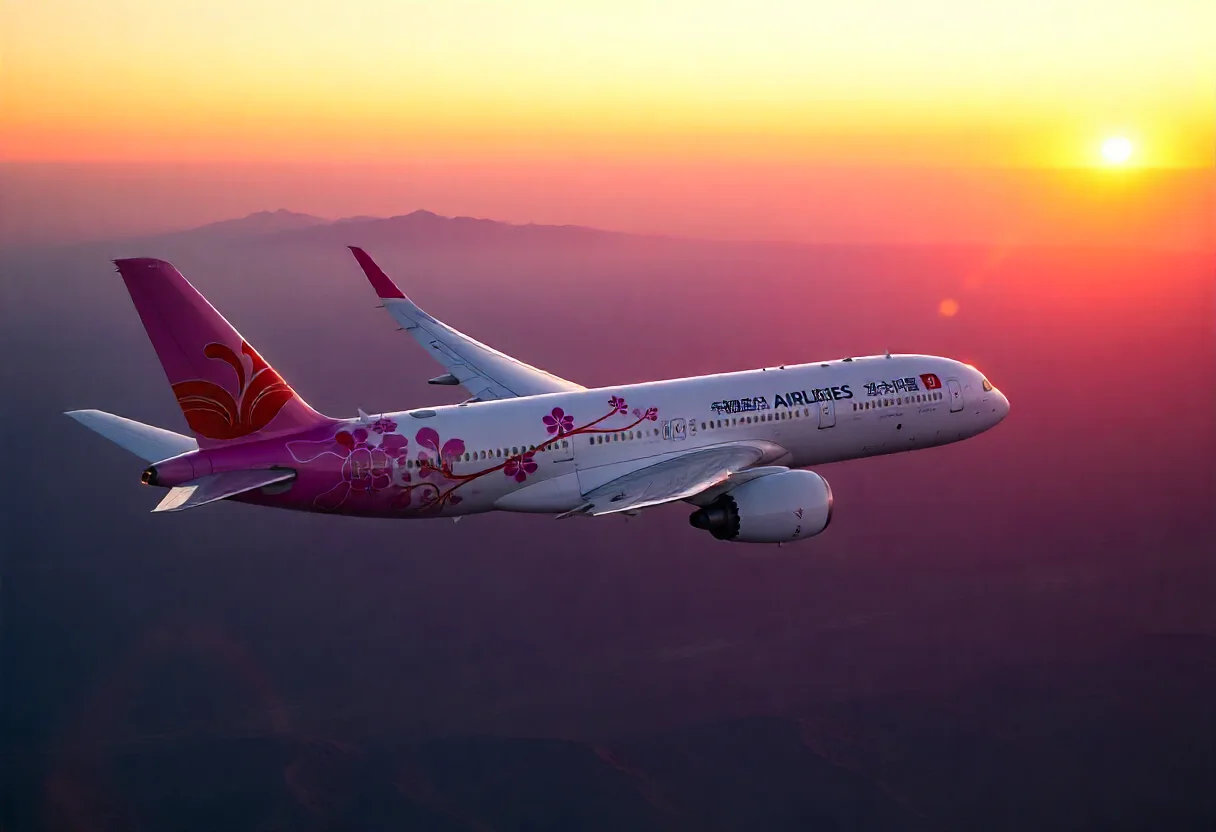
Taiwan’s flag carrier, China Airlines, has firmly positioned itself as a pioneer in transpacific aviation by launching the first-ever nonstop flight between Taipei and Phoenix, Arizona. This strategic move sets a new standard in U.S.–Asia travel, reshaping how travelers and businesses connect across the Pacific. By deploying its state-of-the-art Airbus A350-900, China Airlines not only expands its North American network but also delivers a superior travel experience on one of the most efficient wide-body jets in commercial aviation.
China Airlines Breaks New Ground with Taiwan–Phoenix Nonstop Service
For the first time in commercial aviation history, an Asian carrier is providing direct service between Taiwan and the southwestern United States, addressing a long-standing gap in international air travel. With Phoenix previously underserved in terms of transpacific routes, the launch of this flight signals a major breakthrough in regional accessibility and cross-border economic integration.
China Airlines’ entry into Phoenix is not merely symbolic—it’s strategic. The city’s rising economic profile, particularly in sectors like semiconductors, aerospace, and clean technology, aligns closely with Taiwan’s industrial strengths. This route creates an essential bridge for businesses looking to deepen partnerships, facilitate logistics, and accelerate innovation across borders.
Integrating a Growing U.S. Network
The addition of Phoenix complements China Airlines’ well-established U.S. network, which currently includes New York, Los Angeles, San Francisco, Seattle, Ontario (California), and Vancouver. Phoenix, situated in the heart of the American Southwest, fills a critical geographic void, allowing seamless east-west coverage for the airline’s North American operations.
The new service has been designed with maximum interconnectivity in mind. Thanks to a robust interline agreement with a major U.S.-based airline operating out of Phoenix Sky Harbor International Airport, passengers will benefit from one-stop connections to dozens of U.S. cities. Importantly, travelers can continue their journeys without rechecking baggage or switching terminals—simplifying transits and reducing travel friction.
Strategic Growth Amid Shifting Aviation Trends
China Airlines’ expansion into Phoenix illustrates a broader trend within the aviation industry: a shift away from overcrowded coastal megahubs and toward high-potential secondary cities. As LAX and SFO face operational constraints and intense competition, Phoenix emerges as an optimal alternative. With over 40 million annual passengers, efficient infrastructure, and a rapidly expanding metro area, Phoenix Sky Harbor International Airport offers an ideal gateway for international carriers seeking cost-effective and scalable entry points into the U.S. market.
This trend underscores a new chapter in global airline strategy—one where underserved regions with economic momentum gain prominence on international route maps.
The Airbus A350-900: A Game-Changer in Long-Haul Travel
At the heart of this new service is the Airbus A350-900, a wide-body marvel that represents the next generation of long-haul travel. China Airlines’ decision to utilize this aircraft speaks volumes about its commitment to comfort, sustainability, and operational excellence.
With its long-range capability, fuel efficiency, and ultra-quiet cabin, the A350-900 is tailor-made for the Taipei–Phoenix route, which spans more than 6,800 nautical miles. Passengers aboard this aircraft can expect:
- Lie-flat business class seats with direct aisle access
- Spacious premium economy and economy cabins with enhanced ergonomics
- Next-gen in-flight entertainment systems across all classes
- Improved cabin pressure and air quality to reduce travel fatigue
- LED mood lighting that mimics natural light patterns to minimize jet lag
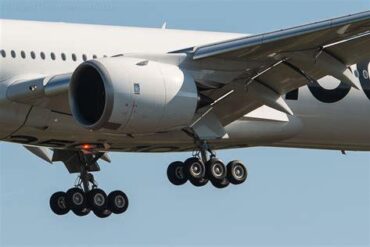
The aircraft’s composite fuselage, quieter Rolls-Royce Trent XWB engines, and lower carbon emissions place it at the forefront of sustainable aviation.
Strengthening Taiwan–U.S. Business Ties
Taiwan and Arizona are natural economic partners. As the semiconductor industry becomes increasingly globalized, with key players like TSMC investing billions in U.S. fabrication facilities, the need for direct, high-capacity air links has never been more critical. The new flight will facilitate the movement of tech talent, engineers, business delegations, and high-value cargo, reinforcing the robust supply chains between the two regions.
Moreover, Phoenix’s growing footprint in green energy, aerospace R&D, and logistics aligns with Taiwan’s national priorities, creating fertile ground for cross-border collaboration and investment. By reducing travel time and improving convenience, China Airlines accelerates opportunities that depend on face-to-face engagement and fast, reliable connectivity.
Expanding Presence at JFK and Beyond
While the Phoenix route is a headline-grabbing development, China Airlines is simultaneously deepening its presence in New York. The carrier has announced an increase in flight frequencies to JFK International Airport, responding to sustained passenger growth and business demand.
In a further upgrade to its U.S. operations, the airline will relocate to the newly constructed Terminal One at JFK, scheduled to open next year. This terminal promises:
- Faster processing through immigration and security
- State-of-the-art lounges and retail facilities
- Streamlined transfers and gate access for connecting passengers
These infrastructure upgrades are essential as China Airlines works to capture premium market share and deliver a consistent high-end experience across all its U.S. destinations.
A New Travel Gateway for Taiwanese Passengers
For outbound passengers from Taiwan, Phoenix offers a unique, less congested point of entry into the U.S. Southwest. Unlike major coastal airports burdened by delays and congestion, Phoenix delivers faster processing, shorter taxi times, and convenient access to domestic U.S. cities. Travelers headed to destinations like Denver, Albuquerque, Austin, or Salt Lake City now have faster and more comfortable alternatives to traditional hub-and-spoke itineraries.
The inaugural flights are expected to attract diverse passenger groups, from tech executives and academic researchers to tourists, students, and families. Phoenix’s desert landscapes, national parks, and Native American heritage offer compelling reasons for Taiwanese leisure travelers to explore America’s Southwest—while Taiwanese hospitality, culture, and innovation await inbound Americans.
Setting the Benchmark for U.S.–Asia Aviation
By becoming the first Asian airline to directly serve Phoenix, China Airlines sends a clear message: the future of aviation lies in smart, targeted expansion that matches demand with innovation. The decision to use the Airbus A350-900 on this route combines strategic foresight with operational pragmatism.
This development is more than just a route launch—it is a bold reimagining of U.S.–Asia connectivity. As global travelers increasingly demand direct, convenient, and eco-conscious options, China Airlines is leading the charge with a product that’s technologically advanced, commercially savvy, and passenger-centric.
The carrier’s moves in Phoenix and New York reflect a two-pronged approach to growth—opening new markets while enhancing services in existing ones. Together, these initiatives reaffirm the airline’s ambition to be not just a connector of cities, but a creator of value for economies, businesses, and people on both sides of the Pacific.
Looking Ahead
With booking options for the Taiwan–Phoenix route becoming available soon, travelers will have a new and compelling option for direct, comfortable, and efficient transpacific journeys. This service stands as a milestone not only for China Airlines but for the global aviation industry, which is seeing a growing shift toward decentralization and sustainable expansion.
As the world recovers from travel disruptions and rediscovers the importance of global mobility, China Airlines’ trailblazing launch affirms its role as a visionary airline—one that anticipates future trends, listens to its passengers, and leads by example.