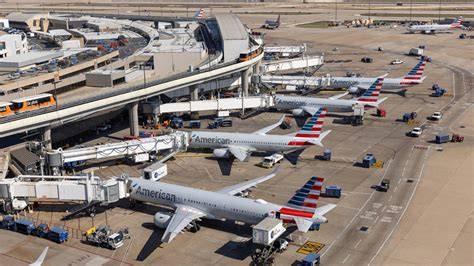
The United States remains the world’s largest aviation market by an enormous margin, and the scale of that dominance is difficult to overstate. According to the International Air Transport Association, 890.1 million passengers arrived at or departed from US airports in 2025, surpassing second-placed China’s 776.1 million by more than 100 million travelers. The United Kingdom, the third-busiest country for passenger traffic, recorded just 269.7 million boardings and disembarkations over the same period. Sustaining that volume requires an extraordinary concentration of capacity, and four of the world’s ten busiest airports in 2025 sat on American soil: Hartsfield-Jackson Atlanta International Airport (ATL), Dallas/Fort Worth International Airport (DFW), Chicago O’Hare International Airport (ORD), and Denver International Airport (DEN). Together they processed in excess of 359 million people, yet their individual shares were far from equal, with Atlanta and Dallas alone accounting for just over a fifth of total US traffic.
So which mega-hub actually handled more passengers, and is Atlanta’s crown genuinely under threat as 2026 unfolds? The answer sits in the collision between two very different metrics. Actual passenger footfall measures how many travelers walked through each terminal, while scheduled seat capacity reveals how many people an airport and its airline partners plan to process. Atlanta dominates decisively on the first measure, Dallas is closing on the second, and a third contender in Chicago is accelerating faster than either.
Atlanta’s 106.3 Million Passengers Kept It Alone Above 100 Million Worldwide
The short answer to the central question is unambiguous. Figures from Airports Council International show that Atlanta processed 106.3 million travelers in 2025, equating to almost 12% of all domestic and international passengers originating in or departing from the United States. That made the Georgia hub not merely the busiest airport in America but the only facility anywhere on the planet to record footfall above 100 million within a single calendar year. No other airport came close to breaching that psychological barrier.
Dallas, by contrast, welcomed 85.7 million arriving and departing passengers, a shortfall of roughly 20.6 million travelers against its Georgia rival. Even so, that represented almost a tenth of the nation’s entire traffic flowing through one facility in Texas. It also positioned DFW as the fourth busiest airport globally, trailing Dubai International, Tokyo Haneda, and Atlanta by clear margins. The ACI rankings for 2025 place Dubai second at 95.2 million and Haneda third at 91.7 million, both comfortably behind Atlanta but comfortably ahead of the Texas hub.
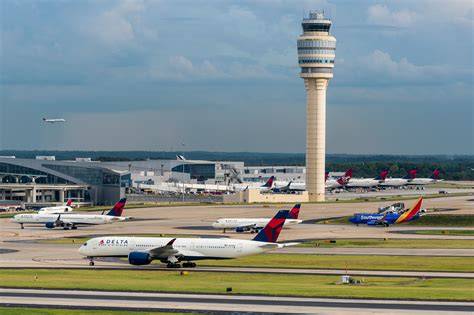
Both mega-hubs recorded softer figures than the year before, with Atlanta welcoming 1.6% fewer travelers and Dallas processing 2.5% fewer. Atlanta’s decline proved insufficient to dislodge it from the summit, but Dallas’s steeper contraction pushed it from third to fourth in the global table. That shrinking traffic base explains why the gap between the two has appeared to narrow in recent months, even as Atlanta’s absolute lead remains enormous.
Delta and American: How One Carrier Each Anchors Atlanta and Dallas
Atlanta’s market-leading position rests overwhelmingly on a single operator. Delta Air Lines, among the largest carriers in the United States and the world, funnels an extraordinary share of its network through Georgia. Based on OAG analysis of ch-aviation data, Delta’s total scheduled seating capacity reached 246.9 million seats in 2025, with Atlanta accounting for just over 49.2 million of that total, or roughly 17% of the carrier’s entire global footprint. For an airline boasting 19 key hubs worldwide and serving more than 300 destinations, concentrating a sixth of its capacity in one city is remarkable.
The airport’s own dependency is sharper still. Measured against departing capacity rather than actual traffic, seats aboard Delta aircraft made up an eye-watering 78% of all capacity leaving Atlanta in 2025. That near-monopoly gives Delta enormous leverage over schedules, pricing, and connecting flows, and it explains why Atlanta’s hub-and-spoke model functions so efficiently as a domestic funnel. Delta’s only Southern hub also positions it to capture high-value traffic from Florida, the Carolinas, and the Gulf Coast without routing passengers north.
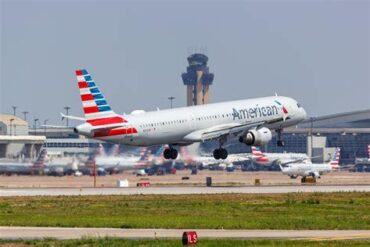
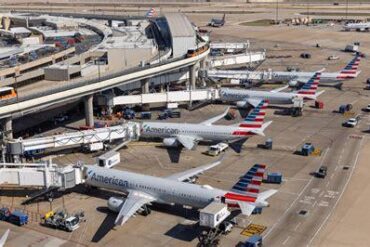
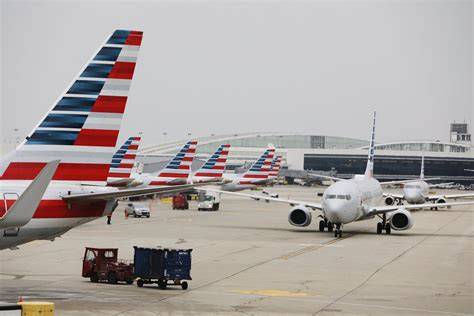
Dallas mirrors that structure almost exactly, with American Airlines playing the Delta role. American’s scheduled capacity from DFW reached 42.1 million seats, representing 15% of its total network capacity of 279.6 million. On the airport side, American commanded an 82% share of Dallas’s overall scheduled capacity, a concentration even higher than Delta’s grip on Atlanta. Two mega-hubs, two fortress carriers, and two nearly identical hub-and-spoke architectures: the economic logic is the same, even if the raw totals differ.
Why Dallas Is Narrowing the Gap on Scheduled Capacity
Scheduled capacity and actual footfall tell genuinely different stories, and conflating them obscures what is really happening. Footfall reflects how many customers an airport served in practice; capacity reveals how many it could theoretically process according to its airlines’ forward planning. Atlanta sits far ahead on the first measure, but the second has shifted meaningfully during 2026. In October, Atlanta’s scheduled capacity remained flat at 5.44 million seats compared with a year earlier, according to separate OAG analysis. Dallas, meanwhile, posted a 5% increase to 4.56 million seats.
Atlanta still led by hundreds of thousands of seats, so its title as the busiest facility is not under imminent threat on this basis. Yet Dallas’s growth unquestionably helped it edge closer in the short term. The Texas hub benefits from American’s aggressive rebuild of its DFW connecting bank, from continued population and corporate migration into the Dallas-Fort Worth metroplex, and from a geographically central position that serves east-west and north-south flows with unusual efficiency. Long connecting itineraries across the continent find DFW materially closer to their origin and destination than Atlanta, and distances between terminals were designed around exactly that transfer volume.
Chicago O’Hare Is the Real Wildcard in the 2026 Capacity Race
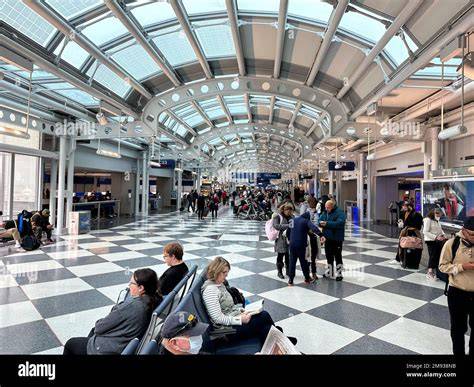
The October capacity data introduces a third contender that deserves scrutiny. On that month’s figures alone, Chicago trumped Dallas, with slightly over 5.0 million seats available after a hefty 8% year-over-year increase. That placed ORD second globally behind only Atlanta, up from fourth a year earlier. Chicago sat approximately 400,000 seats off the top spot, and its 8% growth alone equated to roughly 370,000 additional seats. That made O’Hare the joint-fastest-growing airport among the world’s top ten, sharing the distinction with Guangzhou Baiyun International Airport (CAN).
Dallas’s 5% October increase is strong, but Chicago’s 8% is stronger, and crucially Chicago sits closer to Atlanta on capacity than Dallas does. O’Hare’s gain stems partly from the completion of its Terminal 5 expansion and runway modernization programme, partly from United Airlines’ capacity restoration, and partly from American’s own O’Hare domestic network. The structural implication is that Dallas is not just chasing Atlanta; it is also defending second place against a rival growing at a faster rate. Denver, close behind Dallas in the October capacity table at 4.40 million seats with 2% growth, adds further competitive pressure from the Mountain West.
Year-to-Date Footfall Confirms Atlanta’s Commanding 2026 Lead
Through the first seven months of 2026, Atlanta’s lead in actual passengers has held firmly. With July the most recent month for which all three leading airports have published data, Atlanta served a grand total of 61.7 million travelers, a marginal increase on the same period in 2025. Chicago ranked second with 51.3 million passengers, an increase of over 3%, while Dallas came third with 49.4 million, just over 1% lower than in the equivalent seven months the previous year.
Aircraft operations reveal a nuance that passenger figures alone conceal. Atlanta logged 470,716 movements over the period, Chicago 536,644, and Dallas 427,020. Chicago’s higher movement count against lower passenger volume points to a fleet mix weighted toward smaller narrowbodies, whereas Atlanta’s lower movements against dramatically higher throughput indicate fuller aircraft, a wider average seat count, or both. Dallas’s traffic decline, combined with Chicago’s growth, suggests O’Hare is on course to take second place from DFW over the full year. On year-to-date footfall, Atlanta’s advantage over Dallas stands at a remarkable 12.3 million passengers across just seven months.
Airport Investment Will Decide the Next Decade of Capacity
Whether either rival can close the footfall gap depends heavily on capital programmes already under construction. Atlanta is advancing its $10 billion-plus capital plan, anchored by a new Domestic Terminal Concourse D that will add approximately 20 narrowbody gates and the replacement of the aging Plane Train with a modernized automated transit system. The ATLNext programme reshapes taxiways, cargo facilities, and parking rather than lifting the passenger ceiling immediately, but it protects the operational resilience on which 100-million-plus throughput depends.
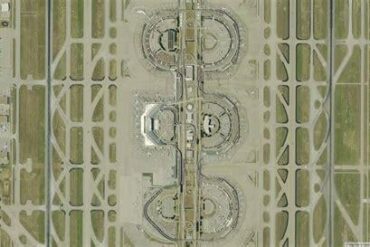
Dallas is executing an equally ambitious expansion. DFW Forward will rebuild the Terminal C complex into an expanded facility capable of adding roughly 24 gates and substantially increased international capacity, alongside a sweeping renovation of Terminals A and B and improvements to the Skylink and roadways. The programme is explicitly designed to allow DFW to serve more than 100 million passengers annually, a threshold Atlanta already clears. The investment question, therefore, is not whether Dallas can grow but how quickly the new bricks become usable.
Atlanta’s 2026 Crown Is Secure Even as Dallas Gains Ground
Intelligent speculation about the coming decade depends on the difference between a hub’s theoretical ceiling and its delivered performance. Atlanta retains a footfall lead that cannot be reversed within a single scheduling season. Its market position rests on Delta’s 78% share of departing capacity, the carrier’s dominant position across the Southeast, and a connecting model so refined that even modest capacity restraints leave rivals well behind. Dallas’s 5% October capacity growth narrows the planning gap without threatening the passenger ranking, while Chicago’s simultaneous surge complicates DFW’s position at number two.
Atlanta’s 2025 position as the only airport worldwide above 100 million passengers also insulates it against external shocks, partly because its closest global competitor, Dubai, has seen traffic fall sharply following disruption in the region. Delta’s Atlanta investment therefore remains the most reliable single reason the Georgia hub will almost certainly retain both the American and global passenger crowns through 2026. Dallas will keep narrowing the capacity gap as DFW Forward comes online and American leans further into its Texas fortress hub, but genuine parity on footfall remains a 2030s proposition rather than a 2026 one. Between America’s two mega-hubs, Atlanta handles more passengers by a margin that is large, stable, and built on structural foundations its rivals cannot quickly replicate.