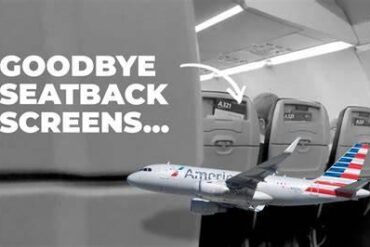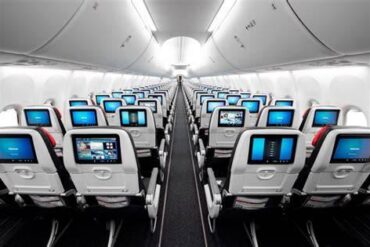
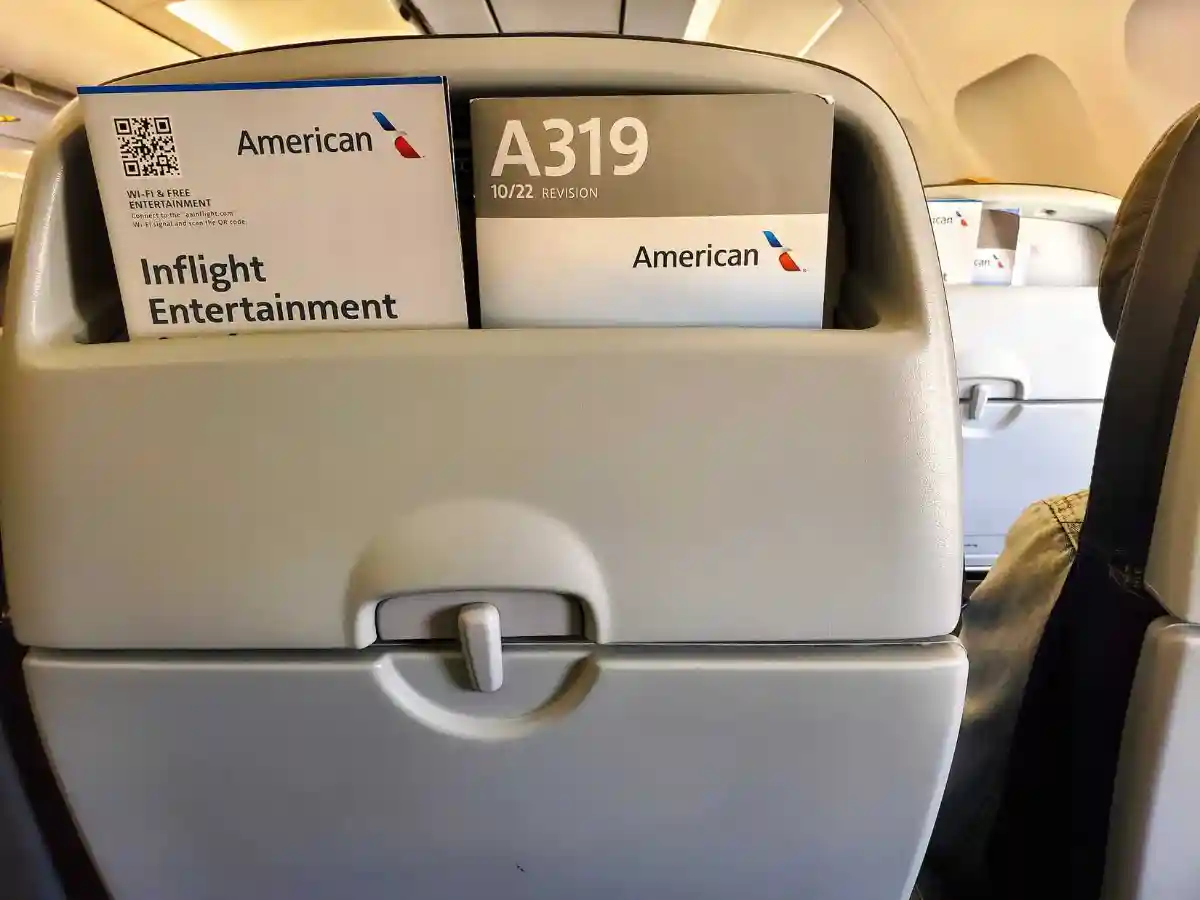
American Airlines is preparing to undo one of the most visible cabin decisions it has made in a decade. After years of steering passengers toward their own phones, tablets, and laptops and treating personal devices as the primary source of inflight entertainment, the Fort Worth-based carrier now intends to put a screen back in front of every seat on its narrowbody fleet. The new direction landed on August 18, when the airline confirmed that seatback displays will be fitted to new narrowbody deliveries from 2028 and retrofitted onto aircraft already flying. The awkward part is the timing. Thirty-two legacy Airbus A319 jets are right now moving through cabin refurbishments that strip out the displays they already have, and by June, 23 of those 32 had reportedly completed the screen-removal process. American has not said when, or even definitively whether, those particular aircraft will get the new hardware, leaving a conspicuous gap between a refurbishment program built around devices and a fleetwide promise built around displays.
A Screen Strategy That Is Reversing Mid-Flight
The reversal is unusual because it overlaps with itself. American spent the better part of a decade converging on a bring-your-own-device model, arguing that passengers were better served by the screens already in their pockets than by hardware the airline had to buy, install, power, clean, and replace. The August 18 announcement committed the carrier to the opposite conclusion for the future: seatback displays at every seat across the narrowbody fleet, delivered on new aircraft and retrofitted onto existing ones. For cabins that were designed around the absence of a screen, that commitment creates an immediate scheduling problem rather than a simple equipment swap.
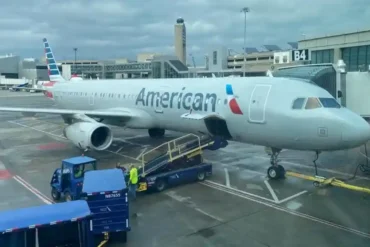
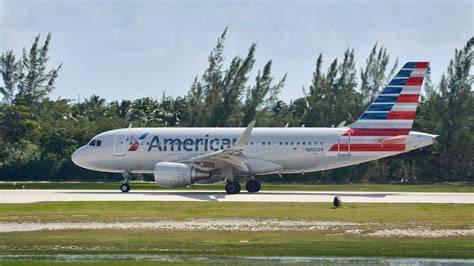
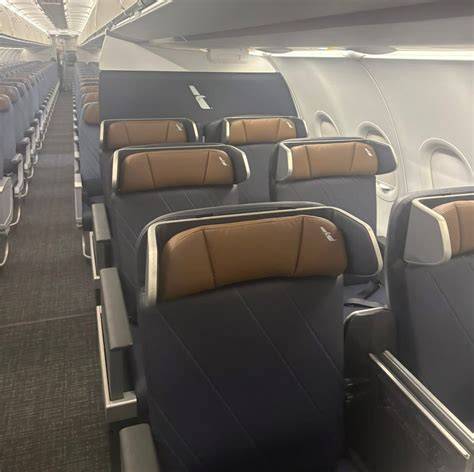
The 32 legacy A319s sit at the center of it. Reporting published in June indicated that 23 of the jets had finished having their screens removed, with the remaining nine expected to wrap by the end of the summer. These aircraft were not being parked; they were being refreshed and returned to service. The refurbishment adds another row of First Class seating and updates the narrowbody cabin interior. American’s August announcement confirmed that in-service aircraft would also receive the new entertainment system, but it did not identify when the A319s would be included, nor whether their screen installations would be folded into other cabin work already scheduled. A fleetwide commitment sets a direction for the program without automatically setting a date for every subfleet, and the gap between the two is exactly where these 32 jets are parked.
The route to this point explains why the decision is more than a straightforward hardware replacement. American’s move away from displays was not an oversight or a cost-cutting accident; it was a deliberate bet on passenger behavior, and that bet shaped real cabins, real contracts, and real certification work.
The Original Bet on Personal Devices
The airline’s earlier strategy rested on a simple observation. In 2017, American said more than 90% of its passengers brought a device or screen with them when they flew. If nearly everyone already carried a screen, the logic went, the marginal value of a built-in display fell sharply, and the money spent on screens could be redirected toward connectivity, charging, and cabin density. Passengers would use familiar interfaces and choose their own content, while the airline would avoid maintaining a separate hardware ecosystem across its Boeing 737-800 and Airbus A321 cabins.
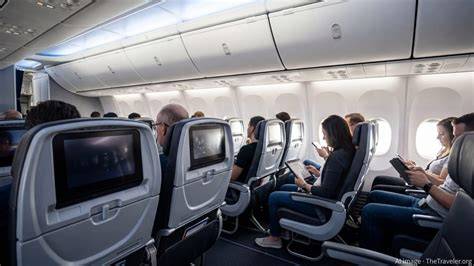
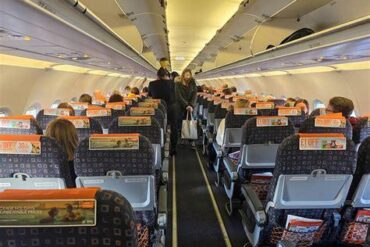
That thinking produced Project Oasis, the modification program under which American removed seatback displays from a number of aircraft and installed device holders in their place. The holders made personal devices structurally central to the entertainment experience, but they also shifted a burden onto travelers. Anyone without a suitable device, anyone whose battery was running low, and anyone who simply preferred not to spend a long flight staring at a phone suddenly had fewer built-in alternatives. Charging and connectivity stopped being conveniences and became prerequisites, so the airline had to compete on power outlets, Wi-Fi quality, and content availability on the passenger’s own hardware.
The August 18 Commitment and Its Contradictions
The new plan does not retire personal devices. American intends, in effect, to offer both: a built-in display for passengers who want one, and continued support for those who prefer their own equipment. The difference is that the new displays are designed to do considerably more than the systems they replace, and that ambition is what makes the retrofit expensive and the timing sensitive.
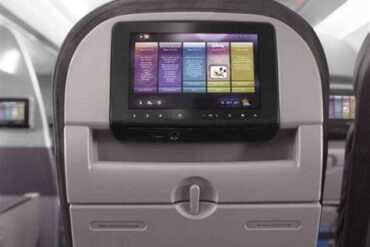
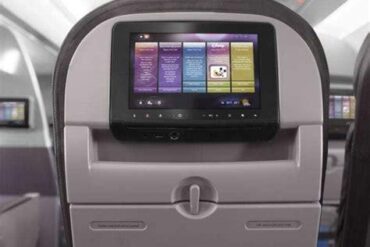
American has confirmed 4K screens, Bluetooth audio connectivity, USB-C fast charging, expanded content, personalized movie and television recommendations, and enhanced flight maps carrying destination information and real-time flight insights. Taken together, those features reposition the seatback screen as a multi-purpose interface rather than a screen for movies. Bluetooth lets passengers pair their own wireless headphones or earbuds, removing the old tangle of proprietary connectors; USB-C fast charging keeps phones and tablets topped up whether or not a passenger watches the built-in display; and personalized recommendations help travelers discover content inside the airline’s own system instead of browsing blindly. American has described the planned displays as among the largest on narrowbody aircraft in North America, though it has not published exact dimensions or named the hardware supplier in its public announcement.
| Entertainment Feature | Confirmed Capability | Passenger Benefit |
|---|---|---|
| 4K Displays | 4K seatback screens | Higher-resolution onboard viewing |
| Bluetooth Audio | Bluetooth connectivity | Pair compatible wireless headphones or earbuds |
| USB-C Charging | USB-C fast charging | Charge compatible personal devices during the flight |
| Expanded Content | A broader selection of entertainment | More movies and television options to choose from |
| Personalized Recommendations | Movie and television recommendations | Discover content suited to individual preferences |
| Enhanced Flight Maps | Destination information and real-time flight insights | Follow flight progress and explore the destination |
What remains undisclosed matters as much as what has been promised. American has not published the total cost of the program or the final hardware configuration for each aircraft, and those details should not be inferred from the promised resolution or the airline’s marketing language. The confirmed features sketch the intended passenger experience; the installation specifications, supplier arrangements, and per-aircraft differences are still behind the curtain. The screens are also only one strand of a much larger cabin investment, which makes the sequencing problem harder rather than easier.
Cabin Refurbishments and the Premium-Seat Push
The entertainment announcement is unfolding alongside a separate program to refresh A319 and A320 interiors, and the two are not obviously coordinated. American has confirmed that its refurbishment work adds an additional row of First Class seats on those aircraft, with refurbished A319s carrying 12 First Class seats and A320s carrying 16. The wider narrowbody plan also adds more Main Cabin Extra seating and updates the onboard interior, part of a broader effort to reshape the passenger experience across the fleet rather than an isolated decision about screens.
The premium-seat target shows the scale of that effort. American says premium seating accounts for roughly 25% of seats on narrowbody departures today, a share it expects to lift to approximately 40% in the coming years through cabin retrofits and new deliveries. Pursuing that shift means tearing cabins apart on a rolling basis, and each teardown is an opportunity — and a risk. Fold screen installation into an existing refurbishment and the airline saves labor; miss that window and the same aircraft must return to the hangar later for a second disruption.
| Program | Announced Direction | What Remains Unconfirmed |
|---|---|---|
| Premium seating | Raise premium seating from about 25% to about 40% of narrowbody seats | Exact timeline and final configuration for each aircraft |
| A319 and A320 refurbishment | Refresh interiors and add a First Class row (12 seats on A319s, 16 on A320s) | Whether all aircraft receive modifications on the same schedule |
| Seatback entertainment | Screens on new narrowbody deliveries from 2028, retrofits on in-service aircraft, fleetwide completion by the early 2030s | Installation sequence and timing for individual aircraft, including the 32 legacy A319s |
| Starlink connectivity | Installations begin in early 2027, targeting the entire mainline fleet of more than 1,000 aircraft | Installation date for each individual aircraft |
Coordinating those workstreams is genuinely complicated because cabin refurbishment, entertainment installation, and connectivity upgrades are distinct programs with their own suppliers, engineering dependencies, and labor requirements. American has not published a subfleet-specific schedule showing how they will intersect on the legacy A319s, and that uncertainty grows with a fourth major technology rollout now entering the picture.
Starlink Introduces a Separate Clock
In May, American announced plans to install Starlink satellite internet on more than 500 Airbus aircraft. On October 8, it expanded that commitment to its entire mainline fleet, covering more than 1,000 aircraft, with installations scheduled to begin in early 2027. The airline has not published a detailed schedule for individual aircraft.
The two upgrades serve different purposes and should not be conflated. Starlink supplies an internet connection that lets passengers browse, stream, work, and communicate on their own devices. Seatback screens supply a built-in display and entertainment interface that works without depending solely on a personal screen. American’s strategy now calls for both, but it has not released an aircraft-by-aircraft schedule showing when individual A319s will receive either one. The early 2027 connectivity start date is a program milestone, not a confirmed installation date for any legacy A319, and treating it as one would misread the airline’s disclosures.
For the 32 jets, the sequence remains unresolved in a way that has real consequences for passengers. Their current refurbishment removes the original displays. Starlink installations begin in early 2027. New narrowbody deliveries with the next generation of screens arrive from 2028. Retrofits of existing aircraft are expected to stretch into the early 2030s. Any one of those dates could define what a passenger experiences on a given A319, and the published plan does not establish that all 32 will lose their screens in 2026 and regain new ones in 2028.
The Legacy A319s and an Unclear Upgrade Path
The next stage depends on how American sequences cabin work across a fleet with different aircraft types, interior configurations, and refurbishment stages. The announcement establishes the destination — displays from 2028 on new Airbus and Boeing narrowbodies, retrofits across the existing fleet, completion by the early 2030s — but that is a fleetwide target, not a promise that every aircraft will be modified in the same year or in the same order.
The 32 legacy A319s make that distinction especially consequential. Reporting in August 2026 said American pushed the planned retirement of these aircraft from 2026 to at least 2030, giving them a longer expected service life than previously assumed. That reported extension makes a future screen retrofit economically plausible; a jet flying for four or more additional years can justify the capital cost of new displays. It does not prove that American will install the new system on every aircraft in the group, and the airline has not published a confirmed list of which A319s will receive displays, whether installation will coincide with other cabin work, or when the modifications will occur.
The gap between the two clocks — when the screens come out and when new ones might go in — is where the passenger experience lives. A traveler booked on one of the 23 aircraft that finished screen removal this year, or on the nine completing by the end of summer, may fly on a refreshed jet with an extra First Class row and no built-in screen for months or years. If the aircraft stays in service into the 2030s, that passenger could eventually see the new 4K system installed during a later retrofit. If the schedule slips, or if the aircraft are prioritized behind other subfleets, the cabin that just lost its screens could keep its device holders for a long time.
Airlines rarely publish the internal logic behind retrofit sequencing, but the economics are visible enough. Engineering teams work through subfleets rather than individual registrations, because configuration differences multiply the cost of every installation and every certification step. The legacy A319s are a small, distinct group with their own cabin layout, their own retirement assumptions, and now their own history of screen removal. That combination makes them a natural candidate for either early attention, to close an embarrassing gap, or late attention, to keep the more common Airbus and Boeing types ahead of them.
American’s next concrete milestones are the start of Starlink installations in early 2027 and new narrowbody deliveries with seatback screens from 2028. Both will be visible steps toward the revised onboard experience, and both will be watched closely by travelers who have learned to read cabin promises skeptically. The 32 legacy A319s remain a specific unresolved part of the transition. The determining factor will be American’s eventual retrofit schedule, which will reveal whether the aircraft that recently lost their screens are among the first narrowbodies to get them back — or whether they stay in their current configuration longer than anyone at American Airlines would care to admit.