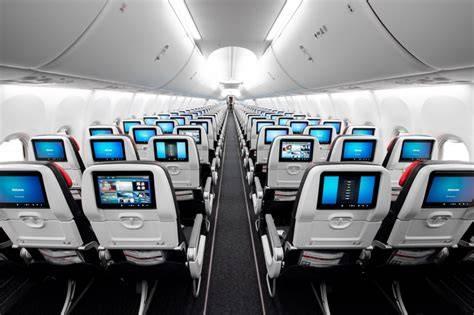
Leisure carriers have long treated passenger comfort as the first casualty of cost control, stripping cabins down to bare bones and pushing travelers toward their own devices to keep overhead low. Air Canada has decided that this is a false economy. The country’s largest flag carrier is deploying Boeing 737 MAX 8 aircraft into its leisure subsidiary, Air Canada Rouge, refitted with full seatback entertainment screens, ergonomic recline and complimentary high-speed connectivity sponsored by Bell Canada. On the surface, this is a straightforward win for vacationers. Beneath the surface, it is a structural recalibration of Canada’s narrowbody fleet, a loyalty-driven play for high-yield leisure demand, and a direct challenge to the ultra-low-cost model that has defined North American sun flying for a decade.
Why Air Canada Is Moving 45 Mainline 737 MAX 8s Into Rouge
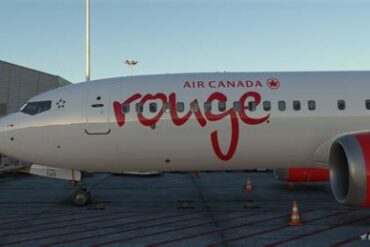
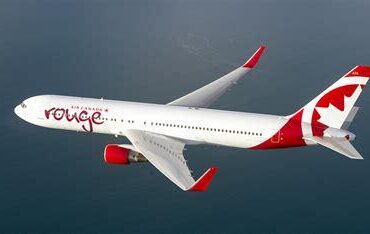
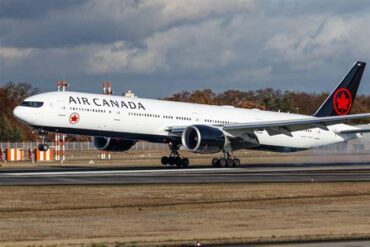
By shifting these jets into the Rouge network, Air Canada is not merely repainting airframes and swapping cabin signage. The carrier is undertaking a comprehensive structural reconfiguration of 45 737 MAX 8 airframes scheduled to transition from the mainline fleet by the end of 2026. The rationale is simple on paper and consequential in practice: mainline-specification hardware is being pushed into vacation-heavy markets under a newly established crew base at Vancouver International Airport (YVR), giving Rouge a modern narrowbody fleet positioned for medium-haul sun flying across Mexico, the Caribbean and the United States.
Removing 45 narrowbody airframes from mainline operations is no small reshuffle. It is a substantial fleet movement that demands a reciprocal response across Air Canada’s domestic network, and the scale of the transfer reveals how seriously management views the leisure sector as a yield engine rather than an afterthought.
The Three-Tier Cabin: 177 Seats With Screens at Every Row
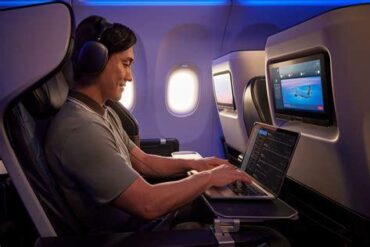
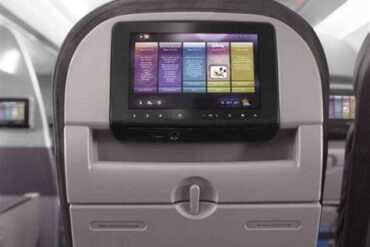
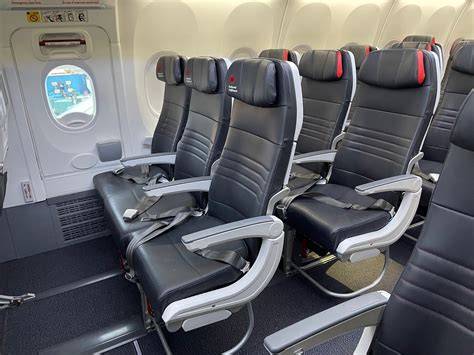
Instead of bare-bones interiors, passengers boarding the reconfigured jets find a three-tier layout seating 177 passengers. The configuration comprises 12 business class seats, 18 preferred seats offering extra legroom and 147 standard economy seats. Critically, every single seat across the aircraft includes dedicated seatback infotainment screens and fast, complimentary Wi-Fi sponsored by Bell Canada for Aeroplan loyalty members, an amenity architecture that mirrors mainline standards rather than leisure-carrier compromise.
The cabin philosophy matters as much as the equipment list. On medium-haul routes to sun destinations, travelers accustomed to legacy leisure carriers missing basic amenities are suddenly greeted with full entertainment suites and connectivity, blurring the line between a vacation flight and a mainline journey. Air Canada is wagering that this blurring is precisely what the modern leisure passenger wants.
Backfilling the Domestic Network With Returned Airbus A320s and A321s
Filling the capacity gap left by transferring 45 narrowbody airframes to leisure operations has necessitated a reciprocal fleet movement across Air Canada’s domestic network. As outlined by Travelweek reporting, the carrier is migrating former Air Canada Rouge Airbus A320 and Airbus A321 aircraft back into the mainline fleet, ensuring mainline operations retain sufficient narrowbody frames to service high-density domestic corridors without disrupting trunk-route frequency or peak scheduling windows.
According to Air Canada corporate disclosures, these returning Airbus jets are scheduled for intensive cabin updates aligning them with the carrier’s newly unveiled interior standards. Mainline technicians are modernizing overhead bins, installing updated power provisions and refreshing cabin finishes to establish a unified passenger experience across key domestic routes. The asset exchange is designed so that no domestic traveler pays for the leisure cabin upgrade with thinner schedules or fewer frequencies.
Where the Widebodies and the A321XLR Fit Into the Fleet Transformation
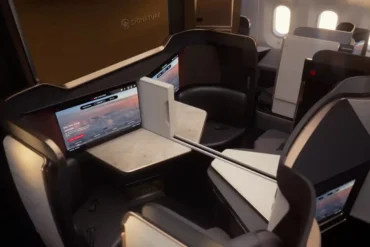
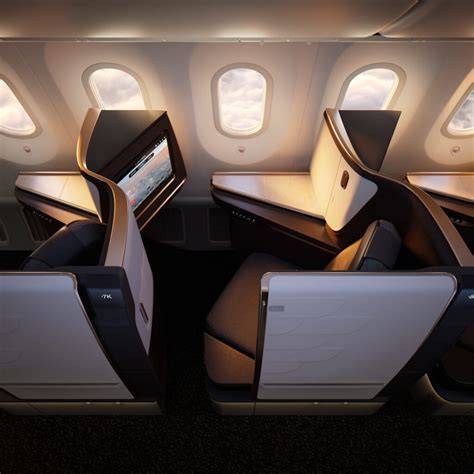
The narrowbody asset swap forms just one moving part within Air Canada’s multiphase fleet transformation. With the mainline fleet taking back refreshed Airbus jets to preserve domestic frequencies, management is positioning upper-tier capacity toward high-yielding international routes with next-generation widebodies and long-range single-aisle flagships. World Airline News highlights the upcoming introduction of 14 Boeing 787-10 Dreamliners, which will debut the Signature Plus Suite featuring 27-inch (68 cm) 4K OLED screens and joinable center suites equipped with retractable privacy panels for shared social spaces, targeting lucrative transatlantic and transpacific trunk routes.
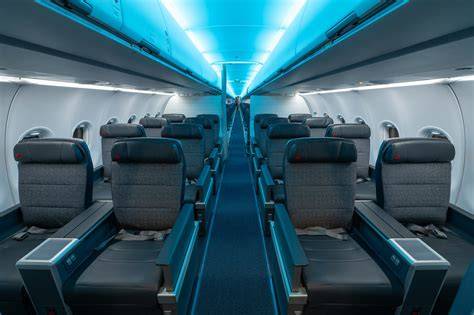
Complementing the widebody additions is the tactical deployment of the Airbus A321XLR, which officially launched scheduled commercial service on June 9, 2026, operating flight AC413 from Montréal-Trudeau International Airport (YUL) to Toronto Pearson International Airport (YYZ). The aircraft introduces 14 lie-flat seats on a single-aisle platform for the first time in the carrier’s history, giving Air Canada unprecedented flexibility to launch thin transatlantic routes that previously could not justify widebody economics. Running simultaneous narrowbody swaps, leisure reconfigurations and flagship widebody introductions exposes the airline to external pressure, however, and the broader aerospace supply chain’s ability to support these multi-year delivery timelines will determine whether the transformation hits its targets.
Challenging the New Leisure Market With a Hybrid Product
Deploying a 177-seat 737 MAX 8 into Air Canada Rouge allows the carrier to aggressively target high-demand leisure corridors across North America, Mexico and the Caribbean. The MAX 8 works well here because modern leisure aviation economics hinge on capturing a rapidly shifting demographic of travelers who demand reliability and comfort without traditional corporate budgets. Transborder and sun-destination corridors have evolved from pure volume routes into highly competitive battlegrounds where passenger expectations consistently outpace legacy low-cost offerings, and by embedding enhanced service standards into its vacation subsidiary, Air Canada directly targets travelers who historically tolerated austere cabins for lower fares.
The strategic positioning directly challenges ultra-low-cost carriers and independent leisure operators by redefining what a vacation product can bring in on yield. Rather than engaging in a destructive race to the bottom on base ticket prices, the airline leverages its loyalty ecosystem to lock in repeat customers. When passengers can earn and redeem loyalty currency while enjoying seamless digital access, price sensitivity softens, allowing the carrier to protect yields even during off-peak seasonal dips without sacrificing load factors. Capturing high-yield leisure demand also serves as a vital corporate hedge against the cyclical volatility of traditional business travel, as corporate budgets fluctuate with broader economic pressures and robust leisure yields provide steady financial support for the wider network.
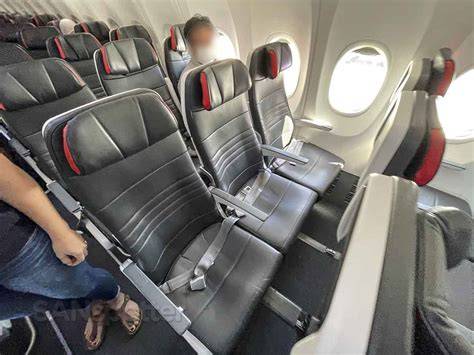
A Squeeze Even With Screens: The 30-Inch Reality
While adding seatback entertainment and complimentary high-speed Wi-Fi is a major qualitative leap for the leisure subsidiary, the cabin’s proportions reflect strict density requirements. Achieving the 177-seat layout across the single-aisle airframe means maintaining a compact economy seat pitch of roughly 30 inches (76 cm), as documented by Seat Maps. Passengers on longer medium-haul flights to southern destinations will therefore experience a distinct product dichotomy: high-end digital connectivity paired with tightly spaced physical seating.
That tension illustrates the central challenge of modern leisure aviation engineering. Carriers must extract maximum revenue per square foot while preventing passenger fatigue on longer sectors, and Air Canada’s solution, trading spatial generosity for digital generosity, is a deliberate calculation rather than an oversight. The juxtaposition defines the modern hybrid leisure product: passengers receive the entertainment and connectivity standards of a mainline carrier while still working within the spatial limits of high-density single-aisle operations. Recline and screens make those limits more tolerable, but they do not eliminate them.
Disrupting the Leisure Market and the 2026 Execution Test
The sweeping fleet realignment shows Air Canada is re-engineering its domestic and international product standards on a massive scale. Pushing modernized, high-specification narrowbodies into the leisure subsidiary while pulling older frames back for comprehensive overhauls, the airline is leaving behind the traditional product penalty long associated with vacation flying. The airline’s ability to synchronize these overlapping transitions across multiple operating certificates dictates how effectively it can capture high-yield traffic without disrupting baseline network capacity.
The phased transfer of all 45 Boeing 737 MAX 8 airframes is slated for completion by late 2026, alongside the continuous introduction of the 14 ordered Boeing 787-10 Dreamliners and the broader 2029 widebody retrofit timeline. Operational execution is therefore paramount. Managing supply chain dependencies and tight cabin layouts, such as maintaining a compact 30-inch seat pitch alongside advanced digital amenities, will show whether passenger satisfaction scales alongside corporate revenue goals. North American aviation competition is intensifying sharply in 2026, and Air Canada’s hybrid model offers a compelling blueprint for legacy carriers seeking to protect leisure market share. Whether it truly disrupts the leisure market or simply raises the floor for everyone else depends on whether those 45 jets arrive on time, fully fitted, and flying the routes where vacationers actually want to sit in them.