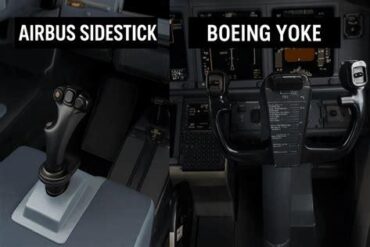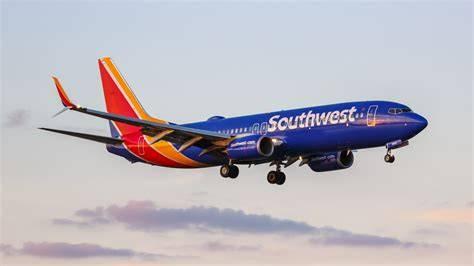
Every morning at more than a hundred US airports, Southwest Airlines opens a ramp where every tail belongs to one family: the Boeing 737. A mechanic reaches for the same wheel, the same brake pack, and the same avionics box whoever is parked at Gate A or Gate B. A pilot sits down in a flight deck they could have flown yesterday on a different registration. That visual sameness is not nostalgia; it is a business model rendered in aluminum, and it explains why the Dallas-based carrier has never placed a single Airbus order across 55 years of operation.
The question “Why Southwest Airlines Decided Against Airbus Early On & Still Does In 2026” has a tempting answer about loyalty and a harder, truer answer rooted in the economics of turnaround time. Southwest launched in 1971 flying short, cheap hops between Dallas, Houston, and San Antonio, first as Air Southwest, founded by Herb Kelleher and Rollin King in 1967. With no federal route protection and no hub network to absorb idle time, every extra minute a jet spent at a gate drained cash and threatened the airline’s survival. The Boeing 737 arrived before Airbus had flown a single commercial passenger jet, and Southwest’s fate was tied to Seattle from the first departure.
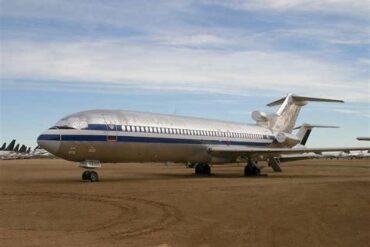
Apart from briefly leasing six Boeing 727-200s in the late 1970s and early 1980s, Southwest has flown nothing but 737s. Interchangeable ground crews and flight decks became the backbone of a system that outran competitors: mechanics stocked a single inventory, pilots boarded any tail without crossing fleet barriers, and Boeing’s successive upgrades slid into the operation with minimal retraining. That intimacy made Southwest the launch customer for five variants — the 737-300, 737-500, 737-700, 737 MAX 7, and 737 MAX 8 — and let it grow past 100 destinations on a point-to-point schedule that a hub-and-spoke legacy carrier could never replicate on cost.
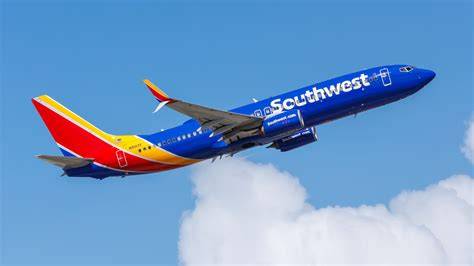
How Single-Fleet Discipline Built Southwest’s Turnaround Machine
The logic of a one-type fleet is not merely aesthetic; it is operational geometry. Ground equipment, bridge fittings, tow bars, and pushback tractors are standardized across the network, so a runway closure or weather event on the East Coast does not strand a specialized crew on the West Coast. Spares are lean and predictable, and line maintenance follows one playbook from Baltimore to Burbank. When a wheel needs replacing, it is the same wheel. When engines need starting, the checklist is the same. Every one of these small efficiencies, compounded across thousands of daily departures, mathematically underwrites the low fares Southwest built its brand upon.
That discipline also shaped labor. In 2022, Southwest formally recorded its reliance on the 737 series in its SEC filing, warning in its risk factors that “a shift away from a single fleet type could also add complexity to the company’s operations, present operational and compliance risks and materially increase the company’s costs.” That sentence sits in a legal document, not a press statement, and it is the clearest admission of the structural lock-in that has kept Airbus off the Southwest property for half a century.
The 1971 Bet That Locked Out Airbus For Half A Century
When the A320-200 swept through low-cost fleets in the 1980s and 1990s, Airbus sales teams had a strong story to tell. They could not sell it in Dallas, because switching to a dual-maker flightline would mean splitting pilot seniority lists, doubling training simulators, and risking gate delays whenever the wrong aircraft stood at the wrong gate. Even today, adding a second jet would immediately end Southwest’s ability to swap crew onto any airplane on the spot. Union terms hardened the barrier: pilots, flight attendants, and mechanics are employed under labor contracts tailored specifically to 737 operations.
The structure created a moat that ran deeper than sentimentality. It stretched across procurement, training, scheduling, and maintenance, and it survived multiple cycles of Boeing struggles. What finally cracked the moat was not price, but trust.
How the 737 MAX Crisis Gave Airbus Its Best Shot in 50 Years
As hundreds of aging 737-700s approached retirement in the late 2010s, two fatal crashes in late 2018 and early 2019 grounded the global 737 MAX fleet and left Southwest facing a gaping hole in its growth plan. According to Skift’s Airline Weekly, Southwest announced in October 2020 that it was evaluating the Airbus A220-300 for 140 to 150 seats while MAX 7 approval stalled. No other global aircraft maker offered a federally certified narrowbody suitable for domestic routes, which left the clean-sheet A220-300 standing alone as a credible alternative.
Aviation Weekly reported that Chief Financial Officer Tammy Romo publicly called the A220 a “viable competitor,” a remark that genuinely rattled Boeing’s narrowbody sales team. Facing the real prospect of losing its founding single-aisle customer to Toulouse, Boeing had to respond with steep discounts and physical hardware improvements. For the first time since 1967, Airbus held rare leverage over an airline that had spent nearly half a century refusing to even look at its aircraft.
Southwest’s conditions were brutal in their simplicity: the replacement jet had to match the A220-300’s seat count and range without abandoning the shared 737 cockpit layout and pilot type rating. Meeting those demands forced Boeing’s engineers to stretch and rebuild the 737 MAX 7 fuselage, wings, and engines into a heavier, farther-flying aircraft than the 737-700 it replaced.
Redesigning the 737 MAX 7 to Beat A220 Economics
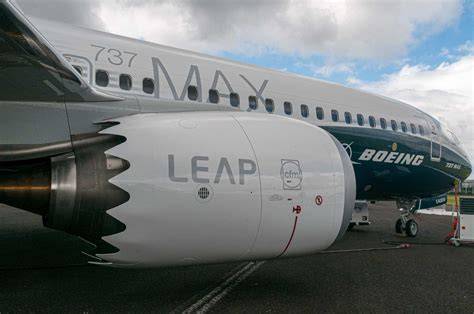
Boeing extended the fuselage 46 inches (117 cm) ahead of the wing and 30 inches (76 cm) behind it, mating the longer body to the more robust 737 MAX 8 wing. A longer nose landing gear provided ground clearance for the CFM International LEAP-1B engines and their 69.4-inch (176 cm) fans. Split-tip winglets cut fuel burn by up to 1.5 percent, and a reshaped tail cone trimmed another 1 percent, giving the MAX 7 roughly 1,000 nautical miles (1,852 km) more range and 18 percent lower fuel costs per seat than the older 737-700.
| Specification | Boeing 737-700 | Boeing 737 MAX 7 | Airbus A220-300 |
|---|---|---|---|
| Max seating capacity | 149 passengers | 172 passengers | 160 passengers |
| Typical two-class seating | 126–128 passengers | 138–153 passengers | 125–150 passengers |
| Overall length | 110 ft 3 in (33.6 m) | 116 ft 8 in (35.6 m) | 127 ft (38.7 m) |
| Maximum range | 3,240 nm (6,000 km) | 3,850 nm (7,130 km) | 3,400 nm (6,300 km) |
| Max takeoff weight | 155,000 lb (70.1 t) | 177,000 lb (80.3 t) | 156,300 lb (70.9 t) |
| Engines | 2× CFM56-7B | 2× CFM International LEAP-1B | 2× Pratt & Whitney PW1500G |
Routing hot engine bleed air through the redesigned nacelles triggered a serious safety snag in late 2023. Leaving engine anti-ice on in dry air overheated the carbon composite inlet, risking structural failure that could rip off the lip and strike the fuselage. Rather than seek a government exemption, Boeing altered the inlet cooling system in late 2025, and the modified MAX 7 received its amended FAA type certificate on August 3. That certificate mattered enormously to Southwest: it kept the MAX 7 inside the fleet without retraining hundreds of pilots in costly simulators.
Inside the 2021 Mega-Order That Cemented Southwest’s Single-Fleet Future
Southwest resolved its evaluation on March 29, 2021, choosing fleet uniformity over the Airbus A220-300 to avoid duplicating training, spares, and line maintenance. As reported by AirInsight, the airline ordered 100 firm MAX 7s with 155 options while converting 70 MAX 8 orders into MAX 7s to replace its aging 737-700s. At the time, Southwest operated 305 737-700s, 198 737-800s, and 300 737 MAX 8s, held 314 MAX 7s on order, and flew no Airbus aircraft whatsoever.
Tammy Romo explained that March that the agreement let Southwest “preserve the low-cost advantages of a single fleet type,” according to Leeham News. Options extending through 2031 gave planners room to swap between MAX 7s and MAX 8s as demand shifted. The deal raised firm MAX orders to 349 jets and total commitments to 619 aircraft through 2031, backed by $5.1 billion in capital spending.
Why Airbus Talk Warrants Skepticism Before Southwest’s 2031 All-MAX Target
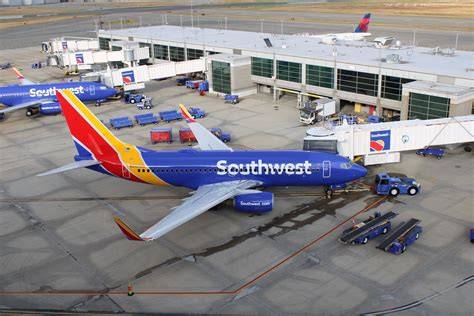
Concentrating 619 commitments on Boeing eliminated any competitive fallback when certification timelines slipped past 2022. That single-source vulnerability kept older 737-700s flying past planned exit dates, raising maintenance costs and forcing Airbus back into the spotlight. Boeing’s persistent 737 MAX issues may make the Airbus A220 seem appealing once more, but Southwest has repeatedly declined to move, and any discussion of leaving Boeing warrants considerable skepticism.
The arithmetic of switching explains the reluctance. Ahead of Southwest’s 2031 all-MAX fleet goal, no Airbus order slot could make up for years of redundant pilot training, union contract rewrites, ramp retooling, and the loss of a single-type pilot pool that lets any captain fly any tail on any given morning. Converting 737-700 retirements into certified MAX 7 deliveries preserves the tooling, the spares network, and the labor architecture that have defined the airline since 1971.
The remaining variable is delivery discipline. It will be interesting to see how quickly Boeing turns August’s certification milestone into consistent MAX 7 handovers rather than a sudden shift to Toulouse. Unless a protracted manufacturing collapse intervenes, Southwest will retire its last 737-700s inside the 1971 family, Seattle’s original bet still paying off in 2026.