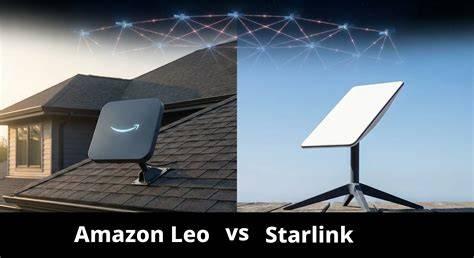
Delta Air Lines has found itself at the center of an increasingly public technology feud after choosing Amazon Leo instead of Elon Musk’s Starlink for its next-generation inflight Wi-Fi strategy. Musk has repeatedly criticized the decision, and his latest warning claims Delta could lose passengers who specifically want the fast satellite connectivity already appearing on rival airlines. Yet Delta maintains that its choice was based on business, technology, cost, and customer-experience considerations rather than a rejection of Starlink itself.
The dispute matters because inflight Wi-Fi has evolved from a premium extra into a major part of the airline experience. Passengers increasingly expect to stream video, work remotely, message friends, upload photographs, and remain connected throughout a flight. As satellite technology transforms what is possible at 35,000 feet, the company providing that connection has become an increasingly important competitive factor for airlines.
Elon Musk Warns Delta Passengers Could Vote With Their Feet
Musk’s latest comments came on X after posts circulated claiming passengers were choosing other airlines because Delta had not selected Starlink. He responded that he had “warned them” about customers voting with their feet and predicted that the situation “will get much worse.” However, the evidence behind that broader claim remains limited. The posts cited by Musk involved only a small number of passengers saying they had selected another carrier because of Wi-Fi preferences, rather than demonstrating a measurable industry-wide migration away from Delta.
That distinction is important. Musk has enormous influence, but a social-media post is not the same thing as passenger-demand data. There is no clear evidence that Delta is experiencing a widespread customer exodus because it lacks Starlink, and the airline continues to provide fast Wi-Fi across most of its fleet. Delta says its existing Delta Sync connectivity has expanded to more than 1,150 aircraft and reaches nearly all of its global network, with transpacific routes being added in fall 2026.
Why Delta Rejected Starlink for Amazon Leo
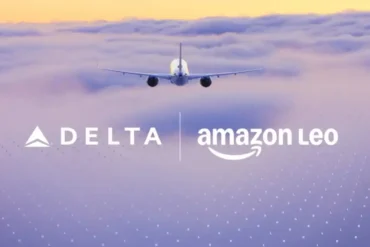
Delta’s decision became public in March 2026, when the airline and Amazon announced a multi-year agreement to introduce Amazon Leo on hundreds of Delta aircraft beginning in 2028. The initial rollout will cover 500 aircraft. The service is expected to provide high-speed, low-latency connectivity, while Wi-Fi will remain free for SkyMiles members.
Delta CEO Ed Bastian has been unusually direct about why the airline preferred Amazon. He said Amazon offered improved bandwidth at a much lower price point, while also bringing capabilities beyond satellite connectivity. Bastian specifically pointed to Amazon’s retailing capabilities, Prime ecosystem, and gaming technologies as advantages that Starlink does not offer.
There is also a deeper strategic relationship between the two companies. Delta has been using Amazon Web Services extensively, migrating nearly 600 applications to the cloud since 2020. Choosing Leo therefore gives Delta an opportunity to combine satellite connectivity with AWS infrastructure, artificial intelligence, digital services, and the airline’s Delta Sync platform.
Amazon Leo Gives Delta a Different Kind of Wi-Fi Strategy
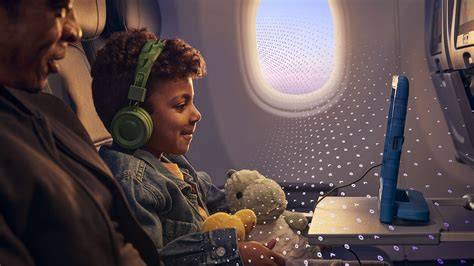
Amazon Leo is not simply being positioned as a cheaper Starlink substitute. Amazon says its aviation system will use an advanced phased-array antenna capable of up to 1 Gbps download speeds and 400 Mbps upload speeds. The low-Earth-orbit network is designed to provide low latency, allowing passengers to stream entertainment, play games, communicate, and upload content while airborne.
The timing, however, creates an obvious vulnerability for Delta. Amazon Leo is still building its satellite network, while Starlink already operates a vastly larger constellation and has secured agreements with numerous airlines. Reuters reported that Amazon’s Leo network had launched only a fraction of the satellites operated by Starlink when Delta announced its deal.
That difference could make the next two years particularly interesting. Delta has selected a technology that is not expected to begin its major aircraft rollout until 2028, while passengers on other airlines are already experiencing Starlink’s capabilities. If Starlink-equipped aircraft develop a strong reputation for reliable, low-latency connectivity, Delta could face questions from customers long before Leo reaches the majority of its fleet.
Starlink Is Turning Inflight Wi-Fi Into an Airline Differentiator
The airline industry’s response to Starlink explains why Musk is so confident in its competitive position. United Airlines, Alaska Airlines, Southwest Airlines and other carriers have moved toward Starlink, while additional international airlines have announced deployments or agreements. American Airlines has also announced plans to install Starlink on more than 500 aircraft, strengthening the satellite provider’s position among major U.S. carriers.
For passengers, the difference is increasingly straightforward: connectivity is becoming part of the reason to choose one airline over another. A traveler who needs reliable internet for work may tolerate a slightly different schedule, aircraft type, or connection if the onboard network is substantially better. That does not automatically mean Delta will lose large numbers of customers, but Wi-Fi can now influence airline choice in ways that were far less significant a decade ago.
Delta’s Bet Is Bigger Than Starlink
The confrontation between Musk and Delta ultimately represents more than a corporate disagreement over an inflight internet contract. It is a contest between two competing visions of connected aviation. Starlink offers an established satellite network with a growing airline customer base, while Amazon is attempting to combine Leo with AWS, entertainment, retail, gaming, and broader digital infrastructure.
Delta is betting that this wider ecosystem will ultimately create more value than simply adopting the market leader. Musk, meanwhile, appears convinced that passengers will increasingly recognize Starlink connectivity as a reason to choose one airline over another. For now, neither side has conclusively proved its case.
The real test will come when Amazon Leo begins flying on Delta aircraft in 2028. If Leo delivers the promised performance and Delta successfully integrates it into Delta Sync and the wider passenger experience, the airline’s decision could look strategically prescient. If Starlink continues to pull ahead and passengers begin deliberately choosing competing carriers for its connectivity, Musk’s prediction could become considerably harder for Delta to dismiss.
The fight, in other words, is only beginning. Delta chose Amazon over Starlink, but passengers will ultimately decide whether that was the right call.