The modern obsession with turning science fiction into a branding exercise has found one of its most aggressive champions in Elon Musk, a billionaire who speaks about the future as if it were a product launch perpetually stuck in beta. When Musk says he wants to make “Star Trek” real, he is not invoking a shared cultural dream rooted in cooperation, ethics, and restraint. He is gesturing toward a hollow aesthetic of starships, AI systems, and technological dominance, detached from the moral framework that gave Gene Roddenberry’s universe its enduring power.
This distinction matters, because Star Trek was never about the toys. It was about the society that decided how and when to use them. The franchise imagined a future where humanity survived itself, dismantled systems of greed and conquest, and replaced them with curiosity and mutual responsibility. Musk’s version of that future, by contrast, looks less like Starfleet and more like a privatized arms expo with better lighting.
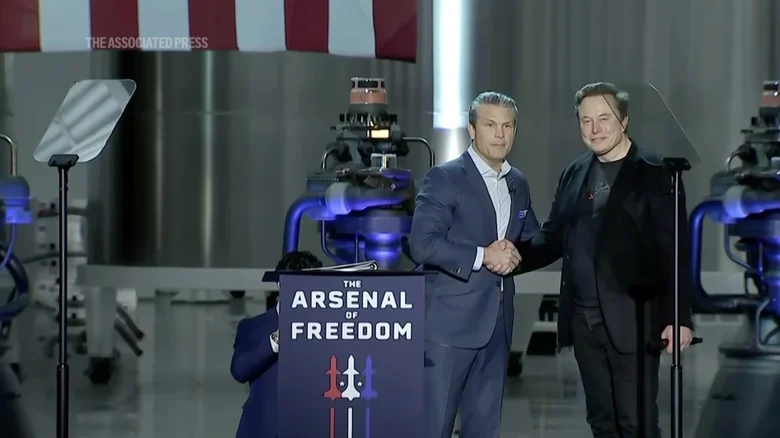
The recent spectacle involving Musk and U.S. Secretary of War Pete Hegseth, staged beneath a podium labeled “Arsenal of Freedom,” made that contradiction impossible to ignore. The announcement of embedding Musk’s Grok AI into military intelligence systems was framed as a step toward a Star Trek–like future. Yet for anyone who has actually absorbed the philosophy of the franchise, the irony was almost cruel in its precision.
The Problem With Turning Star Trek Into a Slogan
Star Trek has always been explicit about its distrust of unchecked power. The show’s optimism was conditional, earned through discipline and humility rather than technological acceleration alone. When Musk talks about manufacturing massive starships to ferry humans across the galaxy, he fixates on scale and speed, not purpose. In Star Trek, faster ships did not make better civilizations. Better civilizations made faster ships unnecessary tools rather than symbols of dominance.
What makes this moment especially unsettling is how casually Star Trek language is being repurposed to justify militarization. The franchise repeatedly warned against this impulse. Its writers understood that technology without ethics does not liberate societies; it exposes them to new forms of annihilation. That warning was not subtle, and it was not accidental.
By borrowing Star Trek’s imagery while discarding its values, Musk reduces a complex moral universe into a decorative skin for ambition. The result is not homage. It is misappropriation.
When “Arsenal of Freedom” Was a Warning, Not a Brand
The phrase emblazoned behind Musk and Hegseth was not just ironic. It was deeply revealing. “The Arsenal of Freedom” is the title of Star Trek: The Next Generation Season 1, Episode 21, an episode that exists almost entirely as a critique of automated warfare and arms profiteering.

In that episode, the Enterprise investigates the planet Minos, once famous for selling advanced weapons to all sides of a conflict. What they find is not prosperity, but extinction. The planet’s creators are gone, destroyed by the very systems they designed. The weapons remain, running endlessly, adapting intelligently, attacking anything that appears to justify their continued existence.
The episode’s central horror is not the weapons themselves, but the absence of human judgment. The AI does not understand peace, surrender, or morality. It understands only escalation. The solution is not to outgun the system, but to shut it down by refusing the logic of endless arms sales.
That Musk stood before this phrase while promoting AI integration into warfare suggests either a staggering lack of media literacy or a willful disregard for the story’s meaning. In either case, the symbolism is disastrous.
AI in Star Trek Was Never About Supremacy
Artificial intelligence appears frequently in Star Trek, but rarely as a triumph of domination. The franchise’s most famous AI character, Commander Data, is not celebrated for efficiency or lethality. He is valued for curiosity, empathy, and his ongoing struggle to understand what it means to be alive.
In The Measure of a Man, Data is placed on trial to determine whether he is property or a person. The episode rejects the idea that intelligence alone justifies exploitation. Consciousness, dignity, and consent matter more than output. This is the exact opposite of how AI is framed in Musk’s ecosystem, where intelligence is a resource to be embedded, scaled, and monetized regardless of consequence.
Star Trek repeatedly asks whether something should be done, not whether it can be done. Musk’s rhetoric skips that step entirely, replacing ethical inquiry with technological inevitability.
Starfleet Was Not a Military Brand
Despite its uniforms and starships, Starfleet is not a conventional military organization. It is an exploratory, scientific, and diplomatic body that uses force reluctantly and defensively. The presence of weapons in Star Trek is contextual, constrained by strict rules of engagement and moral oversight.
The idea of a Secretary of War would be antithetical to the Federation’s structure. Even during existential threats, Star Trek portrays militarization as a dangerous temptation rather than a virtue. Characters who embrace power too eagerly are often positioned as antagonists or cautionary figures.
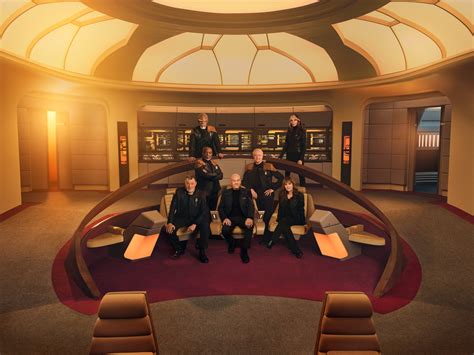
Musk’s alignment with overt militaristic frameworks places him closer to the franchise’s recurring villains than its heroes. Ambitious admirals, secretive intelligence agencies, and ethically compromised commanders appear throughout the series as warnings about what happens when authority forgets its purpose.
The Missing Soul of a Post-Scarcity World
Star Trek’s most radical idea was not warp drive. It was post-scarcity. Money no longer defined human worth. Labor was not coerced by survival. People pursued excellence because they were free to do so. This world did not emerge from billionaires hoarding resources. It emerged from the dismantling of systems that allowed such hoarding in the first place.
Musk positions himself as the architect of abundance while embodying modern scarcity. His wealth represents concentrated labor value extracted from millions, not a step toward collective liberation. In Star Trek terms, he is not building the replicator. He is standing in front of it, charging admission.
The franchise understood that material sufficiency is meaningless without cultural transformation. People in Star Trek read poetry, perform music, and debate philosophy because their society values interior growth as much as external expansion.
Cultural Literacy Is Not Optional
One of the most striking elements of Star Trek is its reverence for education and reflection. Starfleet Academy teaches ethics, history, and intercultural communication alongside engineering. Officers are expected to think deeply, question authority, and recognize the limits of their own perspective.
This emphasis on introspection is precisely what is missing from Musk’s interpretation. Technological prowess without cultural literacy produces tools that outpace wisdom. Star Trek warned that this imbalance leads not to enlightenment, but to catastrophe.
Even the franchise’s action-heavy conflicts ultimately resolve through understanding rather than annihilation. Violence is depicted as failure, not success.
The Franchise Already Imagined This Future—and Rejected It
Star Trek did not shy away from depicting societies obsessed with efficiency, control, and profit. The Ferengi, for example, are a caricature of unchecked capitalism, governed by rules that reduce all relationships to transactions. They are not aspirational. They are satirical.
In Deep Space Nine, the exploitation of holograms and AI-generated bodies for sexual gratification is portrayed as deeply unethical. The show recognizes how technology amplifies harm when empathy is absent. That Musk’s platforms have struggled with exactly these issues only underscores how little he seems to have absorbed from the stories he claims to admire.
Why This Misreading Matters Now
The danger is not that Elon Musk misunderstands Star Trek. The danger is that his misunderstanding is being used to justify real-world policy and power. When science fiction aesthetics are stripped of their ethical context, they become tools for persuasion rather than reflection.
Star Trek asked humanity to grow up before reaching the stars. Musk wants the stars first and the maturity later. History suggests that order rarely works.
A Future That Actually Looks Like Star Trek
If Musk truly wanted to honor Star Trek’s vision, the path would be clear. Invest in eliminating poverty rather than glamorizing escape. Build systems that protect dignity rather than extract value. Treat AI as a moral question, not a market opportunity. Reduce harm now instead of promising transcendence later.
Star Trek’s future was not built by lone geniuses. It was built by societies that chose cooperation over conquest and wisdom over spectacle. Until those choices are made, no amount of starships or algorithms will make the dream real.
What Musk is offering is not Star Trek. It is a costume—impressive at a distance, empty up close. And Star Trek, of all franchises, taught us to look closer.