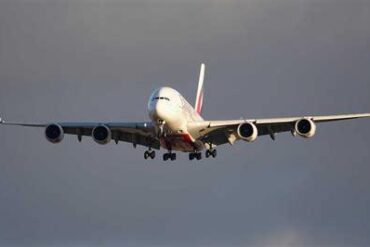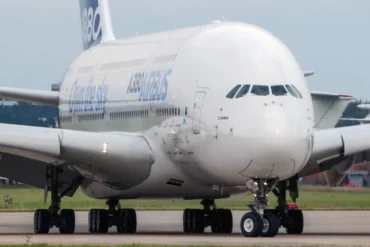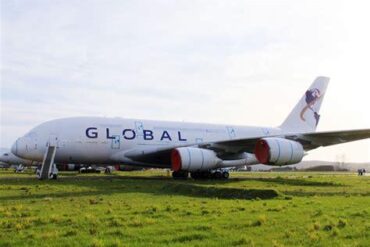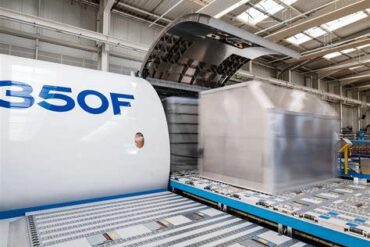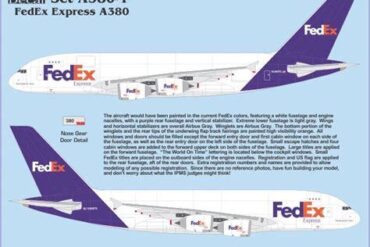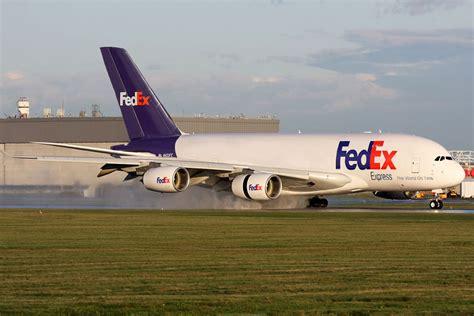
When Airbus unveiled the A380, the world watched in awe. It was the largest passenger aircraft ever built—a full double-decker marvel designed to redefine long-haul travel. With its A380-800 variant dominating attention, a lesser-known sibling quietly emerged: the A380F, a cargo version with immense potential. At first glance, the aircraft seemed tailor-made for high-volume, low-density carriers like FedEx Express, who ordered 10 units with an option for 10 more. Yet, that vision never materialized.
FedEx’s Strategic Interest in the A380 Freighter
FedEx wasn’t just an interested buyer—it was a bold believer in the superjumbo freighter concept. The company envisioned replacing two McDonnell Douglas MD-11Fs with a single A380F, thanks to its unmatched 150-ton payload capacity and expansive floor space. Unlike traditional cargo operators dealing in heavy freight, FedEx thrives on lightweight, high-volume shipments, such as parcels and small packages. This meant that the A380F’s critical limitation—hitting maximum takeoff weight before reaching internal volume limits—was not a concern for FedEx.
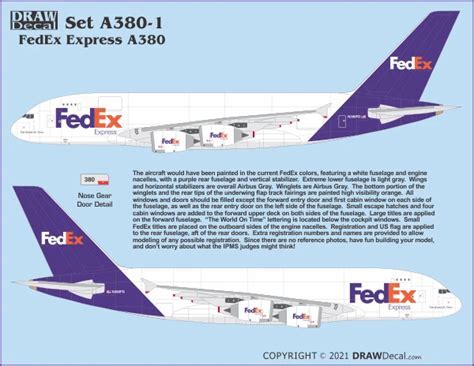
The company even explored preparing its global hubs to accommodate the aircraft’s massive wingspan and loading requirements. Backed by GP7200 engines and eyeing potential expansion into a future A380-900F, FedEx appeared poised to become the flagship operator of the world’s largest freighter.
Airbus Delays Derail Confidence
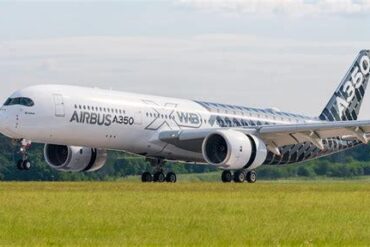
However, Airbus’s ambitious plan began unraveling quickly. Originally scheduled for a 2008 delivery, the A380F program fell victim to the same wiring and engineering delays that plagued the A380-800. With costs ballooning and pressure mounting to focus resources on the passenger version and the newer A350 XWB program, Airbus deprioritized the freighter. Though never formally cancelled at first, the A380F was indefinitely shelved with no reliable delivery timeline.
For FedEx, timing was everything. A global logistics giant cannot afford fleet uncertainty, especially when strategic capacity upgrades are planned years in advance. As Airbus failed to provide clear answers, FedEx pulled the plug in November 2006, canceling its entire order.
Business Model Reevaluation and the Boeing 777F Shift
FedEx’s decision was not merely reactive. Around this period, the company faced financial headwinds and sought to streamline its operations. The allure of the A380F faded in contrast to the proven and more efficient Boeing 777F, which offered excellent payload range performance and significantly lower operating costs. Unlike the superjumbo, the 777F was available, affordable, and scalable.
FedEx’s pivot reflected a broader industry realization: size alone doesn’t guarantee operational efficiency. Even though the A380F promised more space, the inability to consistently utilize that space economically—combined with the premium price and infrastructure adjustments required—rendered it a risky investment.
The Ripple Effect: UPS and Other Customers Follow Suit
FedEx’s exit signaled the unraveling of Airbus’s freighter ambitions. ILFC and Emirates, who had also placed A380F orders, promptly converted theirs to passenger variants. UPS Airlines, which initially remained committed, eventually canceled too when it became clear that Airbus had abandoned the freighter roadmap. With all 37 A380F orders either canceled or converted by 2007, the variant was officially dead.
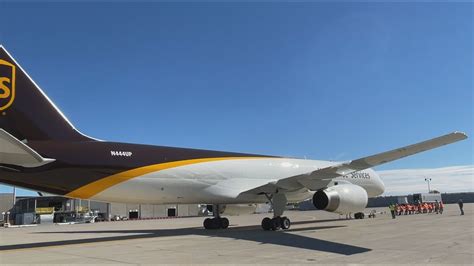
Even though UPS’s network also focused on volume over weight, the company already had Boeing 747-400Fs in service and leaned more heavily on its ground fleet. The delay-tolerant nature of its integrated model made alternatives more viable. Airbus, on the other hand, lacked a convincing pitch to win back freighter clients in a market increasingly focused on fuel efficiency and fleet flexibility.
The Unrealized Future: What Could Have Been
The A380F was part of a broader, unrealized Airbus strategy. The A380-800 itself was designed as a shrink, with the A380-900 as the true economic workhorse Airbus hoped to produce later. That variant would have boasted better fuel burn per seat and lower unit costs, but orders never reached the critical mass needed for launch.
Subsequent ideas like the A380neo, promising next-generation engines like the Rolls-Royce Advance, and the A380plus, featuring aerodynamic improvements and systems from the A350, also failed to gain traction. Airbus could not overcome the mismatch between its engineering marvel and airlines’ evolving operational economics.
Conclusion: A Missed Opportunity Rooted in Timing and Economics
FedEx’s withdrawal from the A380F program encapsulates a rare instance where perfect theoretical alignment collided with brutal market realities. The aircraft’s physical attributes were ideal for the company’s needs, but program instability, delivery delays, and shifting financial priorities made it untenable. Rather than wait for promises, FedEx doubled down on reliability—choosing to invest in the Boeing 777F and expand its existing fleet.
In hindsight, the A380F was a product ahead of its time, launched into a world unprepared to support it. For Airbus, it remains one of the most ambitious yet unfulfilled chapters in commercial aviation history. And for FedEx, it marked a critical lesson in agility and pragmatism in an industry where timing is everything.