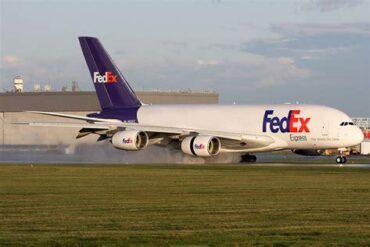
The aviation world thrives on ambitious ideas, but not all of them survive contact with reality. Among the most fascinating unrealized projects stands the Airbus A380-800 Freighter (A380F)—a cargo aircraft concept so vast in scale and promise that, for a brief moment, it seemed destined to redefine global logistics. Yet despite early enthusiasm, firm orders, and industry buzz, the program quietly disappeared before a single aircraft was ever built.
What happened is not a simple story of failure. It is a revealing case of how market dynamics, engineering constraints, and industrial missteps can converge to derail even the most compelling vision.
The Vision: A Cargo Aircraft Designed to Dominate the Skies
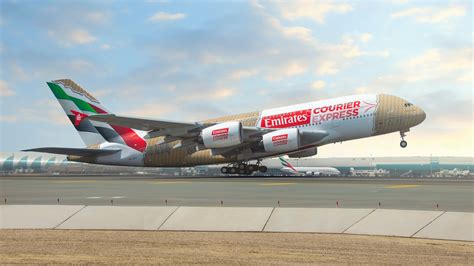
When Airbus formally launched the A380 program in December 2000, it wasn’t just unveiling a passenger aircraft—it was presenting a new philosophy of air transport. Alongside the double-deck superjumbo came plans for a freighter variant that would carry unprecedented volumes of cargo between the world’s busiest hubs.
The proposed A380F was extraordinary on paper. It promised a payload capacity of approximately 330,000 pounds (150 metric tons), distributed across three decks, with a range of around 5,600 nautical miles. Airbus boldly claimed this was about 30% greater capacity than competing freighters, placing it second only to the legendary Antonov An-225 in sheer lifting power.
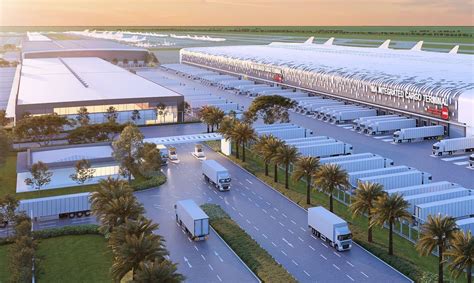
The logic was compelling: as global trade surged in the early 2000s, major airports were becoming congested. Airlines needed a way to move more cargo without increasing flight frequency. The A380F offered exactly that—a high-volume, slot-efficient solution tailored for mega-hubs like Memphis, Dubai, and Hong Kong.
Early Momentum: Why Industry Giants Bought In
Airbus didn’t struggle to sell the idea. In fact, the early response bordered on enthusiastic. Major logistics players saw clear advantages in consolidating shipments onto fewer flights, potentially reducing costs per unit and easing pressure on constrained airport infrastructure.
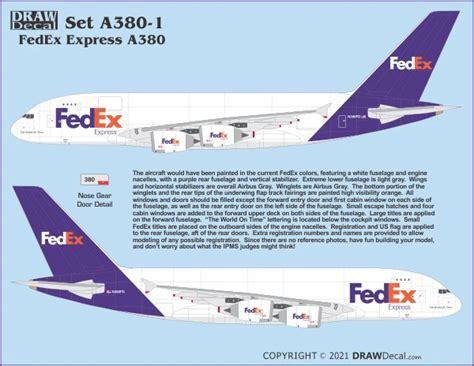
By 2002, FedEx Express placed a firm order for 10 aircraft with options for 10 more. UPS followed in 2005 with a similar commitment. Emirates and leasing giant International Lease Finance Corporation (ILFC) also signaled strong interest.
At its peak, the A380F program had accumulated:
- 27 firm orders
- 20 additional options
- Commitments from some of the most influential cargo operators in the world
For a project that hadn’t yet produced a single component, this level of confidence was remarkable. It suggested that Airbus might replicate—or even surpass—the impact of the Boeing 747 freighter, which had dominated air cargo since the 1970s.
A Subtle Shift: When the Market Began to Move Away
While Airbus was building momentum, the cargo market itself was quietly evolving. What initially looked like a perfect environment for ultra-large freighters began to change in subtle but decisive ways.
Cargo airlines started to rethink their priorities. Instead of maximizing payload per flight, they began to value flexibility, frequency, and network adaptability. Smaller aircraft allowed operators to serve more destinations directly, adjust capacity to fluctuating demand, and reduce the risk of flying partially empty.
This shift gained traction as global supply chains became more complex and time-sensitive. The rise of just-in-time logistics and e-commerce further emphasized speed and flexibility over sheer volume. Suddenly, the A380F’s greatest strength—its enormous capacity—started to look like a potential liability.
Design Reality: When Passenger DNA Clashed with Cargo Needs
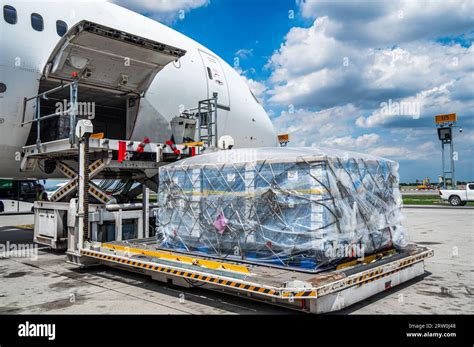
Adapting a passenger aircraft into a freighter is never straightforward, and the A380 presented unique challenges. Its double-deck structure, ideal for carrying hundreds of passengers, introduced complications for cargo operations.
Freighters typically rely on wide, unobstructed main decks that allow for rapid loading and unloading of standardized containers. The A380’s internal architecture made this difficult without significant redesign.
The result was a compromise involving increased structural weight, more complex loading logistics across multiple decks, and reduced operational efficiency compared to purpose-built freighters.
Even more critically, cargo aircraft are often volume-limited rather than weight-limited. In many real-world scenarios, the A380F’s full payload capacity would have been difficult to utilize efficiently. Airlines risked flying with unused space—an expensive inefficiency in a margin-sensitive industry.
Fuel Economics: The Four-Engine Problem
Another issue became increasingly hard to ignore: fuel efficiency. The A380, like the Boeing 747, relied on four engines. While this configuration once symbolized power and range, advances in engine technology were rapidly changing the equation.
Modern twin-engine aircraft such as the Boeing 777F demonstrated that fewer engines could deliver lower fuel consumption, reduced maintenance costs, and comparable range and payload capabilities.
As oil prices fluctuated and environmental concerns grew, the economics of four-engine aircraft became less attractive. The A380F, despite its size advantage, faced a fundamental disadvantage in cost per ton-mile.
The Breaking Point: Production Chaos Inside Airbus
If market trends weakened the A380F’s appeal, internal problems at Airbus delivered the decisive blow. The company encountered severe production issues while building the passenger A380—issues that would ripple directly into the freighter program.
At the heart of the crisis was a seemingly mundane but catastrophic problem: wiring.
Different Airbus facilities were using incompatible design software versions. As a result, wiring harnesses designed in one location didn’t fit properly during assembly in another. Fixing the issue required redesigning thousands of cables, extensive manual rework, and significant delays across the entire program.
Delivery timelines slipped by years, and costs ballooned. For cargo customers like FedEx and UPS, reliability and predictability were non-negotiable. The uncertainty surrounding the A380 program eroded confidence quickly.
Customer Exodus: When Orders Turned Into Cancellations
As delays mounted, patience wore thin. Cargo operators began reassessing their commitments, and the conclusions were decisive.
- FedEx canceled its order, shifting to the Boeing 777F
- UPS followed suit, opting for more flexible aircraft
- Emirates converted its freighter interest into passenger orders
- ILFC also adjusted its strategy
Within a few years, the A380F’s order book effectively collapsed. What had once been a promising launch customer base vanished, leaving Airbus without the commercial foundation needed to proceed.
A Changing Industry: The Rise of Efficient Freighters
By the late 2000s and into the 2010s, the cargo aviation landscape had clearly shifted. Airlines increasingly favored aircraft that balanced capacity with operational efficiency.
The Boeing 777F emerged as a benchmark, offering long range, high payload capability, superior fuel efficiency, and lower operating costs. Later developments, such as the Boeing 777-8F, reinforced this trend.
These aircraft didn’t aim to be the largest—they aimed to be the most profitable per flight and per route. In this context, the A380F began to look like a relic of an earlier mindset.
Why Revival Is Virtually Impossible Today
The idea of reviving the A380 freighter occasionally resurfaces in aviation discussions, often driven by curiosity. But in practical terms, the barriers are overwhelming.
The A380 passenger program has ended. Restarting a freighter variant would require rebuilding supply chains, re-certifying the aircraft under modern regulations, and investing billions without guaranteed demand.
Meanwhile, the market has fully embraced a different model. Airlines now prioritize versatility, frequency, and cost efficiency—criteria that favor smaller, more adaptable aircraft.
A “What If” That Still Captures the Imagination
Despite its cancellation, the A380F remains one of aviation’s most intriguing “what if” scenarios. It represented a bold attempt to push the boundaries of what cargo aircraft could achieve.
There is something undeniably compelling about the idea of a triple-deck flying warehouse, capable of moving vast quantities of goods across continents in a single journey. It reflects an era when scale itself was seen as the ultimate solution.
Conclusion: The Right Aircraft at the Wrong Time
The Airbus A380-800 Freighter was not canceled because it lacked vision or ambition. It may simply have been too ambitious for the market it aimed to serve.
Caught between shifting industry priorities, inherent design compromises, and severe production setbacks, the program never had the stable foundation it needed to succeed. By the time Airbus could have delivered it, the world had already moved on.
In the end, the A380F stands as a powerful reminder that in aviation, timing is everything. Even the most impressive aircraft concept can fail if it arrives at the wrong moment—or solves a problem that no longer exists.