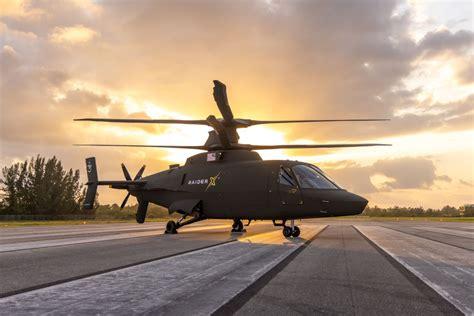
The Sikorsky Raider X was envisioned as a bold leap into the future of vertical lift aviation. Developed under the U.S. Army’s Future Attack Reconnaissance Aircraft (FARA) program, this next-generation scout and attack helicopter represented a synthesis of high-speed flight, agility, modular design, and advanced propulsion systems. Yet, despite its potential, the Raider X would ultimately become another ambitious military aerospace project grounded by evolving strategic priorities.
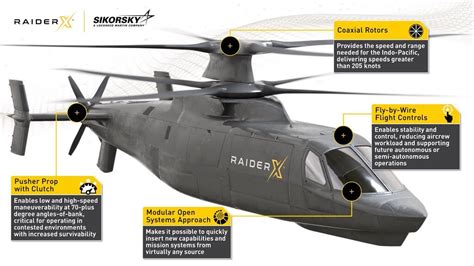
Announced in October 2019, the Raider X emerged from the legacy of the Sikorsky S-97 Raider, itself an evolution of the X2 technology demonstrator. Sikorsky’s commitment to coaxial rotor and pusher propeller configurations, collectively branded as X2 Technology, enabled exceptional maneuverability and speed, offering performance metrics far beyond conventional rotorcraft.
Origins in X2 Technology and the S-97 Raider
The Raider X did not arise in isolation. Its DNA can be traced directly to the Sikorsky X2, an experimental high-speed helicopter that first flew in 2008. The X2 was designed to overcome the limitations of traditional helicopters in terms of speed, vibration, and control responsiveness. By using rigid coaxial rotors to cancel torque and a rear-mounted pusher propeller to provide additional thrust, the X2 broke new ground—literally achieving speeds over 250 knots.
From this foundation came the S-97 Raider, a smaller-scale testbed for proving the viability of X2 principles in a militarized airframe. By 2015, the S-97 had already flown multiple test flights, showcasing tight maneuverability, high-speed cruise, and a compact design suitable for armed reconnaissance missions. Crucially, Sikorsky viewed the S-97 as only 80% the scale of its future offering—what would eventually become the Raider X.
FARA Program and Sikorsky’s Strategic Bid
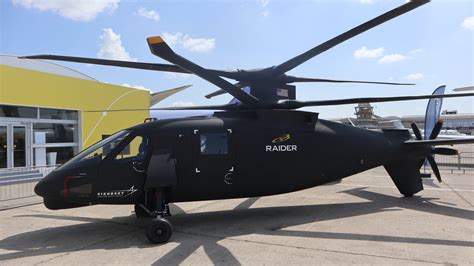
The U.S. Army launched the FARA program in 2018, seeking to replace aging OH-58 Kiowa scouts with a modern, survivable, and fast reconnaissance platform. Five contractors were invited to submit design concepts in 2019. By March 2020, only two were selected to move forward: Sikorsky’s Raider X and Bell’s 360 Invictus.
While Bell proposed a more traditional single-main-rotor layout, Sikorsky offered something revolutionary. The Raider X, unlike any operational Army aircraft, leveraged next-gen flight dynamics to meet or exceed all FARA requirements. These included:
- Speeds over 250 knots (460 km/h)
- Service ceilings above 9,000 feet (2,700 meters)
- Tactical agility and survivability in contested environments
- Integrated modular systems to accommodate evolving weapons and sensor payloads
Construction of the prototype began in early 2020, even as the COVID-19 pandemic introduced manufacturing delays. Still, by April 2024, Sikorsky had successfully powered up the aircraft. However, the prototype would never fly.
Design Innovation and Tactical Architecture
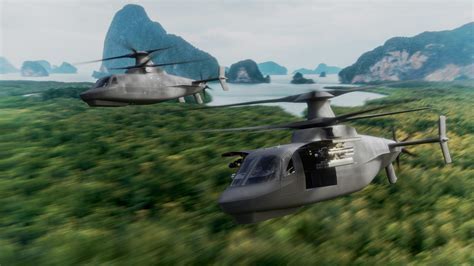
What truly distinguished Raider X from its rivals was its unconventional airframe and tactical philosophy. At the heart of its performance lay the General Electric T901 engine, developed under the Army’s Improved Turbine Engine Program (ITEP). Delivering 3,000 shaft horsepower, the T901 offered increased efficiency, better altitude performance, and resilience in high-hot environments.
In terms of layout, the Raider X featured:
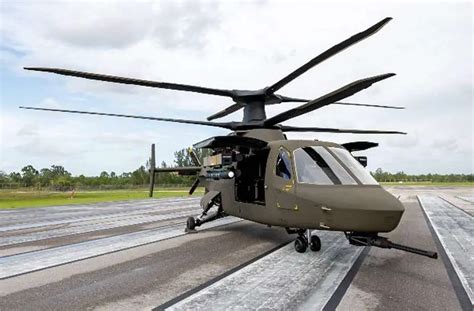
- Two rigid coaxial rotors, 39 feet in diameter, eliminating tail rotor drag and torque issues
- A rear pusher propeller for horizontal propulsion and deceleration
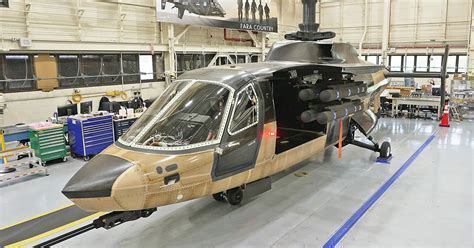
- A side-by-side cockpit, enhancing crew coordination—unusual for U.S. attack helicopters which typically use tandem seating
- A modular mission system architecture, allowing rapid updates and system swaps to address mission-specific demands or future threats
- Internal weapons bays, reducing radar cross-section and aerodynamic drag
Additionally, Swift Engineering was tapped to construct the airframe, ensuring lightweight composite structures and digital production techniques.
Cancellation of FARA: Strategic Reprioritization or Missed Opportunity?
Despite extensive development, the entire FARA program was abruptly cancelled in February 2024. U.S. Army officials cited a strategic shift toward uncrewed aerial systems (UAS), electronic warfare, and long-range precision fires as justification. Raider X, though technologically advanced, did not align with a vision prioritizing cost-effective, attritable, and networked warfare.
The cancellation halted a potential multi-billion-dollar contract, disrupting Sikorsky’s near-term defense portfolio. Though the Raider X prototype had already been powered up, no flight testing would follow. Sikorsky confirmed that there were no plans for flight demonstration, effectively sealing the aircraft’s fate as a high-potential concept never allowed to prove itself.
The Raider X Legacy: Innovation Without Deployment
Though the Raider X never entered production, its technological legacy should not be underestimated. The lessons derived from the X2 platform, high-speed rotorcraft aerodynamics, and modular avionics architectures remain crucial to the broader Future Vertical Lift (FVL) initiative. Moreover, the Raider X has influenced discussions surrounding:
- Hybrid manned-unmanned teaming (MUM-T)
- Sensor fusion and modular warfare systems
- Speed and survivability trade-offs in low-observable vertical lift platforms
The Raider X stands alongside other advanced concepts like the RAH-66 Comanche, representing a trend of military aviation pursuing innovation faster than it can field and fund.

Conclusion: A Helicopter Ahead of Its Time
The Sikorsky Raider X was more than a prototype; it was a statement of what the future of rotary-wing combat aviation could become. With its cutting-edge performance metrics, radical design elements, and modularity-focused architecture, it embodied the kind of leap that only happens once per generation in aerospace development.
Yet, strategic pivots and funding constraints clipped its wings before they could truly open. The Raider X now joins a distinguished list of cancelled military aircraft—not because of failure, but because it may have been too advanced, too soon. As defense priorities evolve, the technologies pioneered by Sikorsky in the Raider X may find new life in next-generation drones, autonomous VTOL systems, and even civilian air mobility solutions.