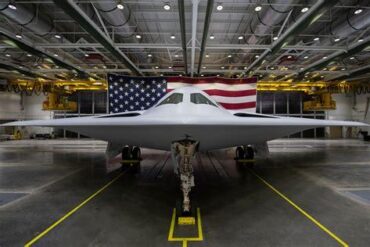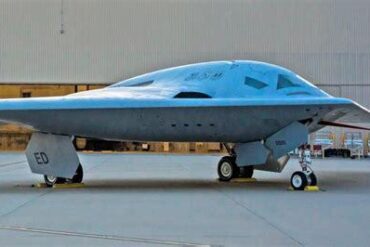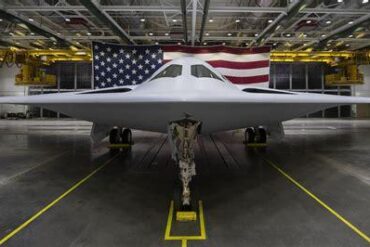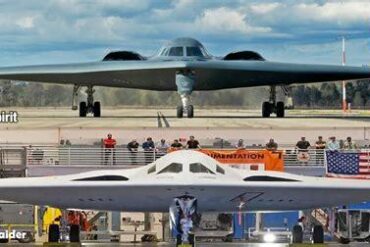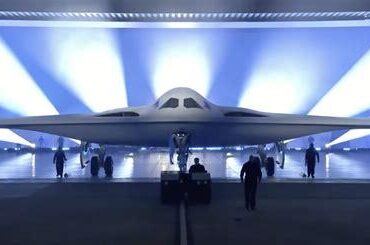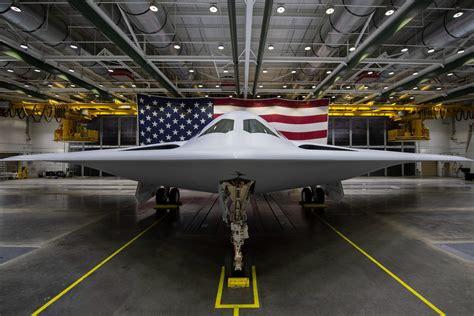
The arrival of the Northrop Grumman B-21 Raider represents far more than the introduction of a new stealth bomber. It signals a fundamental shift in how the United States Air Force intends to conduct long-range strike operations in future conflicts. While the B-2 Spirit revolutionized strategic bombing through its low-observable design and ability to penetrate sophisticated air defenses, it was also burdened by extraordinary maintenance demands, complex logistics, and operational limitations that restricted where and how it could be deployed.
The B-21 has been designed to solve many of those problems. Although it shares the flying-wing appearance that made the B-2 iconic, the Raider is fundamentally a different aircraft beneath the surface. Its stealth architecture, maintenance philosophy, digital engineering approach, and support requirements have all been built around a central objective: creating a bomber that can be deployed more widely, sustained more easily, and operated more frequently than its predecessor.
As military planners increasingly focus on the challenges posed by the Indo-Pacific theater and other contested environments, the ability to disperse forces across multiple locations has become a critical requirement. The B-21’s design directly supports this concept, enabling deployment to forward operating bases that would have been impractical or excessively difficult for the B-2 Spirit.
The result is a stealth bomber intended not merely to survive modern warfare, but to remain operational at a tempo that previous generations of stealth aircraft could never achieve.
The B-2 Spirit was a technological marvel when it entered service. Developed during the final years of the Cold War, the aircraft was designed primarily to penetrate Soviet airspace and deliver nuclear weapons against heavily defended targets. Everything about the bomber prioritized stealth performance above operational convenience.
This approach succeeded in creating one of the most survivable aircraft ever built. However, it also produced an aircraft that became notorious for its maintenance burden. The B-2 earned the nickname “hangar queen” because of the extensive support infrastructure required to keep it mission-ready.
Unlike conventional bombers, the B-2 depended heavily on early-generation radar-absorbing materials. These coatings were highly sensitive to environmental conditions and required constant attention. Exposure to humidity, temperature fluctuations, and harsh weather could degrade stealth characteristics, forcing maintenance crews to perform labor-intensive repairs.
The Air Force frequently relied on specialized climate-controlled facilities to protect the aircraft and preserve its low-observable features. Even when operating overseas, the B-2 often required deployable environmental shelters designed specifically for its maintenance needs.
Such requirements dramatically limited operational flexibility. While the bomber could technically deploy to forward locations, doing so demanded significant preparation, extensive logistical support, and specialized infrastructure that was unavailable at many potential operating sites.
The B-21 Raider was conceived with these limitations firmly in mind.
Rather than treating maintainability as a secondary concern, designers incorporated it as a foundational requirement from the earliest stages of development. The objective was clear: preserve or improve stealth performance while significantly reducing the operational burden associated with sustaining the aircraft.
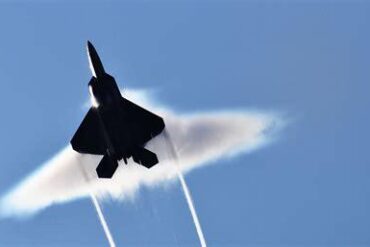
By leveraging decades of experience gained from the B-2, F-22 Raptor, and F-35 Lightning II programs, engineers developed a new generation of stealth technologies that are expected to be substantially more durable and easier to maintain.
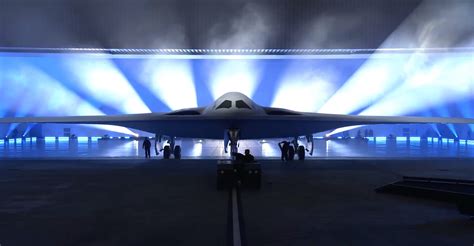
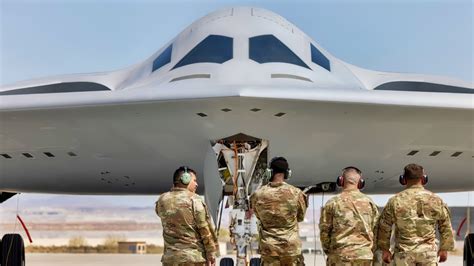
One of the most significant improvements involves the aircraft’s radar-absorbing materials. Early stealth aircraft depended on coatings that demanded constant upkeep. The B-21 benefits from advances in material science that have transformed how low-observable systems are integrated into airframes.
Instead of relying on fragile external treatments requiring frequent repair, modern stealth designs incorporate low-observable characteristics more deeply into the aircraft’s structure. The result is a system that remains effective while reducing maintenance hours and increasing operational availability.
This evolution mirrors the progression seen from the B-2 to the F-22 and then to the F-35. Each generation introduced improvements in stealth durability and maintainability. The Raider represents another major leap forward, applying decades of lessons learned across multiple stealth programs.
The practical implications are enormous. Reduced maintenance requirements mean fewer specialized technicians, less support equipment, and shorter turnaround times between missions. These factors directly enhance the bomber’s ability to operate from dispersed locations.
The concept of Agile Combat Employment (ACE) has become increasingly important to American military strategy. Rather than concentrating aircraft at a small number of major installations, ACE emphasizes dispersing forces across numerous locations to complicate enemy targeting efforts and improve survivability.
This doctrine is particularly relevant in a potential conflict involving a peer adversary capable of launching precision strikes against large air bases. Concentrated aircraft fleets represent attractive targets. Dispersed operations create uncertainty and force adversaries to allocate resources across a much wider area.
The B-2 was never ideally suited for this operating model. Its demanding support requirements limited the number of locations capable of sustaining the aircraft effectively.
The B-21, however, has been designed specifically with operational flexibility in mind. By reducing dependence on specialized facilities and minimizing maintenance complexity, the Raider becomes far more compatible with dispersed operations.
This does not mean the aircraft can operate from any runway with no preparation. Stealth bombers remain highly sophisticated systems requiring significant support. Yet the threshold for deployment is expected to be considerably lower than that of the B-2.
The difference may appear subtle on paper, but in military operations it can be transformative. An aircraft that requires less infrastructure can access more locations. More locations create greater unpredictability. Greater unpredictability enhances survivability and operational effectiveness.
Another major factor driving the B-21’s design is the changing nature of strategic warfare.
The B-2 emerged during an era when the United States generally expected to achieve air superiority relatively quickly. In conflicts such as Kosovo, Afghanistan, Iraq, and Libya, stealth aircraft often opened the campaign before conventional aircraft followed in larger numbers.
Future conflicts may not unfold in the same manner.
Military planners increasingly assume that sophisticated integrated air defense systems could remain dangerous throughout an extended conflict. This means stealth aircraft may need to perform sustained operations rather than serving merely as pathfinders for conventional forces.
In this environment, sortie generation becomes critically important.
A bomber that can fly one mission but then requires extensive maintenance contributes less combat power than a bomber capable of rapidly returning to service. Operational availability becomes just as important as raw performance.
The B-21 is intended to function as a stealth workhorse rather than a highly specialized niche platform. Its design supports larger fleet sizes, higher readiness rates, and greater operational endurance.
This philosophy reflects the Air Force’s expectation that future wars may require prolonged campaigns against capable adversaries. The service cannot rely solely on a small number of exquisite aircraft conducting occasional missions. Instead, it requires a force capable of maintaining pressure over extended periods.
Forward basing plays a central role in achieving this objective.
Distance remains one of the greatest challenges in modern air warfare. This is especially true across the vast expanses of the Pacific Ocean, where operating from the continental United States can involve extraordinarily long flight times.
The B-2 demonstrated remarkable endurance by flying combat missions lasting more than thirty hours. These flights showcased the aircraft’s capabilities and the professionalism of its crews.
However, such missions also highlighted significant inefficiencies.
Every hour spent flying to and from distant targets is an hour unavailable for additional missions. Long-range operations place enormous strain on personnel, consume tanker resources, and reduce overall sortie generation.
Forward deployment offers a solution by positioning aircraft closer to operational areas.
The B-21’s improved sustainment characteristics make this approach far more practical. Instead of relying exclusively on home-station operations, commanders gain greater flexibility to position bombers where they can respond more quickly and maintain higher operational tempos.
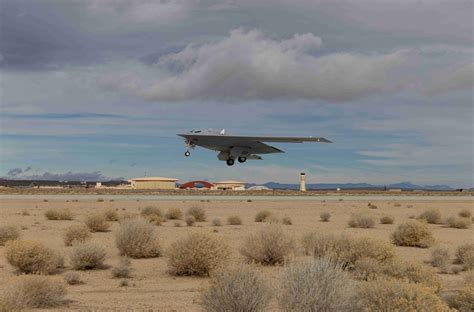
Yet forward basing introduces its own challenges.
A common misconception is that logistical deployment automatically translates into operational security. In reality, the ability to sustain a bomber at a forward base does not guarantee that the base itself can be adequately defended.
Modern warfare has demonstrated the growing vulnerability of aircraft on the ground. Precision missiles, loitering munitions, and inexpensive drones have made fixed installations increasingly exposed.
Stealth technology provides little protection when an aircraft is parked.
Regardless of its radar signature in flight, a bomber sitting on a runway remains a valuable target. This reality applies equally to the B-2 and the B-21.
Consequently, the Raider’s forward-basing advantage should not be interpreted as freedom from risk. Instead, it represents a reduction in logistical constraints that previously limited deployment options.
Military planners must still address force protection, deception measures, hardened shelters, and dispersal strategies to ensure survivability.
In many scenarios, the B-21 will likely continue operating from protected facilities even though those facilities no longer require the elaborate climate-control systems associated with the B-2. Simpler shelters, hardened structures, or concealed locations may provide sufficient protection while supporting operational flexibility.
The ability to operate from a broader range of facilities creates additional dilemmas for adversaries. Instead of monitoring a small number of predictable locations, opponents must account for a larger network of potential operating sites.
This complicates targeting decisions and increases uncertainty throughout the battlespace.
An equally important aspect of the B-21 program is its emphasis on scalability.
Only twenty-one B-2 bombers were originally built, and the operational fleet eventually shrank further following accidents and retirements. Such small numbers inevitably limited strategic flexibility.
The Raider is intended to be produced in significantly larger quantities. Larger fleets generate more operational options, increase resilience, and enable broader deployment patterns.
Maintenance improvements directly support this goal. A larger force becomes meaningful only if the aircraft can be sustained efficiently. Otherwise, readiness rates decline and operational advantages diminish.
By reducing maintenance complexity, the Air Force aims to maximize the percentage of aircraft available for missions at any given time.
This philosophy extends beyond simple cost savings. It reflects a broader understanding that future conflicts may demand sustained operations across enormous geographic areas against highly capable opponents.
The bomber force must therefore be both technologically advanced and operationally practical.
The B-21 seeks to achieve this balance.
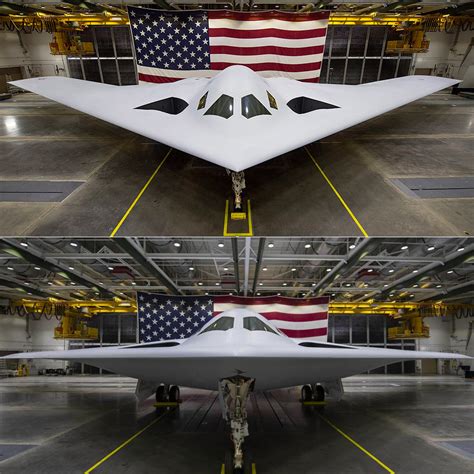
The secrecy surrounding the Raider underscores just how important these capabilities are considered. Although numerous images of the aircraft have been released, many details remain closely guarded. Information regarding radar cross-section, sensor capabilities, electronic warfare systems, payload capacity, and operational concepts remains heavily protected.
This secrecy reflects the aircraft’s strategic significance.
The Raider is not merely replacing the B-2. It is becoming the cornerstone of America’s future long-range strike architecture. Its effectiveness will influence deterrence, power projection, and operational planning for decades.
What can be discussed openly is the broader design philosophy that distinguishes it from its predecessor.
The B-2 prioritized maximum stealth at a time when sustainment concerns were secondary. The B-21 seeks to maintain exceptional survivability while dramatically improving maintainability, availability, and deployment flexibility.
Those improvements explain why the Raider can operate from forward bases that would have posed serious challenges for the Spirit.
The transformation is not the result of a single technological breakthrough. Rather, it reflects the cumulative impact of advances in stealth materials, digital engineering, manufacturing processes, logistics planning, and operational doctrine.
Taken together, these developments create a bomber that is better aligned with the realities of twenty-first-century warfare.
The ultimate measure of the B-21’s success will not simply be its ability to evade detection. It will be its ability to generate combat power consistently, sustain operations across dispersed locations, and remain effective in contested environments where access, survivability, and readiness are equally important.
That is the crucial distinction between the Raider and the Spirit. The B-2 proved that stealth bombers could penetrate sophisticated defenses. The B-21 is being built to do that repeatedly, from more locations, with greater efficiency, and at a scale that the previous generation could never realistically sustain.
In the evolving landscape of global military competition, that operational flexibility may prove every bit as valuable as stealth itself.