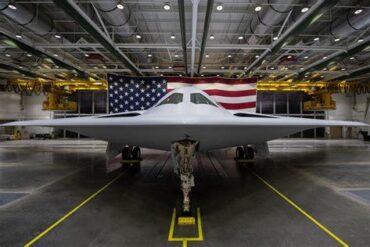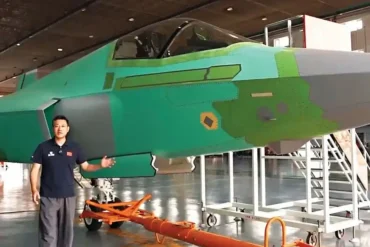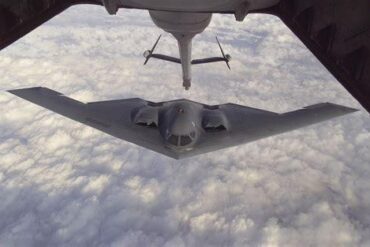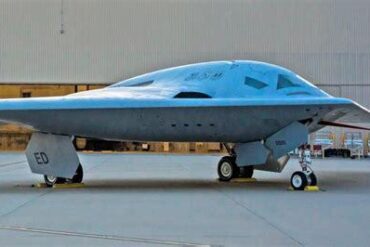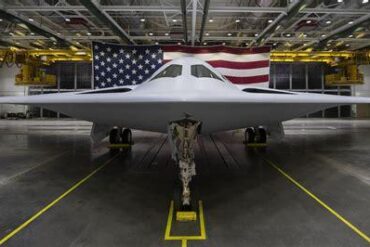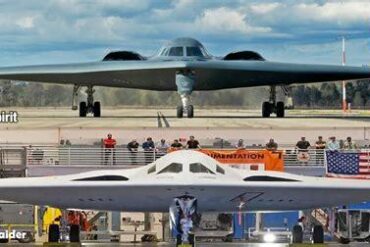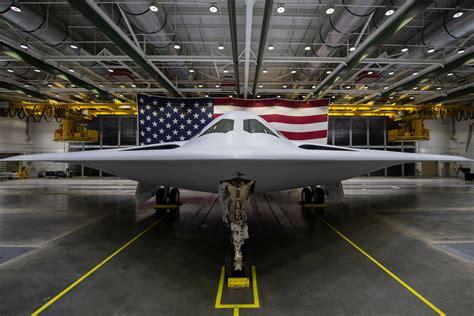
The arrival of the Northrop Grumman B-21 Raider marks one of the most important transitions in modern military aviation since the debut of the B-2 Spirit during the final years of the Cold War. Although politicians and commentators often describe the Raider as an upgraded version of the B-2, the reality is far more significant. The B-21 is not simply an evolution of the Spirit. It represents a fundamental redesign of how stealth bombers are built, maintained, deployed, and sustained in combat operations.
For decades, the B-2 Spirit carried an almost mythical reputation. Its flying-wing design looked decades ahead of its time, while its stealth profile allowed it to penetrate heavily defended airspace that would have been suicidal for conventional bombers. Yet beneath the aircraft’s technological mystique was an operational headache that frustrated maintainers and planners alike. The B-2’s radar-absorbent coatings were so delicate that the aircraft became dependent on climate-controlled hangars wherever it operated.
That logistical burden became one of the defining weaknesses of the Spirit program. Every deployment required specialized environmental shelters, highly controlled humidity levels, extensive maintenance teams, and a constant battle against environmental degradation. The aircraft was stealthy, but keeping it stealthy demanded enormous effort.
The B-21 Raider changes that equation entirely.
Rather than designing an aircraft that prioritizes raw stealth at any cost, Northrop Grumman and the United States Air Force designed the Raider for sustainable stealth. The bomber is intended to function as a routinely deployable combat system capable of operating across dispersed global bases without dragging behind the immense support infrastructure that defined the B-2 era.
The result is a stealth bomber that no longer needs the pampered lifestyle of the B-2 Spirit.
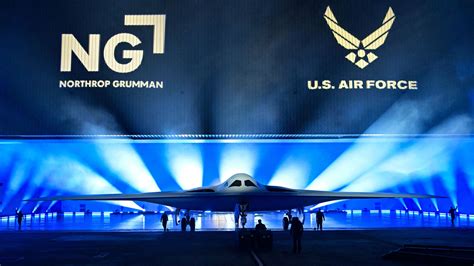
The Cold War Origins Behind The B-2 Spirit’s Fragile Stealth Design
To understand why the B-21 no longer requires climate-controlled hangars, it is necessary to understand the world that created the B-2 Spirit in the first place.
The B-2 emerged from one of the most dangerous periods in military aviation history. During the 1970s and 1980s, the Soviet Union constructed one of the densest integrated air defense networks ever assembled. Advanced surface-to-air missile systems, overlapping radar coverage, interceptor aircraft, and early warning infrastructure made traditional strategic bombing increasingly risky.
The United States Air Force had already experimented with multiple solutions to this growing threat. The B-52 relied on altitude and payload. The B-58 Hustler attempted to survive through speed. The XB-70 Valkyrie pushed the concept even further by aiming to cruise above Mach 3 at extreme altitudes.
Then Soviet missile technology changed the game.
High-altitude penetration became dangerously vulnerable. Low-level penetration tactics soon followed, leading to the development of aircraft like the B-1A and later the B-1B Lancer. Yet even terrain-following flight profiles were becoming less effective as look-down radars improved.
Stealth became the only realistic solution.
The Advanced Technology Bomber program eventually produced the B-2 Spirit, a bomber designed to virtually disappear from radar. Every aspect of the aircraft centered around minimizing radar reflections, reducing infrared signatures, and suppressing detectability from multiple angles.
But achieving that level of stealth during the 1980s required materials and manufacturing methods that were extraordinarily sensitive.
The B-2’s radar-absorbent material, often casually called “stealth paint,” was cutting-edge technology for its era. Unfortunately, it was also extremely vulnerable to environmental conditions. Moisture, temperature fluctuations, dust contamination, ultraviolet exposure, and even routine operational wear could degrade the aircraft’s low-observable characteristics.
This vulnerability forced the Air Force into an expensive compromise: the aircraft had to live in controlled environments almost constantly.
Why The B-2 Spirit Became Known As A “Hangar Queen”
The nickname “hangar queen” was not an exaggeration. The B-2’s stealth coatings demanded relentless maintenance attention.
At Whiteman Air Force Base and other operational facilities, the Spirit was stored inside carefully regulated climate-controlled hangars where humidity and temperature remained stable. Even small environmental changes could affect the integrity of the coatings.
When deployed overseas, the problem became even more complicated.
The Air Force developed portable climate-controlled shelters specifically for the B-2. These temporary structures traveled with the bomber force to forward operating locations, adding substantial logistical complexity to every deployment cycle. Moving stealth bombers no longer meant moving only aircraft and crews. It meant transporting an entire environmental ecosystem.
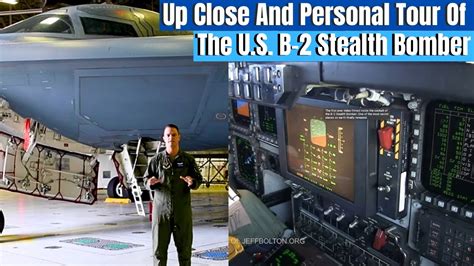
This maintenance burden dramatically increased operational costs. It also reduced sortie generation rates because stealth restoration work frequently consumed significant time between missions.
Ironically, the B-2’s extraordinary stealth capabilities became partially responsible for limiting its operational flexibility.
The aircraft was optimized for maximum survivability against Soviet air defenses, but sustainment considerations were secondary. During the Cold War, that tradeoff seemed acceptable. The B-2 was envisioned as a boutique strategic asset that would conduct limited but critically important nuclear and conventional penetration missions.
Then history changed.
The Soviet Union collapsed shortly after the B-2 first flew in 1989. The massive bomber fleet originally envisioned for the program suddenly appeared financially unjustifiable. Procurement numbers dropped from 132 aircraft to only 21, turning the B-2 into one of the most exclusive and expensive military aircraft ever produced.
The small fleet size only intensified maintenance pressures because every aircraft became strategically valuable.
How Stealth Technology Evolved Beyond The B-2 Era
The B-2 Spirit represented first-generation strategic stealth technology. What followed over the next three decades fundamentally transformed low-observable aircraft design.
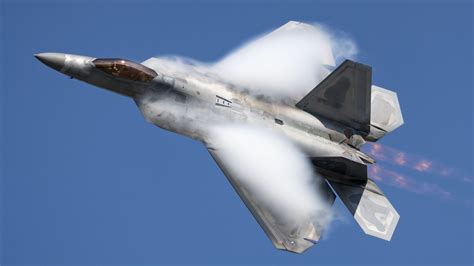
The F-22 Raptor became one of the first major stealth aircraft to demonstrate that advanced stealth coatings could also become maintainable. Lockheed Martin engineers learned critical lessons from earlier stealth programs, especially the labor-intensive support demands of the B-2 and F-117 Nighthawk.
By the early 2000s, the Air Force openly discussed how the F-22’s stealth coatings were significantly easier to repair and maintain than previous systems. The aircraft no longer required elaborate climate-controlled shelters to preserve its radar-absorbent characteristics.
That shift marked a turning point in stealth philosophy.
Instead of treating stealth coatings as delicate outer skins requiring constant preservation, engineers began integrating low-observable characteristics deeper into aircraft structures themselves. Composite materials improved. Manufacturing tolerances tightened. Embedded radar-absorbing structures reduced dependence on fragile surface treatments.
The F-35 Lightning II pushed those concepts even further.
Its stealth systems were designed with operational scalability in mind. Coatings became easier to replace, easier to repair, and more resilient against environmental exposure. Although the F-35 still requires specialized maintenance procedures, it demonstrated that stealth aircraft could function as high-tempo operational platforms rather than carefully protected laboratory projects.
The B-21 Raider benefits from every lesson learned across those programs.
The B-21 Raider Was Designed For Sustainable Stealth
The Raider’s greatest technological advantage may not be its radar cross-section itself. It may be how easily that stealth can be sustained during real-world operations.
Unlike the B-2, the B-21 was conceived from the beginning as a deployable workhorse bomber rather than a rare strategic asset. The Air Force plans to acquire at least 100 aircraft, with some projections suggesting even larger future fleets.
That scale changes everything.
A bomber force of that size cannot depend on fragile maintenance ecosystems. It cannot require specialized environmental shelters at every operating location. It cannot pause operations because humidity levels fluctuate outside narrow tolerances.
The Raider therefore appears to use far more durable radar-absorbent materials integrated directly into the aircraft’s composite structures. While exact details remain classified, defense analysts widely believe the aircraft’s low-observable properties rely less on sensitive exterior coatings and more on deeply embedded structural stealth technologies.
This distinction matters enormously.
If stealth characteristics are integrated throughout the airframe instead of concentrated within vulnerable surface layers, environmental degradation becomes far less severe. Minor scratches, operational grime, or weather exposure no longer threaten to compromise the aircraft’s survivability to the same extent.
The bomber effectively becomes operationally rugged.
That does not mean the B-21 ignores stealth maintenance entirely. Every low-observable aircraft still requires specialized inspection and repair processes. However, the Raider appears designed to tolerate normal operational conditions without demanding the constant environmental pampering associated with the B-2.
In practical terms, the aircraft can operate from more austere locations with a smaller support footprint.
Why Climate-Controlled Hangars Are No Longer Operationally Practical
The strategic environment facing the United States today differs dramatically from the environment that shaped the B-2 Spirit.
Modern military doctrine increasingly emphasizes distributed operations, rapid deployments, and survivability through dispersion. Large fixed installations are becoming vulnerable to precision missile strikes, drone attacks, cyber disruption, and long-range surveillance.
A stealth bomber that depends on specialized climate-controlled hangars at every deployment site becomes strategically predictable.
The B-21 is specifically designed to avoid that vulnerability.
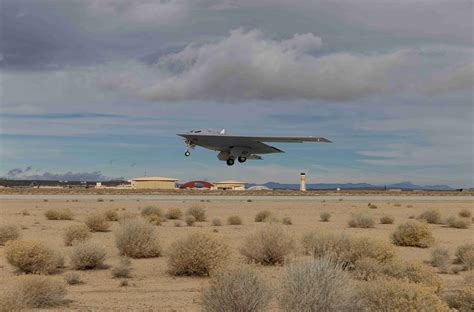
Instead of relying on elaborate support infrastructure, the Raider is expected to operate from dispersed airfields using simplified support systems. This allows commanders greater flexibility when positioning bomber forces during crises.
The shift also aligns with broader Pentagon concerns regarding Indo-Pacific warfare scenarios.
Potential operations across the Pacific would involve enormous distances and potentially limited infrastructure. Aircraft may need to operate from remote airstrips, temporary facilities, or rapidly expanded forward bases. Under those conditions, transporting delicate climate-control systems for every stealth bomber would become operationally restrictive.
The Raider’s durability solves that problem.
The B-21 Still Requires Massive Infrastructure Investment
Eliminating climate-controlled hangars does not mean the Raider is cheap or simple to support.
Far from it.
The Air Force is already investing billions of dollars upgrading facilities at Ellsworth Air Force Base, Dyess Air Force Base, and Whiteman Air Force Base to accommodate the new bomber fleet. These upgrades include maintenance facilities, secure communications infrastructure, mission planning centers, weapons storage areas, and advanced operational support systems.
The B-21 remains one of the most technologically sophisticated aircraft ever constructed.
Its stealth systems, sensors, networking capabilities, electronic warfare suites, and long-range strike functions still demand extensive technical support. What has changed is the nature of that support. The aircraft no longer appears shackled to the delicate environmental maintenance requirements that plagued earlier stealth generations.
This dramatically reduces operational friction.
A bomber force capable of deploying faster, generating sorties more efficiently, and operating from more locations becomes far more difficult for adversaries to track and target.
That operational unpredictability may ultimately prove just as valuable as the aircraft’s stealth profile itself.
Modern Warfare Is Bringing Hangars Back For Different Reasons
Ironically, although climate-controlled hangars may no longer be necessary, protective shelters themselves are becoming important again.
Recent conflicts have highlighted the growing vulnerability of aircraft parked in the open.
Ukraine’s extensive drone strikes against Russian air bases demonstrated how even relatively inexpensive unmanned systems can threaten strategic aviation assets on the ground. Reports surrounding operations targeting Russian bomber fleets showed that aircraft lacking hardened protection could become vulnerable to precision attacks far from the front lines.
The lesson resonated globally.
Even stealth bombers become defenseless when parked on exposed tarmacs.
As a result, future B-21 operating concepts will likely still involve hangars and shelters — but for protection rather than environmental preservation. Hardened aircraft shelters complicate enemy targeting calculations. Camouflage structures reduce satellite visibility. Even basic coverings can disrupt reconnaissance efforts.
In modern warfare, concealment remains critical even when stealth technology advances dramatically.
The difference is that the B-21’s shelters no longer need to function as giant climate-controlled laboratories.
The B-21 Raider Represents A New Philosophy Of Stealth Warfare
The transition from the B-2 Spirit to the B-21 Raider reflects more than technological improvement. It reflects a complete shift in strategic thinking.
The B-2 was built for a world where stealth bombers were rare, elite assets reserved for the most dangerous missions imaginable. Every aspect of the aircraft prioritized survivability against Soviet air defenses, even if sustainment costs became staggering.
The B-21 is built for persistent global competition.
It is designed to fly more often, deploy more widely, require fewer maintenance resources, and sustain higher operational tempos. Its stealth is intended not merely to survive combat but to remain sustainable during prolonged military campaigns.
That distinction explains why the Raider no longer depends on climate-controlled hangars.
Advances in radar-absorbent materials, composite manufacturing, embedded stealth structures, and maintainability engineering have finally allowed stealth bombers to evolve beyond the fragile limitations of first-generation low-observable aircraft.
The B-2 Spirit was revolutionary because it proved strategic stealth could work.
The B-21 Raider may prove even more revolutionary because it makes strategic stealth practical.